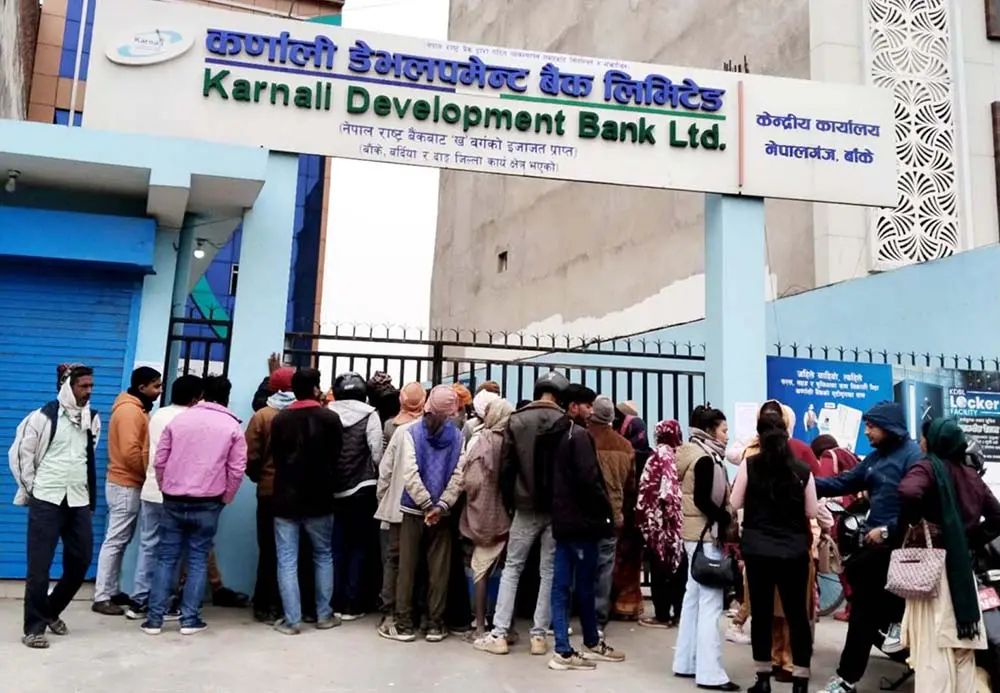
कर्णाली विकास बैंक गम्भीर वित्तीय संकटमा फसिएपछि नेपाल राष्ट्र बैंकले बैंकलाई बचाउन अभूतपूर्व कदम चाल्दै पुनर्संरचना प्रक्रिया औपचारिक रूपमा सुरु गरेको छ। बैंकले निक्षेपकर्तालाई रकम फिर्ता गर्न नसक्ने अवस्था आएपछि राष्ट्र बैंकले नै हस्तक्षेप गरी बैंकको संरचना, स्वामित्व र व्यवस्थापनलाई नयाँ मोडेलमा पुनर्स्थापना गर्ने निर्णय सार्वजनिक गरेको हो।
पहिलो चरणमा राष्ट्र बैंकले घोटालामा संलग्न व्यक्तिहरूको सेयर मूल्य एक प्रतिशतमा झारेर बैंकको स्वामित्व संरचना पूर्णतः खाली बनाइदिएको छ। विगतका सञ्चालक र अपचलनमा संलग्नहरूबाट संस्थापक तथा साधारण सेयर कटौती गरेपछि बैंकको ९९ प्रतिशत सेयर खाली भएको राष्ट्र बैंकले जनाएको छ। यो निर्णय नेपालकै बैंकिङ इतिहासमा पहिलोपटक प्रयोग भएको मोडेल मानिएको छ।
राष्ट्र बैंकले गठन गरेको कर्णाली विकास बैंक व्यवस्थापन समूहका संयोजक तथा उपनिर्देशक टीकाराम खतिवडाका अनुसार पुनर्संरचनाको मूल उद्देश्य बैंक डुब्न नदिनु र सर्वसाधारणको बचत सुरक्षित राख्नु हो। उहाँका अनुसार, सेयर कटौतीपछि बैंकलाई चलायमान बनाउने एक मात्र विकल्प निक्षेपकर्तालाई नै सेयरधनी बनाउने देखिएको छ। त्यसैअनुसार दोस्रो चरणमा बचतलाई सेयरमा रूपान्तरण गर्ने प्रक्रिया अघि बढाइएको छ।
खतिवडाका अनुसार बचतलाई सेयरमा परिणत गर्दा निक्षेपकर्ताले बैंकको स्वामित्व पनि पाउने र भविष्यमा बैंक पुनर्जीवित हुँदा लाभ उठाउन सक्नेछन्। राष्ट्र बैंकले निक्षेपकर्तालाई यसका फाइदा–नोक्सानका विषयमा विस्तृत रूपमा बुझाउँदै सहमतिमा ल्याउने प्रयास गरेको छ। उहाँले निक्षेपकर्ताको सहमति सबैभन्दा निर्णायक चरण हुने बताए।
बैंकको स्वामित्व खाली भएपछि भविष्यको व्यवस्थापन व्यवस्था पूर्णतः नयाँ रूपमा निर्माण गर्न राष्ट्र बैंक अघि बढेको छ। खतिवडाका अनुसार बैंकको नाम, कार्यक्षेत्र, बोर्ड संरचना, प्रमुख कार्यकारी अधिकृतदेखि सेयर संरचना सबै परिवर्तन हुनेछ। पुनर्संरचना पूरा भएपछि कर्णाली विकास बैंक राष्ट्रियस्तरको बैंकका रूपमा पुनः सञ्चालनमा आउन सक्ने सम्भावना पनि देखिएको छ।
कर्णाली विकास बैंकमा आर्थिक अपचलनपछि प्रहरीको केन्द्रीय अनुसन्धान ब्युरो (CIB) ले ३ अर्ब २० करोड रुपैयाँ भ्रष्टाचार गरेको आरोपमा १०९ जनाविरुद्ध मुद्दा दायर गरेको थियो। मुद्दा दायर भएपछि अदालतले तत्कालीन संस्थापक अध्यक्ष राजेन्द्रवीर राय, अध्यक्ष पशुपतिदयाल मिश्र र वित्त प्रमुख बेदप्रकाशसिंह ठकुरीलाई पुर्पक्षका लागि कारागार चलान गरेको थियो। राष्ट्र बैंकका कर्मचारी भुवन बस्नेत भने धरौटीमा छुटेका थिए।
बैंक २०६० सालमा स्थापना भएर बाँके, बर्दिया र दाङका १९ शाखामार्फत सेवा दिंदै आएको थियो। संस्थामा करिब ४ अर्ब ६५ करोड निक्षेप र २ अर्ब ९३ करोडभन्दा बढी कर्जा रहेको तथ्यांकले देखाउँछ। यसरी ठूलो आकारको विकास बैंक संकटमा फसेपछि निक्षेपकर्ताको हित र बैंकिङ प्रणालीको स्थायित्व रक्षा गर्न राष्ट्र बैंकले प्रत्यक्ष हस्तक्षेप गर्नुपरेको हो।
राष्ट्र बैंकका अधिकारीहरूका अनुसार तीन चरणको यो पुनर्संरचना प्रक्रिया सफल भए कर्णाली विकास बैंक नयाँ स्वरूप, नयाँ स्वामित्व र नयाँ व्यवस्थापनसहित पुनर्जीवित हुनेछ। यसले नेपालमा समस्याग्रस्त बैंक बचाउने नयाँ नमुना स्थापित गर्ने विश्वास पनि व्यक्त गरिएको छ।