Top
40 MW Rahughat Hydropower Project Reaches Completion: A Triumph Over Decades of Setbacks
By seamlessly integrating into the Kaligandaki corridor's 220 kV Dana-Kushma transmission line via the LILO (Line In Line Out) system, Rahughat will significantly bolster voltage stability and regional energy independence. The four transmission towers required for this integration are already erected, signaling that commercial generation is imminent.
Dipesh Ghimire
2 min read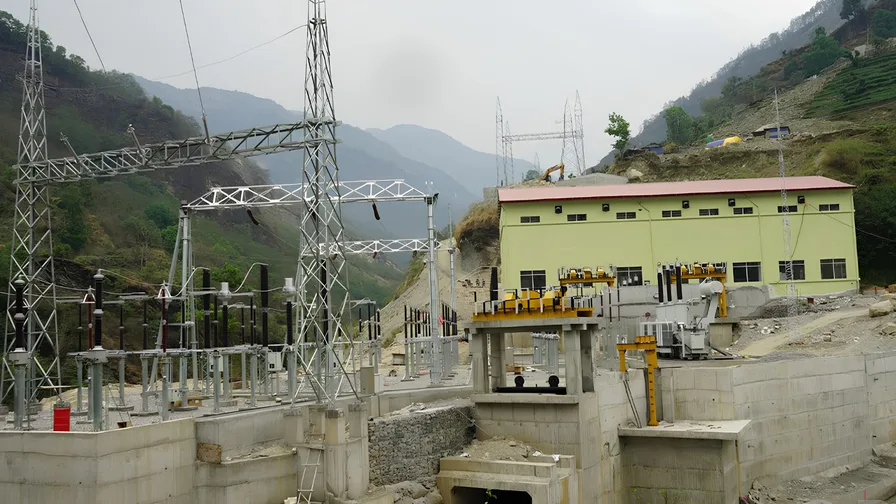
After years of administrative hurdles and environmental calamities, Myagdi’s highly anticipated 40-megawatt (MW) Rahughat Hydroelectric Project has finally reached the finish line. The completion of its physical infrastructure and the commencement of the testing phase mark a significant milestone for Nepal’s energy sector, transforming a historically delayed initiative into a functional powerhouse.
Overcoming Historical and Natural Hurdles
The project's journey has been an analytical case study in infrastructure resilience. Initially stalled by the financial collapse of its first contractor, IVRCL, in 2015, the project required a complete strategic overhaul. Utilizing the Engineering, Procurement, and Construction (EPC) model, the initiative found a financial lifeline through a $67 million concessional loan from the EXIM Bank of India, heavily supported by joint investments from the Nepal Electricity Authority (NEA) and the federal government.
Despite being forced into a fourth deadline extension due to the COVID-19 pandemic, devastating landslides, and persistent riverbed material shortages, the successful execution by subsequent contractors demonstrates a remarkable recovery in project management.
Technical Milestones and Infrastructure Readiness
With the civil works spearheaded by India's Jaiprakash Associates (JP) and electro-mechanical components handled by Bharat Heavy Electricals Limited (BHEL), the project has transitioned from heavy construction to rigorous operational testing.
Structural Integrity: The dam, strategically located at the border of Raghuganga’s Dagnam and Jhi wards, along with the extensive 6.27-kilometer main tunnel and desilting basins, have successfully passed initial testing.
Powerhouse Operations: Electro-mechanical equipment testing is actively underway at the primary powerhouse in Tilkenichaur.
Grid Readiness: A dedicated switchyard has been fully operational since early June, ensuring the infrastructure is structurally primed for immediate power evacuation.
Economic Implications for the National Grid
Promoted by Raghuganga Hydropower, an NEA subsidiary, this facility is a critical addition to Nepal's broader energy strategy. Bound by a Power Purchase Agreement (PPA) signed in early 2019, the project is projected to inject over 240.59 million units of electricity into the national grid annually.
By seamlessly integrating into the Kaligandaki corridor's 220 kV Dana-Kushma transmission line via the LILO (Line In Line Out) system, Rahughat will significantly bolster voltage stability and regional energy independence. The four transmission towers required for this integration are already erected, signaling that commercial generation is imminent.
Advertisement
Written by
Dipesh Ghimire