Dividend
Dividend Season Gathering Momentum: Twelve Commercial Banks Announce Payouts for FY 2082/83, Siddhartha Bank Takes the Lead
With institutions like NMB Bank scheduling their AGM for Mangsir 25 (following an 11th Mangsir book close) and others like Nepal SBI, Laxmi Sunrise, and Standard Chartered yet to lock in their specific book closure timelines, the final chapter of the FY 2082/83 dividend cycle is still unfolding. For investors, these payouts not only signal underlying sectoral profitability but also set the tone for market sentiment across Nepal's capital market.
Dipesh Ghimire
2 min read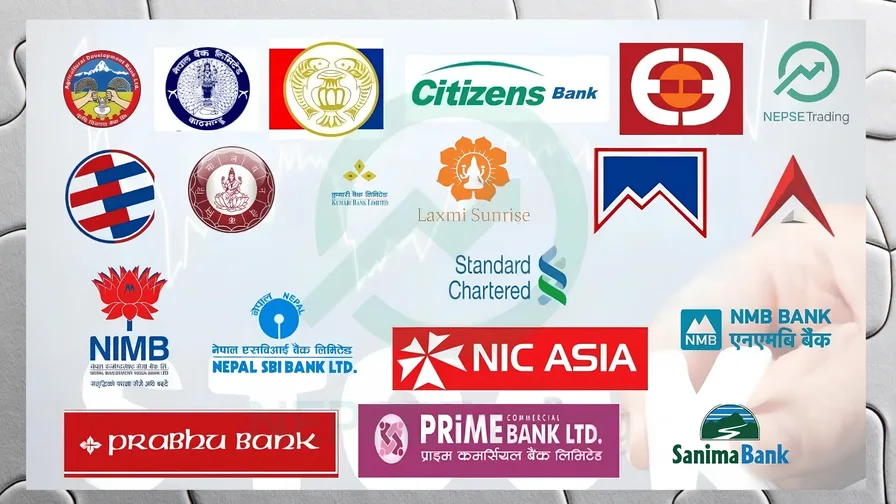
Dividend Season Gathering Momentum: Twelve Commercial Banks Announce Payouts for FY 2082/83, Siddhartha Bank Takes the Lead
/ KATHMANDU
The corporate earnings season in Nepal’s banking sector is shifting into high gear as commercial banks unroll their reward mechanisms for shareholders. Out of the total commercial banking universe, twelve institutions have officially announced dividend distributions from the profits accumulated during the past fiscal year (FY 2082/83). While eight of these frontline financial institutions have already crossed regulatory milestones by completing their book closures and conducting Annual General Meetings (AGMs), four others are currently navigating through the procedural pipeline to finalize their distributions. This unfolding dividend landscape offers a vital window into the profit health, capital preservation strategies, and investor payout capacities of the country’s premier banking institutions.
Frontrunners in Profit Payouts: Siddhartha, Standard Chartered, and Nabil Lead
A granular look at the declaration metrics reveals notable divergence in how individual banks are rewarding their equity holders. Siddhartha Bank has emerged as the most lucrative provider among those declared thus far, offering a robust total dividend of 20 percent, split evenly between 10 percent bonus shares and 10 percent cash. Hot on its heels is Standard Chartered Bank, which opted entirely for a high-yield cash dividend of 16 percent. Meanwhile, Nabil Bank and Everest Bank have positioned themselves strongly with 15.8 percent (5% bonus, 10.8% cash) and 15 percent (5% bonus, 10% cash) total returns respectively, demonstrating resilient balance sheet strength despite macroeconomic headwinds.
Strategic Split Between Cash Liquidity and Capital Capitalization
The dividend mix across the twelve reporting banks highlights two distinct corporate strategies: bolstering capital reserves via bonus shares versus rewarding immediate liquidity through cash payouts. A notable segment of banks has favored a hybrid approach, combining bonus shares with cash to simultaneously strengthen their paid-up capital base and satisfy income-seeking investors. Alongside Siddhartha, Nabil, and Everest, institutions like Global IME Bank (10% total: 4% bonus, 6% cash), Machhapuchchhre Bank (6% total: 3% bonus, 3% cash), Citizens Bank International (4% total: 3.8% bonus, 0.2% cash), and Laxmi Sunrise Bank (5.26% total: 5% bonus, 0.26% cash) have structured their returns to balance regulatory capital requirements with shareholder gratification.
Cash-Only Yields and the Pending Pipeline
Conversely, several banks have leaned exclusively toward cash dividends, reflecting specific liquidity management and capital adequacy considerations. Following Standard Chartered’s leading 16 percent cash payout, Sanima Bank has announced a 10 percent cash dividend, NMB Bank proposed 7 percent, and Kumari Bank announced a modest 2.1053 percent. Meanwhile, the roster of twelve expanded further with Nepal SBI Bank introducing a total dividend of 8.25 percent (3.40% bonus and 4.85% cash), pending regulatory endorsement from Nepal Rastra Bank and its upcoming AGM.
With institutions like NMB Bank scheduling their AGM for Mangsir 25 (following an 11th Mangsir book close) and others like Nepal SBI, Laxmi Sunrise, and Standard Chartered yet to lock in their specific book closure timelines, the final chapter of the FY 2082/83 dividend cycle is still unfolding. For investors, these payouts not only signal underlying sectoral profitability but also set the tone for market sentiment across Nepal's capital market.
Advertisement
Written by
Dipesh Ghimire