Response Desk
Finance Ministry Plans ‘Response Desk’ as Government Pledges Faster Action on Business Barriers
The government’s promises address many of the concerns repeatedly raised by businesses. Their economic effect, however, will depend on implementation. Faster approvals, predictable taxation and legal clarity could improve investor confidence, but another cycle of consultation without institutional follow-through would offer little relief to industries already operating under financial and regulatory pressure.
Dipesh Ghimire
8 min read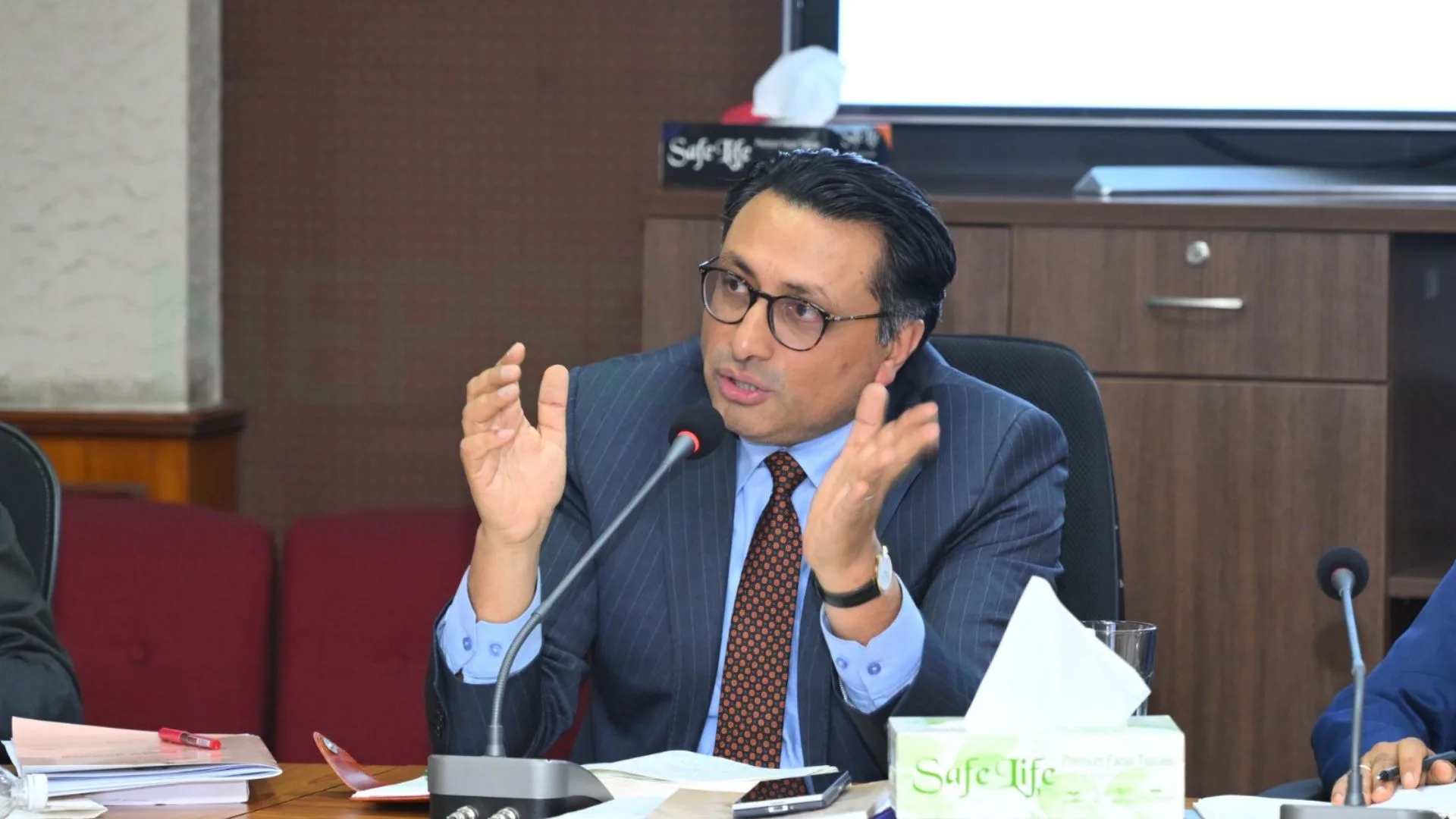
Kathmandu — The government has proposed a new working arrangement with Nepal’s private sector, promising faster decisions, legal reforms and direct institutional support as businesses continue to face obstacles related to taxation, finance, land, electricity, labour and administrative procedures.
Addressing a special discussion with industrialists, business leaders and representatives of private-sector organisations, the finance minister said cooperation between the government and businesses must move beyond formal consultations. He argued that a new working culture was needed to convert concerns raised by investors into practical policy decisions.
The minister said the government was no longer interested in merely preparing lists of economic problems. Instead, it intends to identify workable solutions, assign responsibility to the relevant agencies and ensure that decisions are implemented within a defined period.
The statement reflects growing pressure on the government to improve Nepal’s investment climate at a time when many industries are operating below capacity, private investment remains weak and entrepreneurs frequently complain about regulatory uncertainty and slow administrative decisions.
According to the minister, consultations were held with industrialists, bankers, investors, young entrepreneurs and professional organisations while preparing the national budget. Suggestions collected during those discussions were used to introduce what the government describes as the beginning of structural economic reform.
The government has placed investment promotion at the centre of its economic policy. The minister described its common national agenda as “investment, investment and only investment,” indicating that the administration wants private capital to play a larger role in reviving production, employment and economic growth.
However, the success of such an agenda will depend on whether policy announcements produce visible changes in the business environment. Nepal has repeatedly announced investment-friendly reforms, but businesses continue to report difficulties in obtaining approvals, accessing affordable credit, acquiring land and dealing with overlapping regulations.
The government is now preparing to repeal or amend 42 laws directly related to the economy within the current fiscal year. The proposed legal review is intended to remove outdated provisions, simplify business procedures and reduce contradictions among laws governing investment, taxation, labour, industry and financial activities.
The number of laws identified for amendment suggests that the government recognises regulatory complexity as a major barrier to economic activity. Yet changing a large number of laws within a single year will require careful coordination among the Ministry of Finance, line ministries, the Cabinet and Parliament.
Amending laws without updating the related regulations, directives and administrative practices may produce limited results. Businesses often face delays not only because of legal provisions but also because officials interpret the same rules differently across government agencies.
The minister said the government was working to simplify and make the tax system more transparent. A predictable tax regime is particularly important for investors because frequent changes in rates, valuation methods, exemptions and administrative requirements make it difficult to prepare long-term business plans.
The government has also promised to make business operations easier, expand the capital market, organise the labour market and use digital technology to create a more transparent administration. Together, these reforms are intended to reduce transaction costs and limit opportunities for discretionary decision-making.
Digitalising administrative services could shorten approval periods and improve transparency if government databases and agencies are properly integrated. Simply shifting paper forms to online portals, however, will not solve delays if applications still require repeated physical visits or approvals from several offices.
The government has identified three major objectives for its private-sector policy. The first is to help existing industries operate at full capacity. The second is to create conditions that allow established businesses to expand. The third is to encourage a new generation of entrepreneurs to establish new industries.
These three priorities address different stages of industrial development. Supporting existing industries may produce faster gains because factories, workers and distribution networks are already in place. Business expansion can increase investment and employment, while new enterprises are necessary to introduce innovation and diversify the economy.
Many Nepali industries have struggled to operate at full capacity because of weak domestic demand, high production costs, expensive financing, irregular access to raw materials and competition from imported goods. Improving capacity utilisation could therefore raise output without requiring the same level of investment needed to establish entirely new factories.
The minister said progress in the three priority areas could contribute to higher economic growth, increased employment, stronger government revenue and export promotion. The relationship among these goals is significant: greater industrial production can create jobs and taxable income, while exports can reduce the economy’s heavy dependence on imports and remittance-financed consumption.
However, higher tax revenue will depend on business growth rather than aggressive collection from a narrow group of existing taxpayers. Private-sector representatives have frequently argued that the tax base should be widened while compliant businesses should be protected from unpredictable assessments and repeated investigations.
The finance minister asked business leaders to provide specific information about why domestic production costs remain high and why industries are unable to operate at full capacity. He also sought explanations for the continuing weakness of new investment despite repeated government commitments to improve the business environment.
The minister specifically requested recommendations concerning barriers linked to land, electricity, labour, transport, finance, raw materials and market access. These areas represent some of the most common constraints faced by Nepal’s manufacturing and service sectors.
Land acquisition is often expensive and complicated, particularly for large industrial projects. Electricity supply has improved in recent years, but businesses may still face difficulties related to connections, transmission capacity, tariffs and the reliability of industrial infrastructure.
Access to finance remains another major challenge. Even when liquidity is available in the banking system, high borrowing costs, collateral requirements and cautious lending practices can prevent small and medium-sized enterprises from securing investment capital.
Transport and logistics costs also weaken the competitiveness of Nepali products. As a landlocked country with difficult terrain, Nepal depends heavily on road transport and cross-border trade routes. Delays, poor infrastructure and administrative costs can make imported raw materials expensive and exports less competitive.
To provide a faster response to legitimate business concerns, the Ministry of Finance plans to establish a dedicated “Response Desk.” The desk is expected to receive issues raised by the private sector, coordinate with the responsible agencies and help secure decisions within a shorter period.
The proposed desk could become an important link between businesses and the government if it is given clear authority, qualified personnel and a system for tracking complaints. Without those arrangements, it risks becoming another administrative unit that collects applications without ensuring their resolution.
For the mechanism to be credible, the ministry may need to publish information on the number of complaints received, the agencies responsible, the time taken to respond and the proportion of cases resolved. Such disclosure would allow businesses and the public to judge whether the desk is producing measurable results.
The minister said the government wanted to end the practice of leaving files pending for long periods. Faster decision-making, improved coordination and timely implementation would now receive priority, he said.
Delays in government decisions can impose substantial costs on investors. A business waiting for approval may continue paying interest, rent and staff expenses without generating revenue. In infrastructure and industrial projects, delays can also increase construction costs and discourage financing partners.
The government has promised to implement the economic reforms, legal amendments, regulations, capital expenditure programmes and financial-sector measures announced in the budget according to a fixed schedule. This commitment is important because many budget announcements in Nepal are delayed or only partially implemented.
The minister also assured investors that the government would protect private investment, property and legitimate profits. Legal protection of assets and the ability to earn and repatriate profits are central considerations for both domestic and foreign investors.
His statement indicates that the government wants to present profit-making as a necessary part of economic development rather than as an activity opposed to the public interest. Profitable businesses are more likely to reinvest, expand production, pay taxes and create employment.
At the same time, protection of profit must be accompanied by fair competition, consumer protection, labour rights and effective regulation. Investment-friendly policies are unlikely to gain broad public support if they are perceived as benefiting only a small number of large businesses.
The minister said the prime minister was personally serious about resolving private-sector problems and promoting investment. He added that the government’s entire economic team was focused on creating conditions in which domestic and foreign investors could expand their operations with confidence.
Support from the prime minister and senior economic officials may help accelerate decisions that require coordination among several ministries. Still, investors generally measure government commitment through regulatory stability, contract enforcement and administrative performance rather than political statements alone.
Private-sector umbrella bodies, including the Federation of Nepalese Chambers of Commerce and Industry, the Confederation of Nepalese Industries and the Nepal Chamber of Commerce, have reportedly responded positively to the budget. The finance minister thanked the organisations for their support.
Positive initial reactions from business associations may provide the government with an opportunity to build cooperation around legal and administrative reform. But such support could weaken if announced measures are delayed or if businesses do not experience improvements in day-to-day operations.
The government’s investment campaign comes at a time when Nepal needs stronger productive activity to generate domestic employment. A large number of working-age Nepalis continue to seek opportunities abroad, while the country relies heavily on imports and remittance income.
Increasing investment in manufacturing, agriculture, tourism, energy, information technology and export-oriented services could help create more jobs within the country. However, investors will require access to infrastructure, skilled workers, stable policies and reliable dispute-resolution mechanisms.
The proposed reforms therefore represent more than an effort to improve communication with business groups. They are linked to the wider challenge of shifting Nepal’s economy from consumption and imports towards production, investment and exports.
The establishment of the Response Desk and the proposed amendment of 42 economic laws could provide early tests of the government’s seriousness. Clear deadlines, public progress reports and measurable outcomes would strengthen confidence in the reform programme.
The finance minister urged industrialists and entrepreneurs to expand investment, increase production, establish new industries and create employment. He said the government would accelerate reforms and maintain continuous cooperation with the private sector in pursuit of broader economic prosperity.
The government’s promises address many of the concerns repeatedly raised by businesses. Their economic effect, however, will depend on implementation. Faster approvals, predictable taxation and legal clarity could improve investor confidence, but another cycle of consultation without institutional follow-through would offer little relief to industries already operating under financial and regulatory pressure.
Advertisement
Written by
Dipesh Ghimire