National Pride Irrigation Proj
Government Sets Deadline to Complete National Pride Irrigation Projects
The ministry stated that delays in past projects were mainly caused by increasing project scope, changes in requirements, and slow performance by contractors. Going forward, the government plans to link project scope, budget allocation, and implementation schedules with clear deadlines to ensure timely completion.
Dipesh Ghimire
2 min read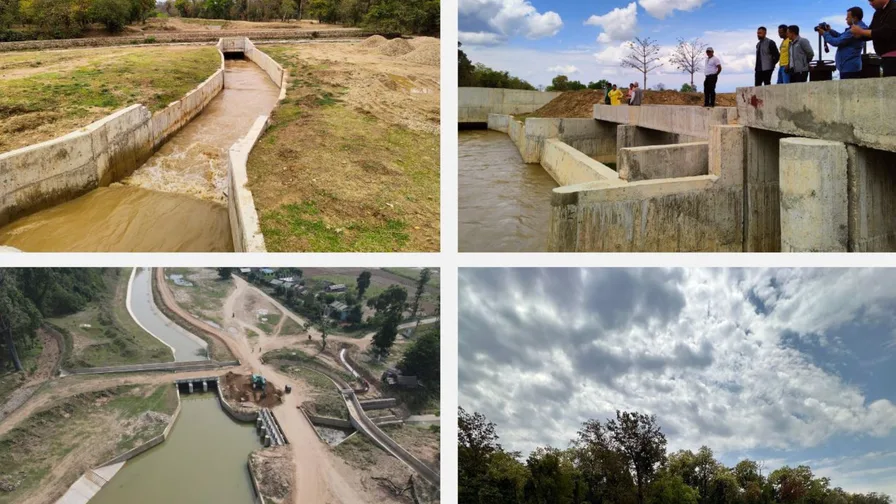
Kathmandu. The government has prepared a new action plan to complete major national pride irrigation projects within fixed timelines, aiming to improve project delivery and expand agricultural irrigation facilities.
The Ministry of Energy, Water Resources and Irrigation has set a target to complete the Babai and Bheri–Babai Irrigation Projects within two years, while the Sunkoshi–Marin, Sikta, and Rani Jamara–Kulariya Irrigation Projects are planned to be completed within five years.
The ministry reviewed the progress, challenges, and implementation status of major irrigation projects and decided to move forward with a deadline-based approach. The Mahakali Irrigation Project has been targeted for completion by fiscal year 2091/92.
The Sunkoshi–Marin Diversion Project, under construction in Sindhuli and Ramechhap districts, has achieved around 34 percent physical progress. The project has an estimated cost of Rs 61.65 billion, with around Rs 17 billion already spent.
The Bheri–Babai Diversion Project in Surkhet has made significant progress, with physical completion reaching more than 66 percent. Out of its estimated cost of Rs 33.2 billion, around Rs 19.3 billion has been spent so far. The government aims to complete the project within the next two years.
The Sikta Irrigation Project in Banke is designed to provide irrigation facilities to around 42,700 hectares of land. Currently, irrigation has been expanded to nearly 25,000 hectares. Technical challenges caused by dispersive soil have affected progress, and the government plans to resolve these issues and complete the project within five years.
The Rani Jamara–Kulariya Irrigation Project in Kailali has achieved around 75 percent physical progress. Although the project aims to provide irrigation to 38,300 hectares, land acquisition issues and difficulties in collecting construction materials remain major challenges.
The Babai Irrigation Project in Bardiya has entered its final stage. The project has already provided irrigation facilities to around 28,800 hectares out of the targeted 36,000 hectares. The ministry aims to complete the remaining work by fiscal year 2085/86.
Progress of the Mahakali Irrigation Project in Kanchanpur remains relatively slow. With only around 31 percent physical progress, the project has been scheduled for completion by fiscal year 2091/92. Land acquisition problems and uncertainty over water availability from India under existing agreements have been identified as major obstacles.
The ministry stated that delays in past projects were mainly caused by increasing project scope, changes in requirements, and slow performance by contractors. Going forward, the government plans to link project scope, budget allocation, and implementation schedules with clear deadlines to ensure timely completion.
Advertisement
Written by
Dipesh Ghimire