Nepali Congress
NC Pledges Strict Action Against Party Cadres Obstructing Hydropower Projects Amid Rising Extortion Concerns
Echoing the collective sentiment of the private sector, IPPAN Secretary Suman Joshi urged political parties to stop viewing energy entrepreneurs through a "political lens." Given the massive capital investment and long-term risks developers undertake, stakeholders emphasized that the state and political actors must genuinely treat them as indispensable partners in the nation's economic development, rather than subjects for political maneuvering
Dipesh Ghimire
2 min read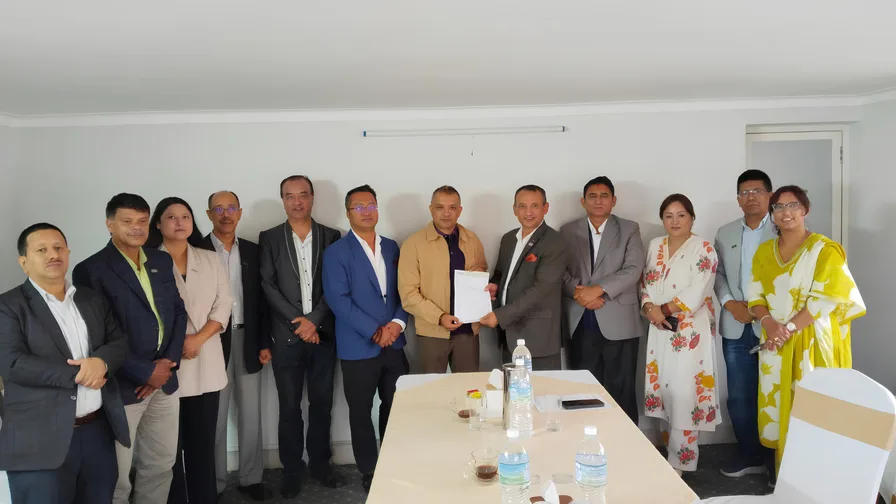
KATHMANDU: In a strong message aimed at curbing local rent-seeking behavior, Nepali Congress (NC) General Secretary Gagan Thapa has pledged to take stringent disciplinary action against party cadres and local representatives found obstructing legally compliant hydropower projects. The commitment comes in response to growing frustrations among energy developers over unwarranted harassment, extortion, and politically motivated disruptions at project sites.
Speaking at an interaction program organized by the Independent Power Producers' Association, Nepal (IPPAN) on Thursday, Thapa assured private sector developers that the party would not tolerate any undue interference by its local units. To address this, he revealed that the Nepali Congress is in the process of establishing a ‘Governance Institute’ designed to train, empower, and regulate locally elected officials. "If any NC-affiliated local government or cadre illegally obstructs private sector operations, developers can directly lodge a complaint through our institutional mechanism," Thapa stated. "If you come to us with proof of illegal obstruction, it becomes our responsibility to take action at the party level."
Thapa’s assurances followed a barrage of grievances from IPPAN officials, who highlighted how political access at the grassroots level is being weaponized to inflate project costs and risks. Uttam Blon Lama, Senior Vice President of IPPAN, pointed out the alarming trend of local politicians inciting communities to demand additional funds even after formal benefit-sharing agreements have been settled. Developers reported facing bizarre and extortionate demands, including the halting of construction materials, blocking of access roads, and repeated demands for "donations" in the name of the local community, which severely vitiates the investment climate.
The dialogue also scrutinized the persistent policy bottlenecks and bureaucratic red tape at the federal level. IPPAN President Mohan Kumar Dangi reminded the political leadership that the private sector has now developed the capacity to build projects up to 440 MW using domestic capital—a foundation laid by the policies of late NC leader and former Water Resources Minister Shailaja Acharya. However, Dangi lamented that despite the government’s annual budget rhetoric prioritizing the energy sector, the ground reality remains grim. He cited convoluted forest and environmental laws, alongside frequent interim orders from courts, as major hurdles that stall projects for years. He urged the Nepali Congress, as the main opposition party, to play a robust watchdog role in dismantling these legal and procedural obstacles.
Beyond man-made disruptions, the energy sector is currently grappling with severe natural disasters. Highlighting the recent devastating floods in the Bhote Koshi and Trishuli river basins that damaged approximately 13 hydropower projects, IPPAN demanded special policy interventions for their swift reconstruction. Acknowledging this plight, Thapa expressed empathy for the developers, noting the tragic irony that while natural disasters garner widespread media and state attention for a few days, the massive financial and operational burden ultimately falls squarely on the solitary developer.
Echoing the collective sentiment of the private sector, IPPAN Secretary Suman Joshi urged political parties to stop viewing energy entrepreneurs through a "political lens." Given the massive capital investment and long-term risks developers undertake, stakeholders emphasized that the state and political actors must genuinely treat them as indispensable partners in the nation's economic development, rather than subjects for political maneuvering
Advertisement
Written by
Dipesh Ghimire