Nepal Rastra Bank
Nepal Rastra Bank's Balance Sheet Swells to Rs 38.75 Trillion: What the Numbers Really Tell Us
However, strength at the central bank level does not automatically translate into prosperity at the household level. Nepal's economic growth remains modest, private sector credit has been sluggish, and unemployment continues to push hundreds of thousands of young Nepalis abroad each year — the very remittances that are fueling these impressive reserve numbers. The central bank's balance sheet is healthy. The broader economy still has considerable ground to cover.
Dipesh Ghimire
6 min read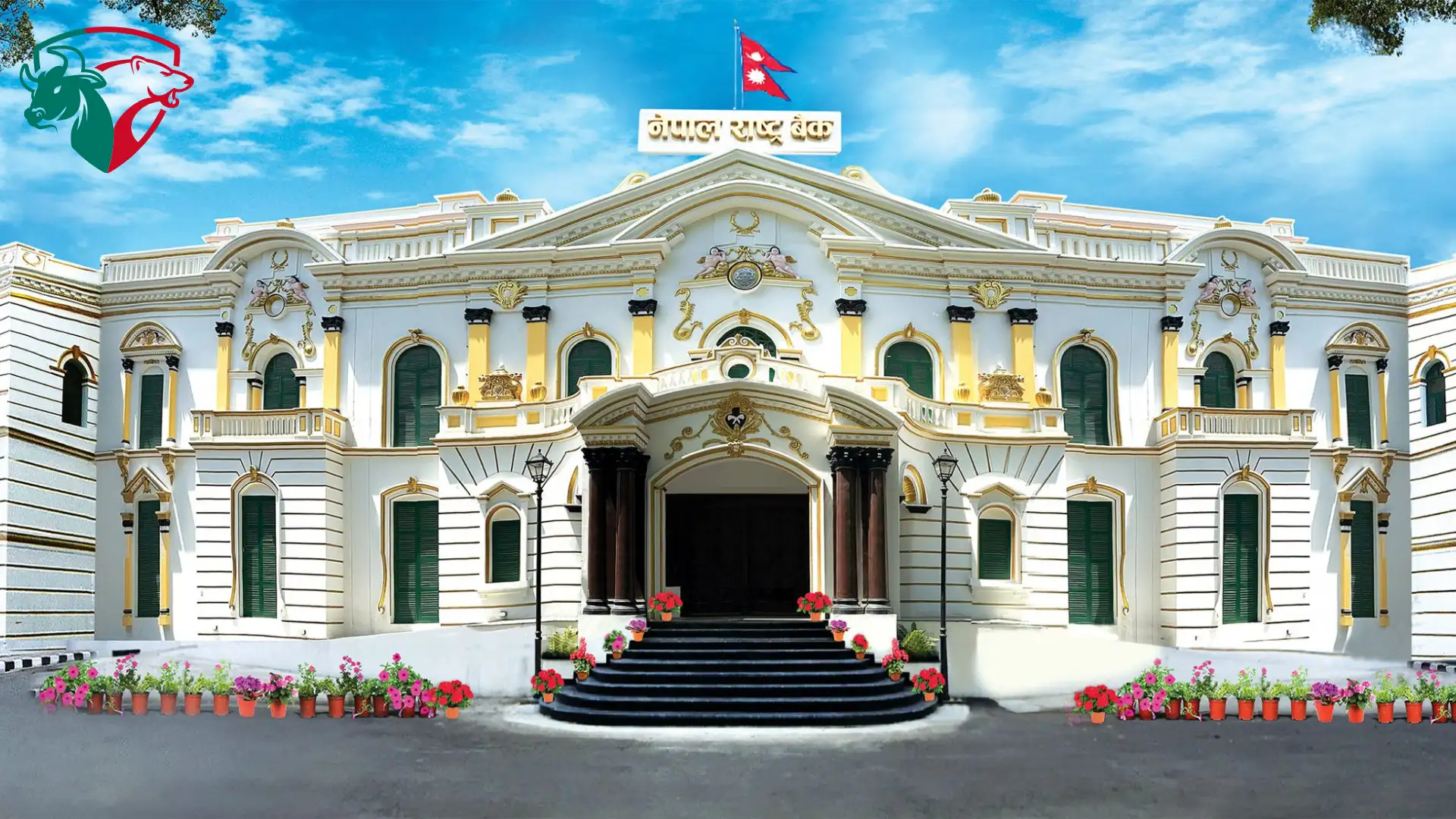
Nepal's central bank ended fiscal year 2082/83 in a position of remarkable financial strength. According to the provisional monthly financial statement released by Nepal Rastra Bank for the period ending Ashadh (mid-July), the institution's total assets and liabilities climbed to Rs 38 trillion 74 billion 99 crore — a figure that would have seemed almost unimaginable just a few years ago.
To put that in perspective, the same figure stood at Rs 26 trillion 71 billion 24 crore at the end of the previous fiscal year. That means the central bank's balance sheet expanded by nearly Rs 12 trillion in just twelve months — a growth rate of roughly 45 percent year-on-year. For a central bank, such expansion in a single year is not routine. It signals something deeper happening in Nepal's external economy.
The Foreign Reserve Story: Nepal's Quiet Strength
The overwhelming share of this expansion — nearly 96 percent of total assets — came from foreign currency holdings. Nepal Rastra Bank's total foreign currency assets reached Rs 37 trillion 30 billion 2 crore by end-Ashadh, up from Rs 25 trillion 67 billion 32 crore a year earlier. That is an increase of over Rs 11.6 trillion in foreign assets alone.
This is not simply an accounting number. Foreign currency assets represent Nepal's buffer against external shocks — the reserve that protects the country when import bills surge, when remittances slow, or when the currency comes under pressure. A larger foreign reserve means Nepal has more room to maneuver in difficult global conditions.
The question worth asking is: where did this surge come from? The answer lies largely in Nepal's persistently strong remittance inflows, a recovering tourism sector, and relatively contained import growth over the past year. When more dollars, euros, and Indian rupees flow into the country than flow out, the central bank accumulates foreign assets — and that is precisely what happened.
Gold and Silver: A Strategic Bet Paying Off
One of the most striking details buried inside the financial statement is the dramatic rise in gold and silver holdings. Nepal Rastra Bank's gold and silver reserves jumped from Rs 55 billion 41 crore last year to Rs 91 billion 67 crore this year — an increase of nearly 65 percent in a single fiscal year.
This is not accidental. Central banks globally have been increasing their gold holdings as a hedge against dollar volatility and geopolitical uncertainty. Nepal Rastra Bank appears to have followed this global trend deliberately. Gold does not earn interest, but it holds value when paper currencies fluctuate — and in a world of rising uncertainty, that insurance has real worth.
Additionally, investment in gold certificates stood at Rs 22 billion 47 crore, suggesting the bank is diversifying even within its gold strategy — holding both physical gold and certificate-based instruments.
How the Bank Is Deploying Foreign Reserves
Not all foreign reserves sit idle. Nepal Rastra Bank actively invests its foreign holdings to generate returns while maintaining liquidity. The provisional statement reveals a layered investment strategy.
The largest portion — Rs 2 trillion 62 billion 32 crore — is placed in foreign securities, typically government bonds of stable economies like the United States, which offer safety and modest returns. Fixed deposits at foreign banks account for another Rs 61 billion 58 crore, providing short-term liquidity. Meanwhile, cash and balances held directly at foreign banks stood at Rs 25 billion 35 crore, ensuring the central bank can meet immediate foreign currency demands without delay.
This tiered approach — securities for returns, fixed deposits for medium-term liquidity, and cash for immediate needs — reflects a professionally managed reserve portfolio that balances safety, liquidity, and yield.
The Domestic Side: Measured and Modest
While the foreign currency picture dominates the headlines, the domestic asset side of Nepal Rastra Bank's balance sheet tells a quieter but equally important story. Total domestic currency assets reached Rs 1 trillion 44 billion 96 crore — a fraction of the foreign currency holdings, but significant in its own right.
Within this, investment in government securities stood at Rs 11 billion 32 crore. This reflects the central bank's role in the domestic bond market — buying and selling government paper to manage liquidity in the banking system. Bonds and fixed deposits added another Rs 13 billion 94 crore, and other loan-related investments contributed Rs 11 billion 41 crore.
These domestic investments also serve a monetary policy purpose. By adjusting how much it holds in government securities and how much it lends to commercial banks, Nepal Rastra Bank controls the amount of money circulating in the economy — a core tool for managing inflation and credit growth.
Currency in Circulation: Gradual and Controlled
On the liabilities side, Nepali currency in circulation rose to Rs 80 billion 16 crore from Rs 75 billion 11 crore the previous year. This is a modest increase of roughly 6.7 percent — broadly in line with economic activity and not a signal of excessive money printing.
A central bank's currency in circulation is a liability because the bank effectively owes the holder of every banknote the value printed on it. Keeping this growth moderate is important for price stability. The fact that currency in circulation grew by only 6.7 percent even as the bank's total balance sheet expanded by 45 percent suggests that the bulk of the growth came from external factors — rising foreign reserves — rather than domestic money creation.
Reserve Fund Crosses Rs 1 Trillion: A Historic Milestone
Perhaps the most symbolically significant number in the entire statement is the reserve fund figure. Nepal Rastra Bank's internal reserves — its accumulated retained earnings and capital buffers — crossed Rs 1 trillion for the first time, reaching Rs 1 trillion 8 billion 57 crore.
Just a year ago, this figure stood at Rs 67 billion 10 crore. A jump of more than Rs 41 billion in a single year points to strong profitability at the central bank — driven largely by income on its foreign investments. When the central bank earns more on its reserves than it spends on operations, those profits flow into the reserve fund.
A well-capitalized central bank is not just an accounting achievement. It is a signal of institutional strength. A central bank with deep reserves can absorb losses — from currency interventions, bad loans to financial institutions, or unexpected shocks — without requiring a government bailout. For Nepal, crossing the Rs 1 trillion reserve mark is a quiet but meaningful milestone.
The Broader Picture: What This Means for Nepal
Taken together, these numbers paint a picture of a central bank that has grown substantially stronger over the past year — and by extension, a country whose external financial position has improved considerably.
Nepal's foreign exchange reserves, which these figures reflect, now comfortably cover more than several months of merchandise imports — a standard measure of reserve adequacy. This gives the central bank flexibility to defend the Nepali rupee if needed, to absorb import shocks, and to maintain confidence among international creditors and investors.
However, strength at the central bank level does not automatically translate into prosperity at the household level. Nepal's economic growth remains modest, private sector credit has been sluggish, and unemployment continues to push hundreds of thousands of young Nepalis abroad each year — the very remittances that are fueling these impressive reserve numbers.
The central bank's balance sheet is healthy. The broader economy still has considerable ground to cover.
Advertisement
Written by
Dipesh Ghimire