Margin Lending and Short Selli
Nepal's Securities Regulator Charts New Course With Landmark Policy Document on Margin Lending and Short Selling
Taken in full, SEBON's concept paper represents something more than a regulatory update. It reflects a recognition that Nepal's capital market, after three decades of incremental progress, needs a qualitative leap to play the role it should in the country's economy. A market that only allows investors to buy and hold is a market that works well in bull conditions and poorly in bear ones. A market with short selling, lending mechanisms, and eventually derivatives is a market that can function across a full economic cycle — one where price discovery is more accurate, where risk can be transferred and hedged, and where institutional capital has reasons to participate actively rather than sitting on the sidelines. Whether Nepal's market gets there smoothly will depend on how well the consultation process works, how strong the final regulations turn out to be, and whether the institutions responsible for enforcement have the capacity and the will to do their jobs. The concept paper is a promising start. The harder work lies ahead.
Dipesh Ghimire
8 min read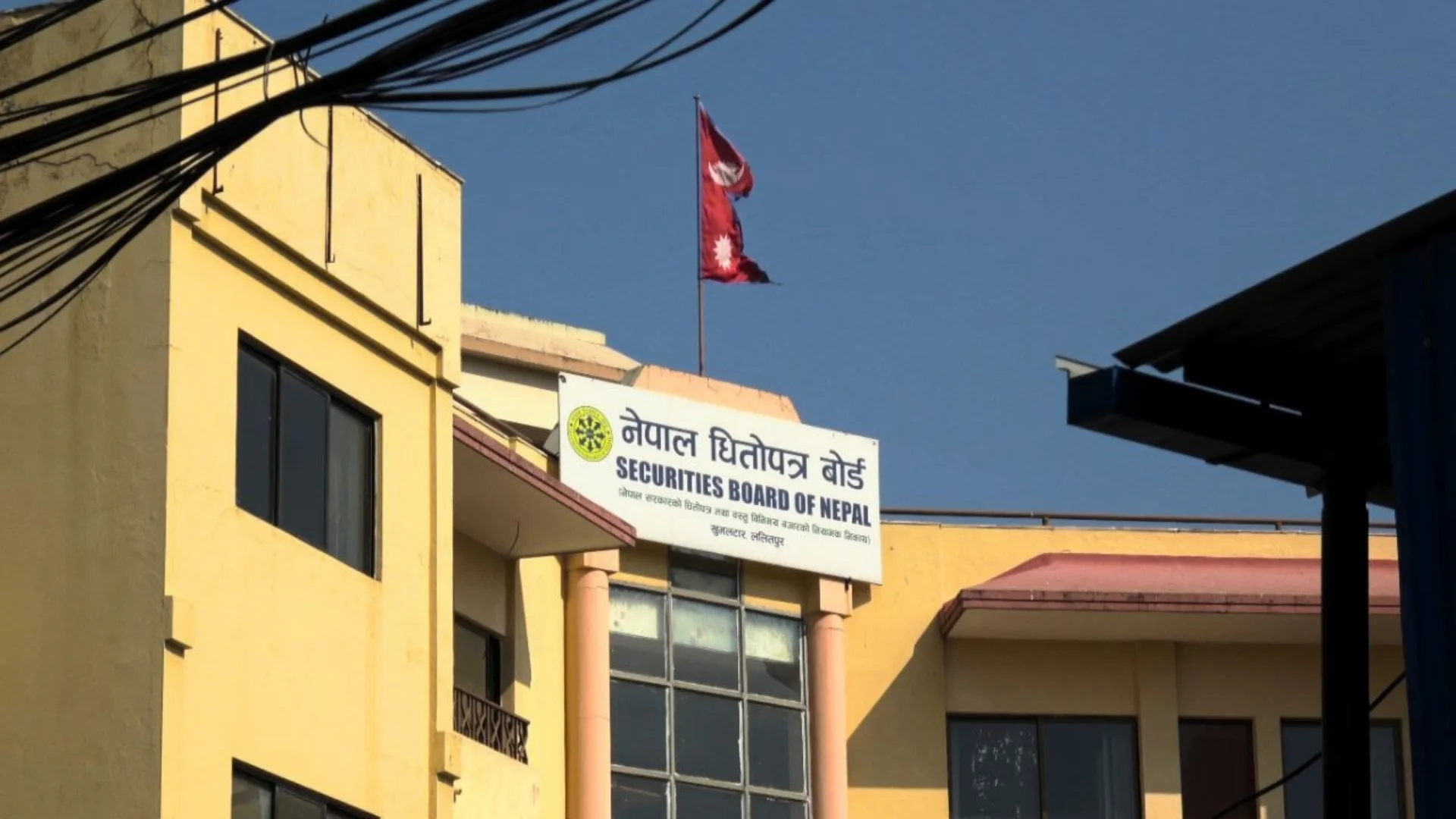
Nepal's capital market regulator has taken what many analysts are likely to view as the most consequential policy step in the country's securities market history. The Securities Board of Nepal, widely known as SEBON, has released a detailed concept paper outlining the foundational framework needed to introduce margin lending, securities lending and borrowing, and covered short selling into the Nepali market for the first time.
The document, formally titled the "Concept Paper on Policy, Legal, Structural and Technical Arrangements for Margin Lending, Securities Lending and Borrowing, and Covered Short Selling in Nepal's Securities Market — 2083," was made public to gather feedback from stakeholders and assess whether the market is ready for these instruments.
Why Now — And What Changed
The timing of this release is not accidental. The government had already signaled its intentions through the budget for fiscal year 2083/84, announcing plans to introduce modern financial instruments including intraday trading, short selling, and derivatives in a phased manner. SEBON's concept paper is the regulatory machinery beginning to move in response to that political commitment.
This matters because budget announcements in Nepal have a long history of remaining on paper. The fact that SEBON followed through with a detailed, four-chapter concept paper within the same fiscal year suggests a level of institutional seriousness that goes beyond routine policy rhetoric. It also means the clock is now ticking — stakeholders, brokers, banks, and investors will be expected to engage with the document and help shape the rules that follow.
What These Three Instruments Actually Mean
To understand why this document is significant, it is worth stepping back and explaining what these three instruments are — and why their absence has long been considered a structural weakness of Nepal's capital market.
Margin lending allows qualified investors to borrow money against their existing securities holdings to make larger trades than their own capital would otherwise permit. In practice, an investor with shares worth Rs 5 lakh could use those shares as collateral to borrow additional funds and take a larger position in the market. This increases purchasing power and, in theory, market activity. The risk, of course, is that losses are magnified just as much as gains — a point that SEBON's document acknowledges by emphasizing the need for robust risk management.
Securities lending and borrowing is a mechanism through which investors who hold shares for the long term can temporarily lend those shares to other market participants in exchange for a fee. The borrower typically uses the shares for short selling or other strategies, while the lender earns additional income on holdings that would otherwise sit idle. The broader benefit to the market is increased liquidity — more shares circulating, more transactions happening, tighter spreads between buying and selling prices.
Covered short selling is perhaps the most conceptually unfamiliar of the three for most Nepali investors. It allows a trader who believes a stock's price will fall to borrow shares, sell them at the current higher price, and then buy them back later at a lower price — returning them to the lender and pocketing the difference. The "covered" aspect is critical: the trader must have already borrowed the shares before selling them, which distinguishes it from the riskier and often prohibited practice of naked short selling. SEBON's paper proposes introducing only the covered variety, which is internationally considered the more controlled and transparent form.
The Gap Between Where Nepal Is and Where It Wants to Be
SEBON Chairperson Dr. Gopal Prasad Bhatt, writing in the foreword of the concept paper, offered a candid assessment of Nepal's capital market. He acknowledged that while the past three decades have brought meaningful progress — dematerialization of shares, electronic trading systems, expansion of the investor base, and improved market infrastructure — the market still falls short in several critical dimensions.
Depth is one such dimension. A deep market is one where large transactions can be absorbed without dramatically moving prices. Nepal's market remains shallow by this measure, meaning that even moderately sized trades can cause disproportionate price swings. Liquidity is another gap — the ease with which shares can be bought and sold quickly at fair prices. And institutional investor participation remains limited, with the market dominated by retail investors who tend to move in herds, amplifying volatility in both directions.
Dr. Bhatt also pointed to a structural imbalance that goes beyond the stock market itself. Nepal's financial system, he noted, remains heavily bank-centric. Businesses and government projects rely overwhelmingly on bank credit for financing, rather than raising long-term capital through equity or bond markets. This creates both vulnerability — the entire economy's credit risk is concentrated in the banking system — and opportunity, since a stronger capital market could redirect some of that financing demand and reduce the pressure on banks.
Learning From Others: The International Comparison
One of the most substantive sections of SEBON's concept paper examines how comparable markets have implemented these instruments. The document draws on the experiences of the United States, India, Singapore, Hong Kong, and Australia — a deliberate choice of markets at different stages of development.
India's experience is perhaps the most directly relevant for Nepal, given the similarities in regulatory culture, investor behavior, and the structure of the broader economy. When India introduced securities lending and borrowing through its SLB mechanism and later expanded short selling permissions, it saw meaningful improvements in market depth and institutional engagement. The National Stock Exchange of India became one of the world's busiest derivatives exchanges in the years that followed, partly because the introduction of these instruments attracted a different class of market participant — one focused on hedging and risk management rather than purely speculative gain.
Singapore and Hong Kong offer examples of how small, open economies can punch above their weight in financial markets by maintaining clear rules, strong enforcement, and a predictable legal environment. These are lessons Nepal will need to absorb carefully, because the technical instruments alone are not sufficient — the institutional and legal scaffolding around them matters just as much.
A Four-Chapter Blueprint
The concept paper is structured across four chapters, each addressing a distinct layer of the reform agenda.
The first chapter examines Nepal's current capital market structure — its strengths, its gaps, and the reforms needed to move forward. This section effectively makes the case for change by documenting what is missing rather than simply celebrating what exists.
The second chapter is the international benchmarking exercise, drawing on the experiences of developed and emerging markets to identify practices worth adapting for Nepal's context.
The third chapter assesses the regulatory impact of introducing these instruments — what new rules will be needed, which existing regulations will need to be amended, and what risks the regulator will need to monitor once these services go live.
The fourth chapter is the most practically oriented: it proposes specific models for how margin lending, securities lending and borrowing, and covered short selling should be structured in Nepal, tailored to the country's existing market infrastructure and investor base.
Who Does What: Roles Across the Ecosystem
One of the more detailed aspects of the concept paper is its effort to define the roles of each institution in this new ecosystem. SEBON itself will serve as the overarching regulator. Nepal Stock Exchange, known as NEPSE, will provide the trading platform. CDS and Clearing Limited will handle settlement and custody functions that are central to making securities lending work safely. Licensed brokers and dealers will be the front-line providers of margin lending and execution services. Banks and financial institutions are envisioned as key sources of funding for margin lending operations.
The paper also flags what needs to happen before any of this can go live. Legal amendments will be required to explicitly authorize these activities. Technology systems at NEPSE, CDS, and broker firms will need upgrades to handle the additional complexity. Human resources will need training. And perhaps most importantly, investors will need education — because putting leveraged instruments in the hands of investors who do not understand the downside risks is a recipe for the kind of market crisis that sets reform agendas back by years.
The Consultation Process and What Comes Next
SEBON has opened the concept paper for public comment, inviting submissions from investors, brokers, banks, academics, and any other interested party. Feedback can be sent to [email protected].
Once that consultation process concludes and the responses are analyzed, SEBON plans to draft three separate sets of regulations: a Margin Lending Regulation, a Securities Lending and Borrowing Regulation, and a Covered Short Selling Regulation. These will then be published for further review before being finalized.
This phased approach — concept paper first, regulations second, implementation third — is the right sequence. It allows the regulator to surface problems and concerns before rules are locked in, rather than discovering them after the market has already started operating under a flawed framework.
The Risks Worth Watching
No serious analysis of this development would be complete without acknowledging the risks. Margin lending, in particular, has a well-documented history of amplifying market downturns. When prices fall, margin calls force investors to sell — which pushes prices down further, triggering more margin calls. This feedback loop contributed to the severity of market crashes from Wall Street in 1929 to various Asian markets in the late 1990s.
Nepal's retail-dominated investor base, combined with a regulatory and judicial system that is still building its capacity to handle complex financial disputes, makes careful sequencing essential. The concept paper's emphasis on "phased implementation" is reassuring in this regard — but the devil will be in the details of how quickly these phases move and how strictly the risk management requirements are enforced in practice.
Short selling, meanwhile, tends to generate controversy whenever markets decline, with politicians and commentators often blaming short sellers for falling prices rather than recognizing their role in correcting overvaluations. SEBON and the government will need to be prepared to defend the instrument publicly if — and when — it faces criticism during a market downturn.
The Larger Significance
Taken in full, SEBON's concept paper represents something more than a regulatory update. It reflects a recognition that Nepal's capital market, after three decades of incremental progress, needs a qualitative leap to play the role it should in the country's economy.
A market that only allows investors to buy and hold is a market that works well in bull conditions and poorly in bear ones. A market with short selling, lending mechanisms, and eventually derivatives is a market that can function across a full economic cycle — one where price discovery is more accurate, where risk can be transferred and hedged, and where institutional capital has reasons to participate actively rather than sitting on the sidelines.
Whether Nepal's market gets there smoothly will depend on how well the consultation process works, how strong the final regulations turn out to be, and whether the institutions responsible for enforcement have the capacity and the will to do their jobs. The concept paper is a promising start. The harder work lies ahead.
Advertisement
Written by
Dipesh Ghimire