Khimti-Ghwang Hydropower
NMB Bank to Finance Rs 1.24 Billion for 9 MW Khimti-Ghwang Hydropower Project
The project’s progress will now depend on timely disbursement of the bank loan, effective contractor performance, completion of environmental obligations and control of construction costs. With 30 per cent of the work reportedly completed and the major financing agreement signed, the project appears to have addressed several early-stage risks, though completing the remaining work within the announced deadline will require close financial and technical management.
Dipesh Ghimire
3 min read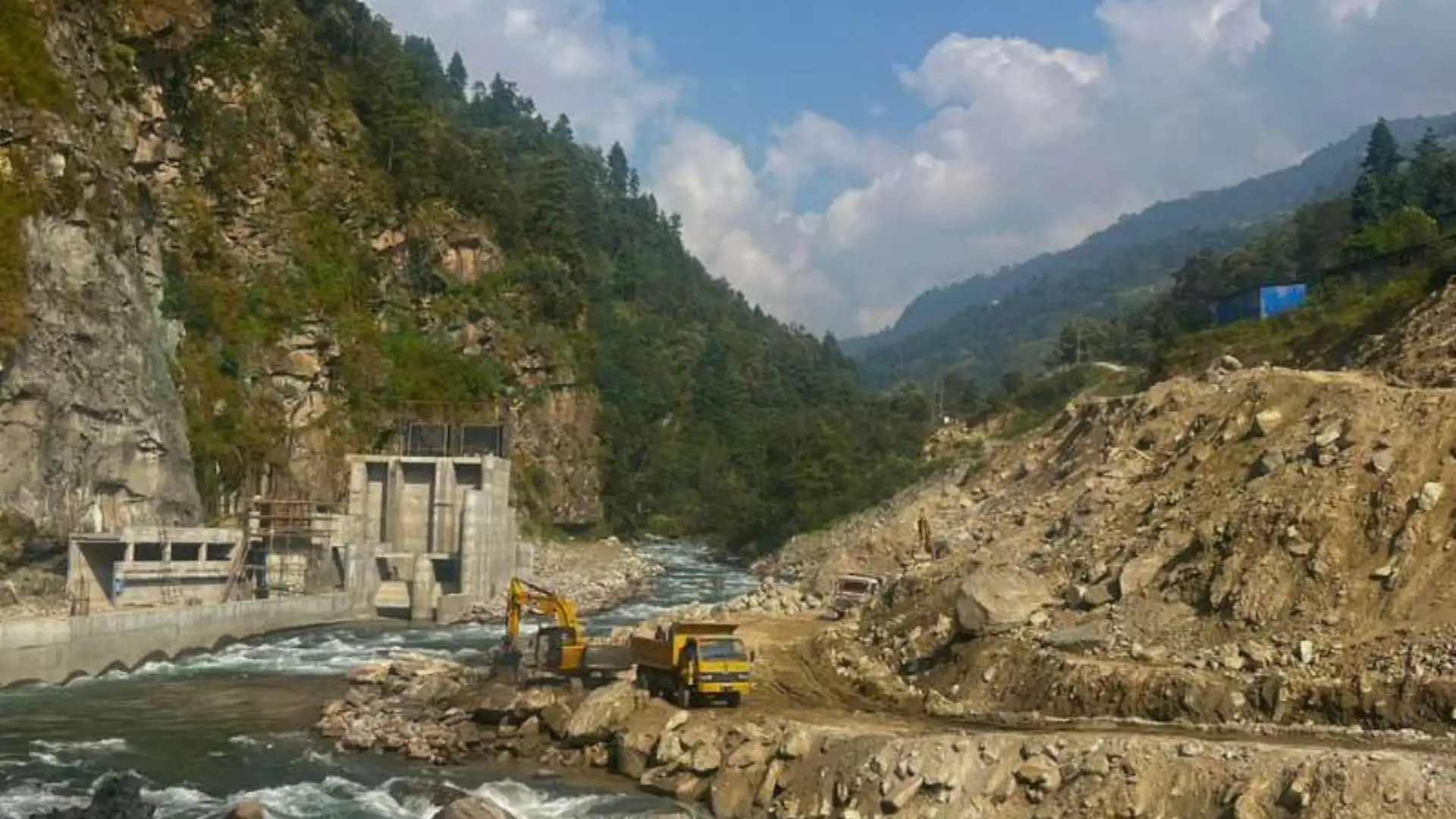
Kathmandu — NMB Bank has agreed to provide a loan of Rs 1.24 billion for the construction of the 9-megawatt Khimti-Ghwang Small Hydropower Project, which is being developed along the border of Dolakha and Ramechhap districts.
The financing agreement was signed between NMB Bank and Wonders Engineering Pvt Ltd, the project’s developer. Dinesh Dulal, head of the bank’s banking department, signed the agreement on behalf of NMB Bank, while Managing Director Prakash Chandra Dulal represented the company.
The project is being constructed on the Khimti-Ghwang River, which flows through Ward 1 of Jiri Municipality in Dolakha and Ward 1 of Gokulganga Rural Municipality in Ramechhap. The developer has set a target of completing the project by Chaitra 2084 BS.
The project is estimated to require a total investment of approximately Rs 1.80 billion. The Rs 1.24 billion loan from NMB Bank represents nearly 69 per cent of the estimated project cost. The remaining 31 per cent, equivalent to around Rs 560 million, is expected to be arranged through investment from the promoters and other equity sources.
Based on the estimated cost and installed capacity, the project will require an investment of about Rs 200 million for each megawatt of electricity-generation capacity. The cost reflects the substantial expenditure involved in civil construction, hydromechanical equipment, electromechanical systems, transmission arrangements, access infrastructure and environmental management.
The agreement with NMB Bank is expected to strengthen the project’s financial position and allow the developer to accelerate major construction activities. Securing bank financing is an important milestone for hydropower projects, as delays in financial closure frequently affect procurement, contractor mobilisation and the overall construction schedule.
According to the company, around 30 per cent of the project’s physical construction has already been completed. The acquisition of privately owned land, installation of electricity required during construction, development of access roads and construction of warehouses and residential facilities have also been completed.
Contract agreements for civil, hydromechanical and electromechanical works have already been finalised. Completion of these preliminary arrangements suggests that the project has moved beyond the initial preparation stage and entered a more intensive phase of physical construction.
The project has also received approval to use the required government land and cut trees from areas affected by construction. The permission was granted through a decision of the Council of Ministers at a meeting held on Baisakh 15. Such approval is important because delays in forest clearance and the use of government land have historically slowed down infrastructure projects in Nepal.
The company said it had already raised Rs 350 million from its financing sources and was preparing to collect an additional Rs 300 million by the end of Asoj. However, these two figures amount to Rs 650 million, which is Rs 90 million more than the stated remaining financing requirement of Rs 560 million.
The difference may represent additional working capital, contingency funding or a revision in the project’s financing structure. However, the company would need to clarify whether the additional amount is part of the original equity requirement or is intended to cover possible cost increases and other project expenses.
As the project is located within the Gaurishankar Conservation Area, its construction will be subject to comparatively strict environmental and social requirements. The developer said the project was being implemented with measures aimed at reducing environmental damage, involving local communities and following sustainable-development principles.
Construction inside a protected area may require careful management of river flow, forest resources, spoil disposal, aquatic habitats and local livelihoods. Effective implementation of these measures will be important not only for regulatory compliance but also for maintaining community support during construction and operation.
The company has claimed that the project will be the first hydropower development in Nepal to follow certain international standards, including a system referred to as “Hydro Select Tools Flow.” Since the precise technical meaning and certification status of this standard have not been clearly explained, the claim remains subject to independent verification.
Once completed, the 9 MW project will add a modest but useful volume of electricity to Nepal’s national power system. Although its capacity is small compared with large storage and run-of-river projects, small hydropower schemes can support local infrastructure development, generate employment and contribute to decentralised economic activity.
The project’s progress will now depend on timely disbursement of the bank loan, effective contractor performance, completion of environmental obligations and control of construction costs. With 30 per cent of the work reportedly completed and the major financing agreement signed, the project appears to have addressed several early-stage risks, though completing the remaining work within the announced deadline will require close financial and technical management.
Advertisement
Written by
Dipesh Ghimire