Rs 2 Coins
NRB Calls for Global Bids to Mint 300 Million Units of Rs 2 Coins
Furthermore, the NRB has integrated strict corporate governance clauses to prevent malpractice. The central bank explicitly warned that any blacklisted institutions, firms, or their respective directors and investors are permanently barred from the process, and they cannot bypass this restriction by establishing new corporate entities. The NRB retains the ultimate legal right to accept or reject any proposals, either partially or entirely, without disclosing explicit reasons.
Dipesh Ghimire
2 min read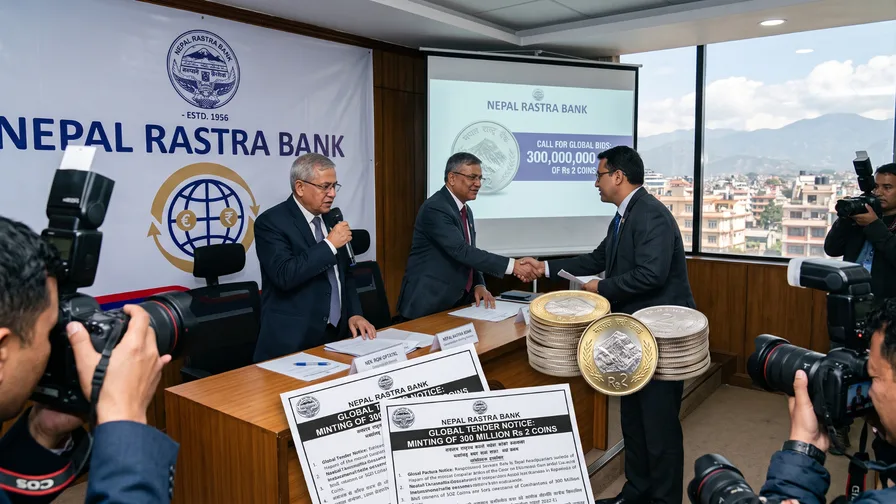
In a major move to manage the country's currency circulation and ensure a steady supply of lower-denomination currency, the Nepal Rastra Bank (NRB) has issued an international competitive tender for the mass production of two-rupee coins. The central bank aims to procure a staggering 300 million pieces of the Rs 2 denomination, tapping into the expertise of global security minting companies.
The total face value of the targeted coin production stands at Rs 600 million. According to a notice published by the NRB’s Currency Management Department on Monday, the comprehensive contract will not be limited to just manufacturing. The successful international bidder will be entirely responsible for a turnkey delivery—encompassing the intricate design of the coins, the physical minting process, and the highly secure supply and logistical transport of the final consignment to Nepal.
To maintain stringent quality and security standards, the central bank has made it clear that this is a restricted bidding process. Only pre-qualified international security minters—whose names were previously shortlisted and published in 'The Rising Nepal' daily on Chaitra 28—are eligible to compete. The NRB is employing a single-stage, two-envelope bidding mechanism for this procurement. Under this system, participating firms must seal their technical capabilities and financial price tags in two separate envelopes, which are then submitted together inside a single master envelope to ensure maximum transparency.
The timeline and financial prerequisites for the bidding process have been strictly outlined. Eligible foreign firms or their authorized local agents can purchase the tender documents from the Currency Management Department in Thapathali or the Mint Division in Babar Mahal until Kartik 17. The non-refundable fee for the document has been set at Rs 20,000 for domestic agents, or USD 131 (EUR 115) for international applicants. The absolute deadline for submitting the proposals, either in person or via courier, is noon on Kartik 18. Following standard procurement protocols, the central bank will open the bids just an hour later at 1:00 PM in the presence of the bidders' official representatives.
Given the large scale of the contract, the central bank has mandated robust financial guarantees. Bidders are required to submit a minimum bid security of USD 132,000. While the bids themselves carry a validity period of 120 days from the date of opening, the financial guarantee must remain active for an additional 30 days, extending its validity up to Chaitra 20, 2083.
Furthermore, the NRB has integrated strict corporate governance clauses to prevent malpractice. The central bank explicitly warned that any blacklisted institutions, firms, or their respective directors and investors are permanently barred from the process, and they cannot bypass this restriction by establishing new corporate entities. The NRB retains the ultimate legal right to accept or reject any proposals, either partially or entirely, without disclosing explicit reasons.
Advertisement
Written by
Dipesh Ghimire