NEPSEtrading

Make smarter moves backed by machine learning. Join thousands of traders leveraging AI to maximize profits.

nepsetrading.com is an online news portal that provides insights into trading and investment by analyzing the stock market and the global economy. We create charts based on the analysis of various indicators. Please do not rely solely on this information for investment decisions. Self-study is crucial. Use this information only as an educational and informational resource.

Marketminds Investment Group Private Limited

DOIB Registration certificate no. :

4680-2081/2082

Chairman: Bishal Bikram Bimali

Director and Editor-in-chief:

Dipesh Ghimire

(

9802363868,

9851119988

)

Koteshwor 32 , Kathmandu

01-5253221

+977 9709066745

Contact support

Subscribe to our newsletter

Weekly insights from the NEPSE market in your inbox.

Market

StocksSectors

Company

About UsOur TeamTerms of UseOur PolicyTrainingContact Us

Help

SupportReportFAQ

© 2026 nepsetrading.com. All rights reserved.
This website is owned and operated by Marketminds Investment Group Private Limited.

Charts are powered byTrading View

NEPSEtrading

  • Home
  • Market
  • NEPSE Overview
  • Charts
  • News
  • Blogs
  • Training
  • Pricing
  1. Blogs
  2. Deposit
  3. Rs 8 Trillion in the Vault, Few Takers at the Counter: Deposit Milestone Masks a Credit Dr...
Deposit

Rs 8 Trillion in the Vault, Few Takers at the Counter: Deposit Milestone Masks a Credit Drought

Until that turn comes, the pattern looks set to persist: deposits climbing, loans crawling, and the central bank vacuuming up the difference. Rs 8 trillion is a number that flatters the system. Money waiting, after all, is not money working.

DGDipesh Ghimire
Published on June 5, 20263 min read
Rs 8 Trillion in the Vault, Few Takers at the Counter: Deposit Milestone Masks a Credit Drought

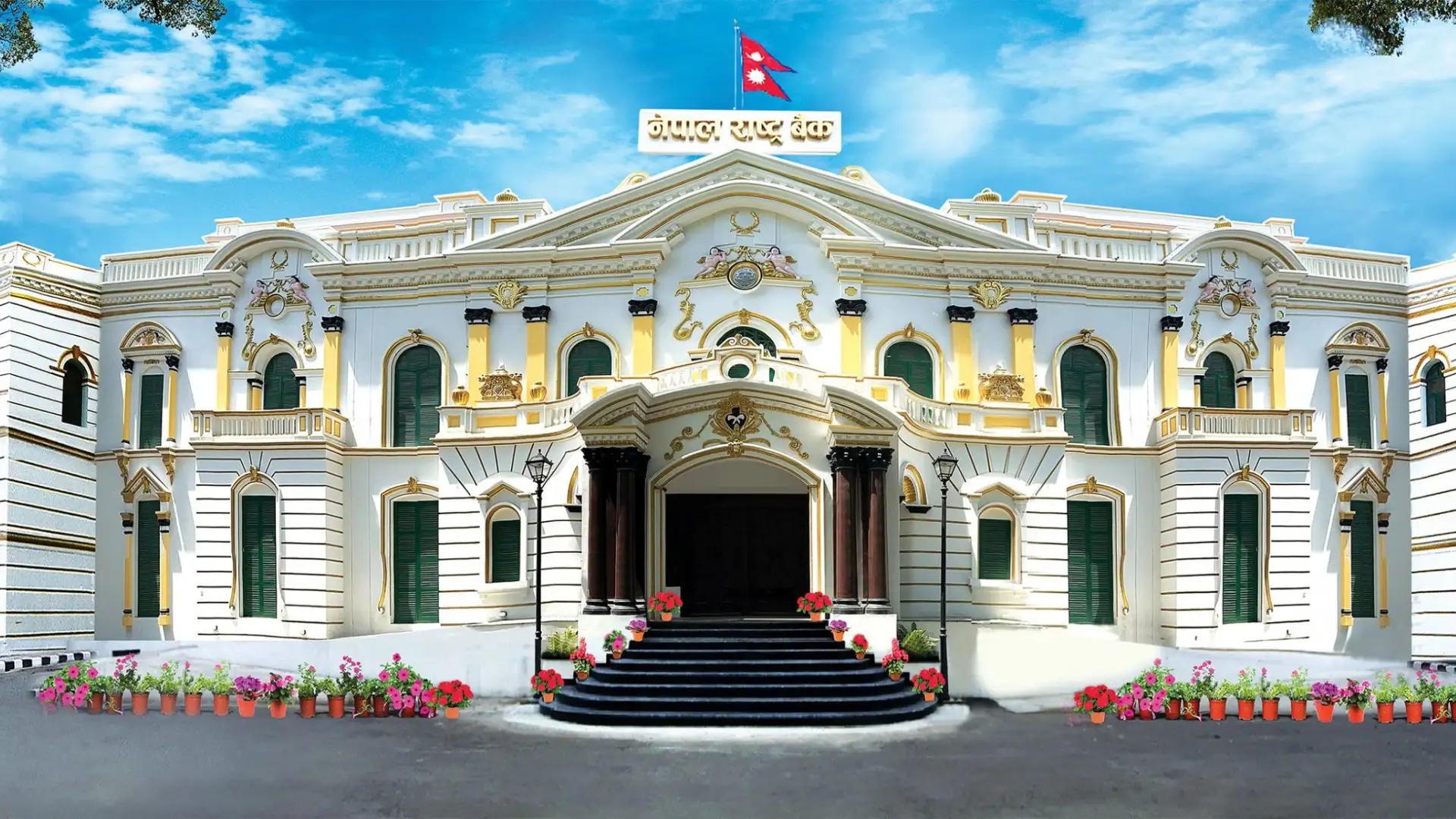
Total deposits in Nepal's banking system have crossed the Rs 8 trillion mark — Rs 8,014 billion as of Jestha 14, according to the latest Nepal Rastra Bank data. It is a milestone that tells two stories at once: never has the system held so much money, and rarely has it struggled this hard to find borrowers for it.

The engine behind the pile-up is remittance. In the first nine months of the current fiscal year 2082/83, Nepal received Rs 1,659 billion from workers abroad — a striking 39 percent jump over the same period last year. With alternative investment avenues limited, that money has flowed straight into bank accounts, swelling deposits even though the average deposit rate has sunk to a meager 3.40 percent. When savers accept near-nothing returns and still keep depositing, it says less about the attractiveness of banks than about the absence of anywhere else for the money to go.

The lending side tells the opposite story. Banks have extended Rs 5,898 billion in credit, leaving the credit-to-deposit (CD) ratio at just 72.93 percent. The average lending rate has slid to 6.77 percent — among the lowest in years — yet private sector demand for loans has barely stirred. Cheap money, it turns out, cannot manufacture borrowers.

The headroom this leaves is enormous. Banking sector insiders put the funds currently available for lending at over Rs 1,300 billion — a figure that checks out against the arithmetic: with the CD ratio at 72.93 percent against the regulatory ceiling of 90 percent, roughly 17 percentage points of lending capacity sits unused. That is a war chest large enough to finance a small construction boom, lying effectively idle because industry, trade, construction and other productive sectors are not asking for it.

Unable to lend, banks are parking the surplus with the central bank. More than Rs 1,000 billion now sits at Nepal Rastra Bank, absorbed through its deposit collection instruments and the standing deposit facility (SDF) at interest rates of 2.68 to 3 percent. The central bank's mechanism works both ways — mopping up money when the system is flush and injecting it back when liquidity tightens — and for now it is working overtime in only one direction.

Look closely at those numbers and the squeeze on banks becomes visible. They are paying depositors an average of 3.40 percent while earning no more than 3 percent on funds parked at the central bank — a negative carry on every idle rupee. That structural loss-maker explains why lending rates keep being cut: with the spread between deposit and lending rates compressed to a thin 3.37 percentage points, banks are not being generous, they are being desperate. The longer the credit drought lasts, the harder their profitability gets hit — a pressure point the central bank's own recent analysis of the financial sector has flagged, noting precisely this combination of abundant liquidity and weak loan demand.

The deeper paradox is what the remittance surge is — and is not — doing. Record inflows are lifting household incomes, propping up foreign exchange reserves and filling bank vaults, but they are arriving as savings, not as investment. An economy that earns abroad and parks at home will keep generating deposit milestones without generating the factories, projects and jobs that would borrow against them. And history offers a caution: when returns on deposits stay this low for this long, idle money tends to seek out shares and real estate rather than productive enterprise.

For policymakers, the message in the data is uncomfortable but clear. Interest rates have done about all they can; the binding constraint is no longer the price of money but the confidence to use it. Economists say credit expansion will struggle to accelerate until private investment appetite returns, business confidence recovers, the construction sector revives and overall economic activity picks up — which shifts the burden squarely onto fiscal execution and structural reform rather than further monetary easing.

Until that turn comes, the pattern looks set to persist: deposits climbing, loans crawling, and the central bank vacuuming up the difference. Rs 8 trillion is a number that flatters the system. Money waiting, after all, is not money working.

DG

Written by

Dipesh Ghimire

Rs 8 Trillion in the Vault, Few Takers at the Counter: Deposit Milestone Masks a Credit Drought

Related News

View all
  • Plan Now, Deliver on Time: Energy Minister Puts NEA on the Clock for Budget Implementation
    Energy

    Plan Now, Deliver on Time: Energy Minister Puts NEA on the Clock for Budget Implementation

    5 Jun, 2026

  • Built by the Storm: Why the Hardest Seasons Produce the Strongest Lives
    Top

    Built by the Storm: Why the Hardest Seasons Produce the Strongest Lives

    4 Jun, 2026

  • Rewarded While in Breach: Budget Hands Nepal Re a Captive Market as Its Governance Crumbles
    Nepal Reinsurance Company

    Rewarded While in Breach: Budget Hands Nepal Re a Captive Market as Its Governance Crumbles

    4 Jun, 2026

Related News

Plan Now, Deliver on Time: Energy Minister Puts NEA on the Clock for Budget Implementation
Energy

3 min read

Plan Now, Deliver on Time: Energy Minister Puts NEA on the Clock for Budget Implementation

The meeting closed with a timeline. The deputy executive directors informed the minister that a detailed action plan is being prepared for submission to the NEA board by Asar 15 — that is, before the new fiscal year even begins. The sequencing matters: Nepal's chronic implementation failure is the year-end spending rush, in which plans are finalized late and budgets are burned in the final quarter. Front-loading the plan so that execution can start from day one of the fiscal year is the textbook remedy. Whether it works will depend on what no action plan can fully anticipate — procurement delays, land acquisition disputes and the everyday friction of building infrastructure in Nepal. The directives are now on record; from Shrawan onward, the only measure that counts is delivery.

Dipesh Ghimire

·

5 Jun, 2026

Built by the Storm: Why the Hardest Seasons Produce the Strongest Lives
Top

2 min read

Built by the Storm: Why the Hardest Seasons Produce the Strongest Lives

So when circumstances press down with all their weight, do not surrender to them. Hold your patience. Stay committed to your goal. Keep trying — not occasionally, but relentlessly, especially on the days when effort feels pointless. Because the person who can barely, painfully, stubbornly make it through the worst of times is precisely the person who carries within them the capacity to build the brightest, most successful and most honorable of futures.

Dipesh Ghimire

·

4 Jun, 2026

Rewarded While in Breach: Budget Hands Nepal Re a Captive Market as Its Governance Crumbles
Nepal Reinsurance Company

3 min read

Rewarded While in Breach: Budget Hands Nepal Re a Captive Market as Its Governance Crumbles

What stands out most is the sequencing. The budget rewarded first and demanded nothing in return. The 20 percent mandate and the pool leadership could easily have been conditioned on the company restoring compliance — publishing its overdue financials, convening its long-delayed AGM, filling its empty board seats. Until that happens, the special protection extended to Nepal Re will look less like industrial policy and more like what it currently is: a guaranteed income stream awarded to a company that answers to no one.

Dipesh Ghimire

·

4 Jun, 2026

A Caution Could Now Cost the Corner Office: Supreme Court Ruling Rattles Nepal's Banks
Nepal's Supreme Court

4 min read

A Caution Could Now Cost the Corner Office: Supreme Court Ruling Rattles Nepal's Banks

The longer-term stakes cut in two directions. If every caution now carries career-ending force, the central bank may grow hesitant to use its lighter supervisory tools at all — a chilling effect that could push enforcement either toward informal pressure or toward nothing. Alternatively, the ruling could harden governance discipline overnight, since a board seat or a CEO's office now carries genuine regulatory jeopardy. Either way, the cost of crossing the regulator has just risen sharply — and the next move belongs, by court order, to the central bank itself.

Dipesh Ghimire

·

4 Jun, 2026

Excise Out, New Fee In: Nepal's EV Tax Overhaul Hits the Middle-Class Buyer Hardest
Nepal's EV Tax

4 min read

Excise Out, New Fee In: Nepal's EV Tax Overhaul Hits the Middle-Class Buyer Hardest

NADA's Upreti argues the market can absorb the higher taxes — on one condition. "Consumer purchasing power has to grow. Capital spending must rise to get money circulating in the market," he says. "If the domestic market gets moving, it energizes the entire sector." In other words, whether this tax overhaul dents Nepal's EV boom or merely skims revenue off it will depend less on the rates themselves than on whether the government spends its budget fast enough to keep buyers walking into showrooms.

Dipesh Ghimire

·

4 Jun, 2026

Non-Life Insurance Stocks Rally as Budget Doubles Third-Party Motor Cover
Non-Life Insurance

3 min read

Non-Life Insurance Stocks Rally as Budget Doubles Third-Party Motor Cover

There is also a side of the equation the share market does not trade: the policy's real-world trade-off. Vehicle owners face renewals that could cost 30 percent more, while victims of road accidents gain access to a compensation pool twice as deep. Whether the budget provision proves a windfall for insurers, a burden for motorists or simply better protection for the public will become clear only once the rate committee puts a number on it.

Dipesh Ghimire

·

4 Jun, 2026

Visa Bets Long Term on Nepal as the Economy Inches Away from Cash
Global payments

4 min read

Visa Bets Long Term on Nepal as the Economy Inches Away from Cash

The real test, then, is maturity rather than momentum. By Visa's own yardstick, the market will have come of age when consumers transact digitally with full confidence, businesses accept payments without friction, and the system's records start translating into credit, formalization and deeper participation in the economy. If Nepal gets that right, the company argues, the payoff will reach well beyond the financial sector — stronger businesses, wider access and an economy more firmly connected to the world. The direction is promising; the hard part is the plumbing, and the trust.

Dipesh Ghimire

·

4 Jun, 2026

Nepal's Infrastructure Reckoning: Big Budget, Bigger Expectations
editorial

5 min read

Nepal's Infrastructure Reckoning: Big Budget, Bigger Expectations

The Rs 303 billion allocation is, by itself, neither a solution nor a guarantee. It is an opportunity. Whether Nepal converts it into durable highways, reliable electricity, functional irrigation, and connected cities — or watches it dissolve in administrative delays, monsoon-season shortcuts, and political deal-making — will depend on decisions made in the months ahead. The foundation of Nepal's economic future is being poured right now. The question is whether it will hold.

Dipesh Ghimire

·

3 Jun, 2026

Big Promises, Smaller Share: How the Budget Fell Short of the RSP's Education Pledges
Budget 2084/84

3 min read

Big Promises, Smaller Share: How the Budget Fell Short of the RSP's Education Pledges

The shortfall looks starker still against Nepal's own international commitments. The country has repeatedly pledged on global platforms to devote 20 percent of the national budget (or 5 percent of GDP) in education, but successive governments have failed to live up to the commitment. With the share stuck around 10-11 percent for years and now at roughly 10.28 percent — and amounting to less than 3 percent of the GDP — the new government has landed at about half of what it had promised the world, let alone its own voters.

Dipesh Ghimire

·

2 Jun, 2026

Why NEPSE's Optimism Keeps Flickering Out — and Why the Budget Couldn't Light It
NEPSE

5 min read

Why NEPSE's Optimism Keeps Flickering Out — and Why the Budget Couldn't Light It

Seen as a whole, the past few months describe a market whose direction is dictated by political and policy signals — arrests, ministerial reassurances, budget clauses — rather than by the performance of listed companies. Confidence stays brittle precisely because the recurring sources of fear, namely regulatory and legal risk on one side and tax uncertainty on the other, keep resurfacing just as optimism builds. The budget was meant to be the catalyst that finally lifted sentiment for good; instead it stacked a tax increase on top of an unresolved question, leaving the rally hostage to a clarity that has yet to fully arrive. Until that clarity comes — in unambiguous implementation of the final-tax provision and a steadier regulatory climate — NEPSE's enthusiasm looks set to keep flaring up and fading away.

Dipesh Ghimire

·

2 Jun, 2026