
NEPSEtrading

Make smarter moves backed by machine learning. Join thousands of traders leveraging AI to maximize profits.

nepsetrading.com is an online news portal that provides insights into trading and investment by analyzing the stock market and the global economy. We create charts based on the analysis of various indicators. Please do not rely solely on this information for investment decisions. Self-study is crucial. Use this information only as an educational and informational resource.

Marketminds Investment Group Private Limited

DOIB Registration certificate no.: 4680-2081/2082

Director & Editor-in-chief: Dipesh Ghimire · 9802363868, 9851119988

Koteshwor 32, Kathmandu
01-5253221 · +977 9709066745

Contact support

Subscribe to our newsletter

Weekly insights from the NEPSE market in your inbox.

Market

  • Stocks
  • Sectors

Company

  • About Us
  • Our Team
  • Terms of Use
  • Our Policy
  • Training
  • Contact Us

Help

  • Support
  • Report
  • FAQ

© 2026 nepsetrading.com. All rights reserved.
Owned and operated by Marketminds Investment Group Private Limited.

Charts powered by TradingView

  • Home
  • Latest
  • Trending
  • Stock
  • Education
  • International
    1. News
    2. Investor
    3. Inflation Under Control, But Service Sector Pressures Mount
    भौगोलिक क्षेत्रअनुसार उपभोक्ता मूल्य सूचकाङ्क: नेपालका सबै क्षेत्रहरूमा मूल्यवृद्धि नियन्त्रणमै
    Investor
    2 min read
    Published on July 9, 2025
    NEPSE TRADING

    भौगोलिक क्षेत्रअनुसार उपभोक्ता मूल्य सूचकाङ्क: नेपालका सबै क्षेत्रहरूमा मूल्यवृद्धि नियन्त्रणमैInflation Under Control, But Service Sector Pressures Mount

    काठमाडौं — चालु आर्थिक वर्षको ११ महिनासम्म उपभोक्ता मूल्य सूचकाङ्क (CPI) सबै भौगोलिक क्षेत्रहरूमा सन्तुलनमा देखिएको छ। नेपाल राष्ट्र बैंकले सार्वजनिक गरेको तथ्याङ्कअनुसार काठमाडौं उपत्यका, तराई, पहाड र हिमाल चारवटै क्षेत्रमा वार्षिक मूल्यवृद्धि दर सामान्य रहेको छ। समग्र सूचकाङ्क १०१.७० बाट बढ्दै १०४.४७ पुगेको छ। यो वृद्धिदर वार्षिक आधारमा २.७२ प्रतिशत र मासिक रूपमा ०.२८ प्रतिशत रहेको छ।

    काठमाडौं उपत्यकामा मूल्यवृद्धि तुलनात्मक रूपमा सन्तुलनमा देखिएको छ। यहाँको वार्षिक CPI वृद्धि दर २.७३ प्रतिशत रहेको छ। खाद्यान्न समूहमा मूल्यवृद्धि ०.७८ प्रतिशत मात्रै देखिए पनि सेवा तथा गैर-खाद्य क्षेत्रमा भने ३.४७ प्रतिशत वृद्धि भएको छ। निजी अस्पताल, विद्यालय, घरभाडा र सञ्चार सेवामा खर्च बढ्दै गएको अनुमान गर्न सकिन्छ।
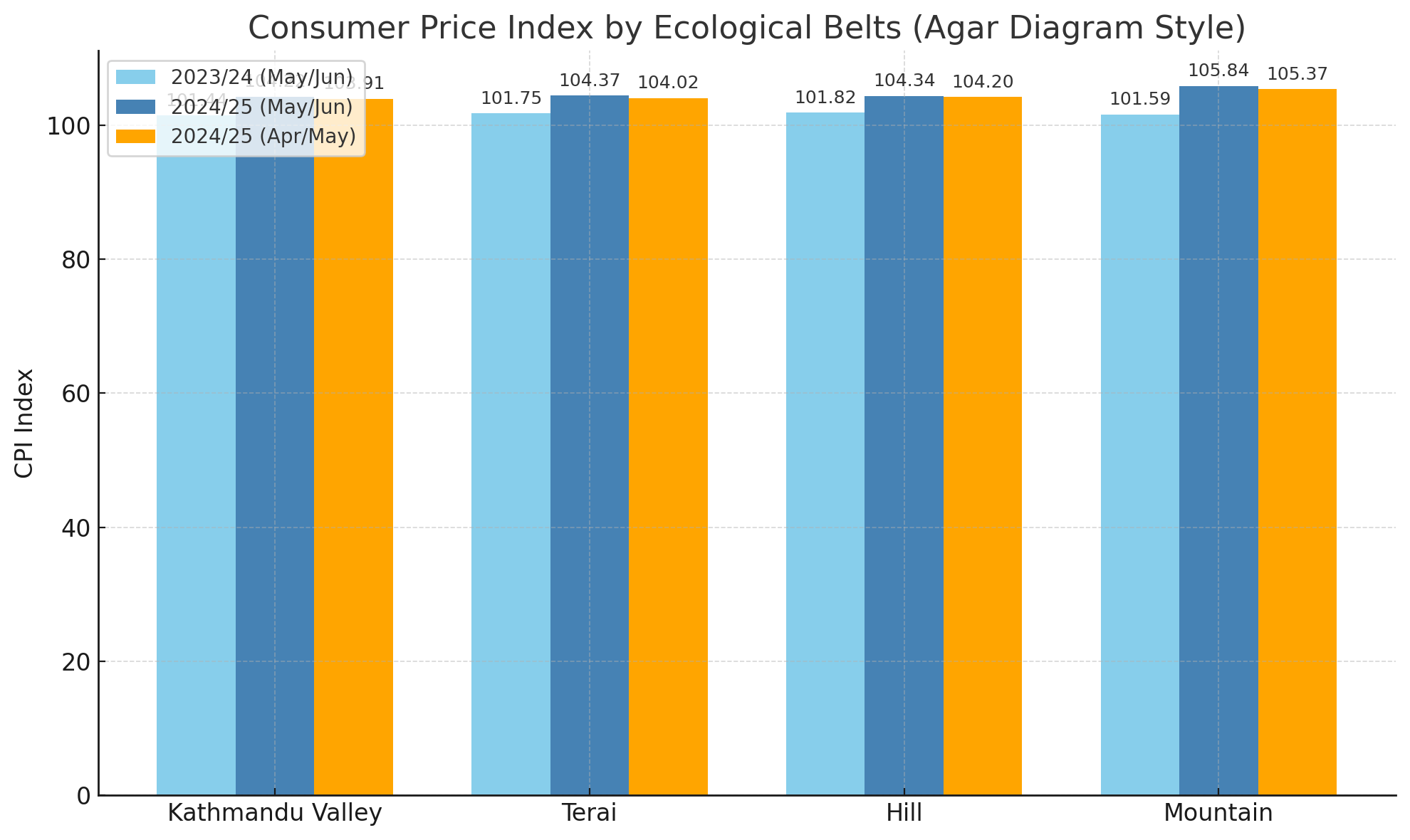
    तराई क्षेत्रमा पनि मूल्यवृद्धि सन्तुलनमै देखिएको छ। तराईको समग्र CPI २.५८ प्रतिशतले बढेको छ। तर, खाद्यान्नमा मूल्यवृद्धि शून्यभन्दा तल (–०.०९%) रहँदा गैर-खाद्य तथा सेवा समूहमा ४.२५ प्रतिशतको वृद्धि भएको छ। यो वृद्धिले देखाउँछ कि कृषि उत्पादनले खाद्य वस्तुको मूल्य थामेको भए पनि सेवामा उपभोग खर्च बढ्दो छ।

    पहाडी क्षेत्रमा समग्र मूल्यवृद्धि दर २.४८ प्रतिशत मात्र देखिएको छ। विशेष उल्लेखनीय पक्ष भनेको यहाँ खाद्य मूल्यमा ०.३९ प्रतिशतले कमी आएको हो। उत्पादन वृद्धि, वितरण सहजता वा मागमा स्थायीत्वले यस्तो परिणाम दिएको हुनसक्छ। तर, गैर-खाद्य क्षेत्रमा ३.१६ प्रतिशतको मूल्यवृद्धि अझै कायम छ। मासिक रूपमा हेर्दा यो क्षेत्रको CPI वृद्धिदर ०.१४ प्रतिशत मात्र रहेको छ, जुन सबैभन्दा न्यून हो।

    हिमाली क्षेत्र भने अझै पनि मूल्यवृद्धिका हिसाबले सबैभन्दा प्रभावित देखिएको छ। यहाँको CPI वार्षिक रूपमा ४.१८ प्रतिशतले बढेको छ। खाद्य वस्तुमा १.१६ प्रतिशत वृद्धि भएको छ भने गैर-खाद्य तथा सेवाहरूमा ६.१७ प्रतिशतको तीव्र वृद्धि देखिएको छ। दुर्गमता, ढुवानी लागत, आपूर्ति अभाव र सीमित प्रतिस्पर्धा यसका प्रमुख कारण हुनसक्छन्।

    अर्थशास्त्रीहरूका अनुसार सेवा क्षेत्रमा बढ्दो खर्चले उपभोक्ताको जीवनस्तरमा असर पार्न सक्छ। यस्तो अवस्थामा सरकार र राष्ट्र बैंकले क्षेत्रीय मूल्य असमानता घटाउने र सेवा क्षेत्रमा प्रतिस्पर्धा बढाउने नीति ल्याउनु आवश्यक रहेको विश्लेषण गरिएको छ।

    नेपाल राष्ट्र बैंकको पछिल्लो विवरणले मूल्यवृद्धि अहिले नियन्त्रणमै रहेको देखाए पनि सेवा क्षेत्रमा रहेको दबाबलाई मध्यनजर गर्दै नीति निर्माताहरू सजग रहनुपर्ने देखिन्छ। विशेष गरी हिमाली क्षेत्रलाई प्राथमिकतामा राख्दै आपूर्ति प्रणाली र पूर्वाधार विकासमा लगानी बढाउनु पर्ने आवश्यकता देखिएको छ।
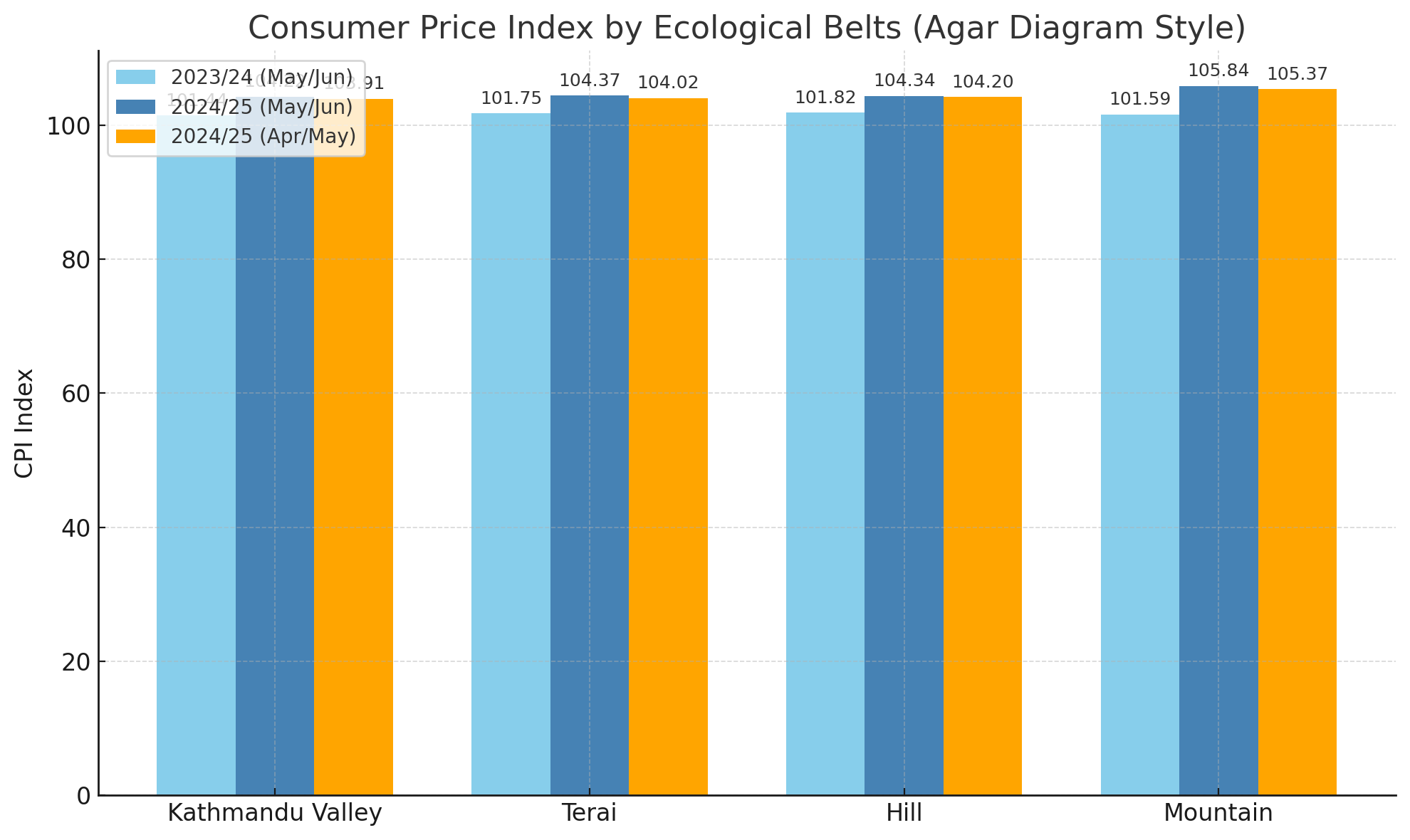

    Kathmandu — The consumer price index (CPI) across Nepal’s major ecological regions — Kathmandu Valley, Terai, Hill, and Mountain — remained balanced in the first 11 months of the current fiscal year. According to data published by Nepal Rastra Bank, inflation was moderate across all belts, with the national CPI increasing from 101.70 to 104.47. This marks an annual increase of 2.72%, and a monthly rise of just 0.28%, suggesting inflation is currently under control.

    In the Kathmandu Valley, the price trend has remained relatively stable. The annual CPI growth reached 2.73%, with food prices increasing only 0.78%, while non-food and service prices surged by 3.47%. This hints at growing costs in housing, education, health, and other private services — a reflection of urban cost pressures.

    The Terai region also showed a similar balanced inflation pattern. Its overall CPI rose 2.58% year-on-year. Notably, food prices declined slightly by 0.09%, while non-food and service prices jumped by 4.25%. This suggests that although agricultural production may have helped stabilize food costs, service consumption and pricing are on the rise.

    In the Hill region, inflation was mild and stable. The overall CPI increased by 2.48%, but food prices actually fell by 0.39%, the only region to see a drop. This may be due to stable supply chains or subdued rural demand. However, non-food and service prices still rose by 3.16%, keeping cost pressures intact. Month-on-month, the Hills reported the lowest CPI growth at just 0.14%, indicating stable price movement.

    The Mountain region, however, continues to face the highest inflation among all regions, with the CPI increasing 4.18% year-on-year. While food prices rose by 1.16%, non-food and services soared by 6.17% — the highest among all categories. This is likely due to logistical difficulties, transportation costs, and lack of market competition in remote, high-altitude areas.

    Economists warn that rising costs in the service sector could impact living standards, particularly in urban and remote regions. While overall inflation is still within acceptable levels, the disparity in regional price trends calls for targeted policy action.

    Experts argue that Nepal Rastra Bank and the government must closely monitor the widening price gap between regions. Particularly in the Mountain belt, there is an urgent need to improve infrastructure, streamline supply systems, and boost competition in essential services.

    Although the current inflation trend is manageable, growing service-sector pressure signals the need for proactive policy responses to ensure equitable price stability across the country.

    Trending News

    • Trending14 Jun, 2026

      असारमा वाणिज्य बैंकको मुद्दति ब्याजदर थप घट्यो, ७ बैंकले दर घटाए

      Read news
    • Trending14 Jun, 2026

      नेपालकै सबैभन्दा ठूलो सम्पत्ति शुद्धीकरण मुद्दा अदालत पुग्यो, एक खर्ब ६ अर्बभन्दा बढी बिगो दाबी

      Read news
    • Trending14 Jun, 2026

      अमेरिका–इरान शान्ति सम्झौता निर्णायक मोडमा, पाकिस्तानले भन्यो — '२४ घण्टामा हस्ताक्षर सम्भव'

      Read news

    Related News

  • असारमा वाणिज्य बैंकको मुद्दति ब्याजदर थप घट्यो, ७ बैंकले दर घटाए
    Investor

    1 min read

    असारमा वाणिज्य बैंकको मुद्दति ब्याजदर थप घट्यो, ७ बैंकले दर घटाए

    NEPSE TRADING

    ·

    14 Jun, 2026

  • नेपालकै सबैभन्दा ठूलो सम्पत्ति शुद्धीकरण मुद्दा अदालत पुग्यो, एक खर्ब ६ अर्बभन्दा बढी बिगो दाबी
    Investor

    4 min read

    नेपालकै सबैभन्दा ठूलो सम्पत्ति शुद्धीकरण मुद्दा अदालत पुग्यो, एक खर्ब ६ अर्बभन्दा बढी बिगो दाबी

    NEPSE TRADING

    ·

    14 Jun, 2026

  • अमेरिका–इरान शान्ति सम्झौता निर्णायक मोडमा, पाकिस्तानले भन्यो — '२४ घण्टामा हस्ताक्षर सम्भव'
    Top

    1 min read

    अमेरिका–इरान शान्ति सम्झौता निर्णायक मोडमा, पाकिस्तानले भन्यो — '२४ घण्टामा हस्ताक्षर सम्भव'

    NEPSE TRADING

    ·

    14 Jun, 2026

  • शेयर बजारमा जलविद्युत कम्पनी : अनुत्तरित प्रश्नहरूको भारले थिचिएको लगानीकर्ता
    Investor

    5 min read

    शेयर बजारमा जलविद्युत कम्पनी : अनुत्तरित प्रश्नहरूको भारले थिचिएको लगानीकर्ता

    NEPSE TRADING

    ·

    12 Jun, 2026

  • नेपालको पुँजी बजार : तीन दशकको यात्रा, अझै अधुरो सुधार
    Investor

    3 min read

    नेपालको पुँजी बजार : तीन दशकको यात्रा, अझै अधुरो सुधार

    Dipesh Ghimire

    ·

    12 Jun, 2026