NEPSEtrading

Live NEPSE data, charts, broker analysis and portfolio tools for investors in Nepal.

Subscribe to our newsletter

Weekly insights from the NEPSE market in your inbox.

Marketminds Investment Group Private Limited

Registration
DOIB certificate no. 4680-2081/2082
Editor-in-chief
Dipesh Ghimire, Director
9802363868, 9851119988
Office
Koteshwor 32, Kathmandu
Phone
01-5253221, +977 9709066745
Email

Contact support

Market

  • Stocks
  • Sectors

Company

  • About Us
  • Our Team
  • Terms of Use
  • Our Policy
  • Training
  • Contact Us

Help

  • Support
  • Report
  • FAQ

Get the app

Markets, signals and alerts on your phone.

Get it onGoogle Play

More from NEPSE Trading

  • Stock EducationFree share market courses
  • EconomyNepal and world economic data
  • BFIS CompareBank rates, loans and insurance
  • Nepal's CapitalsMutual fund NAV and dividends
  • JobsNepalJobs in Nepal

nepsetrading.com is an online news portal that provides insights into trading and investment by analyzing the stock market and the global economy. We create charts based on the analysis of various indicators. Please do not rely solely on this information for investment decisions. Self-study is crucial. Use this information only as an educational and informational resource.

© 2026 nepsetrading.com. All rights reserved. Owned and operated by Marketminds Investment Group Private Limited.·Charts powered by TradingView

  • Portfolio
  • Explore
  • Calendar
  • Chart
  • Social
  • News
  • Account
  1. News
  2. Education
  3. Reverse Repo: What It Is, How It Works, and Its Importance

रिभर्स रिपो: के हो, कसरी काम गर्छ, र यसको महत्त्वReverse Repo: What It Is, How It Works, and Its Importance

NEPSE tradingPublished on November 26, 20243 min read
रिभर्स रिपो: के हो, कसरी काम गर्छ, र यसको महत्त्व

रिभर्स रिपो (Reverse Repo) एक मौद्रिक उपकरण हो जसको प्रयोग वित्तीय प्रणालीको तरलता व्यवस्थापन गर्न गरिन्छ। नेपाल राष्ट्र बैंकलगायत विश्वभरका केन्द्रीय बैंकहरूले वित्तीय स्थिरता र ब्याजदर सन्तुलन कायम गर्न यो उपकरण प्रयोग गर्छन्। यो प्रक्रिया बैंक तथा वित्तीय संस्थाहरूबाट अतिरिक्त तरलता घटाउन र वित्तीय प्रणालीलाई सन्तुलित बनाउन अत्यन्त प्रभावकारी मानिन्छ।

यस लेखमा हामी रिभर्स रिपोको परिभाषा, यसले कसरी काम गर्छ, यसको नीतिगत महत्त्व, अन्तर्राष्ट्रिय परिप्रेक्ष्य, र नेपालमा यसको प्रयोगबारे विस्तृत रूपमा चर्चा गर्नेछौं।

रिभर्स रिपो के हो?

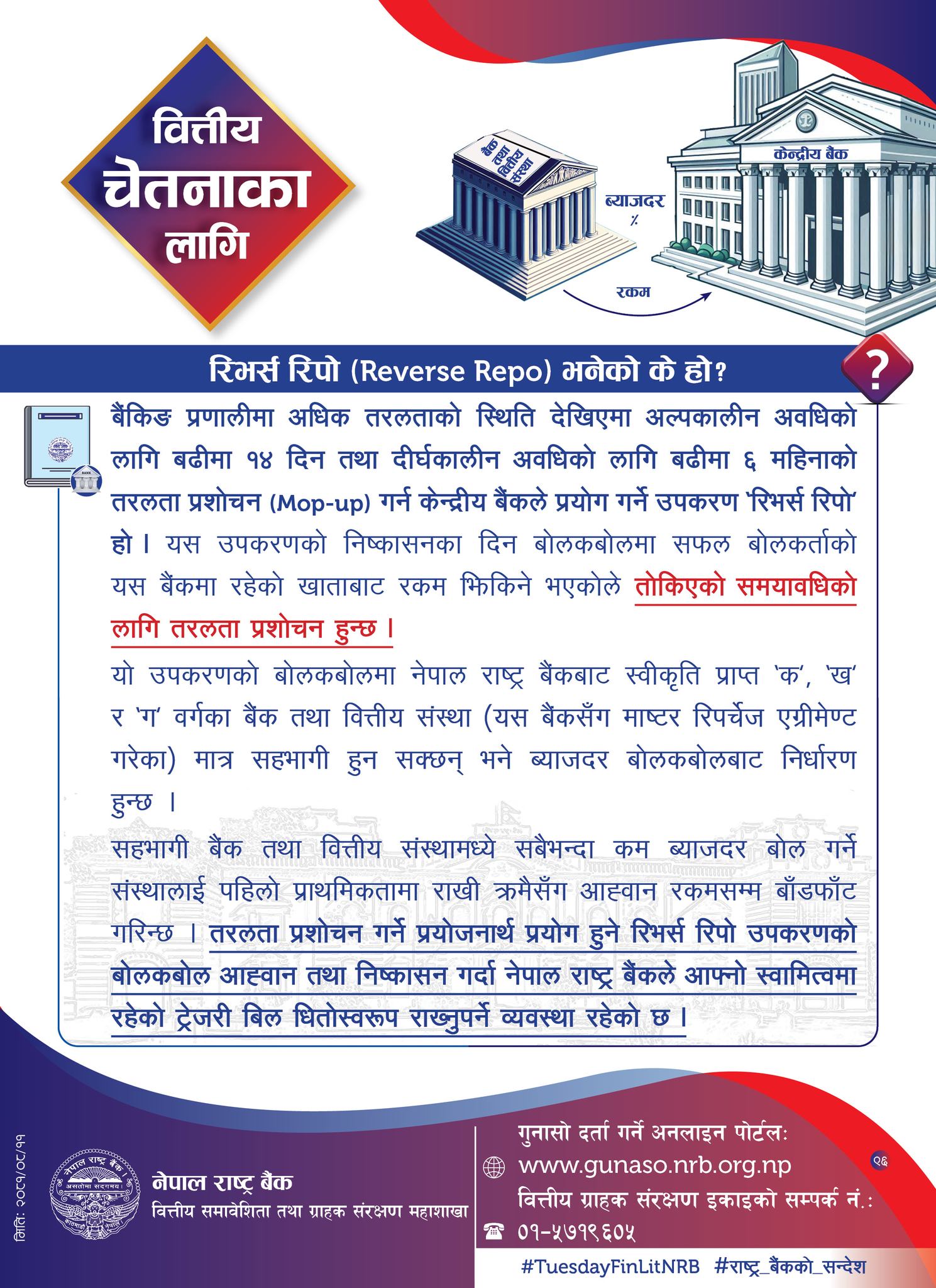
रिभर्स रिपो भनेको केन्द्रीय बैंकद्वारा बैंक तथा वित्तीय संस्थाहरूबाट अल्पकालीन अवधिका लागि रकम उधारो लिने प्रक्रिया हो। यस प्रक्रियामा केन्द्रीय बैंकले निश्चित ब्याजदरमा बैंकहरूको रकम लिन्छ र समयावधि सकिएपछि उक्त रकम ब्याजसहित फिर्ता गर्छ।

  1. अत्यधिक तरलताको नियन्त्रण: बैंकिङ प्रणालीमा बढी तरलता हुँदा अर्थतन्त्रमा मुद्रा आपूर्ति अनावश्यक रूपमा बढ्न सक्छ, जसले गर्दा महँगी र अस्थिरता निम्त्याउँछ।

  2. ब्याजदर नियन्त्रण: अतिरिक्त तरलता घटाउन र ब्याजदरलाई सन्तुलनमा राख्न रिभर्स रिपो प्रभावकारी मानिन्छ।

  3. आर्थिक स्थायित्व: यो उपकरणले वित्तीय प्रणालीमा अनुशासन र स्थायित्व कायम गर्न मद्दत गर्छ।

रिभर्स रिपो कसरी काम गर्छ?

  1. बोलकबोल प्रक्रिया: नेपाल राष्ट्र बैंकले रिभर्स रिपो कार्यान्वयनका लागि बोलकबोल प्रक्रिया सुरु गर्छ। यसमा, बैंक तथा वित्तीय संस्थाहरूले केन्द्रीय बैंकलाई निश्चित ब्याजदर प्रस्ताव गर्छन्।

  2. तोकिएको अवधि: रिभर्स रिपो सामान्यतः १४ दिनदेखि ६ महिनासम्मका लागि गरिन्छ। यस अवधिलाई अल्पकालीन र दीर्घकालीन समयका रूपमा वर्गीकृत गरिन्छ।

  3. ब्याजदर निर्धारण: नेपाल राष्ट्र बैंकले न्यूनतम ब्याजदर निर्धारण गर्छ। उक्त ब्याजदरका आधारमा बैंकहरूले बोलकबोल गर्छन्।

  4. तरलता संकलन: केन्द्रीय बैंकले छनोट गरिएका बैंकहरूको रकम संकलन गरी समयसीमाभित्र ब्याजसहित फिर्ता दिन्छ।

नेपालमा, "क", "ख", र "ग" वर्गका बैंक तथा वित्तीय संस्थाहरू मात्र रिभर्स रिपोमा सहभागी हुन योग्य मानिन्छन्।

नेपालमा रिभर्स रिपोको प्रयोग

नेपाल राष्ट्र बैंकले रिभर्स रिपो उपकरणलाई आफ्नो मौद्रिक नीतिको अभिन्न अंशका रूपमा प्रयोग गर्दै आएको छ। यसले वित्तीय प्रणालीलाई स्थिर बनाउने र अर्थतन्त्रलाई सन्तुलनमा राख्न महत्त्वपूर्ण भूमिका खेल्छ।

मौद्रिक नीतिमा योगदान:

  1. तरलता व्यवस्थापन: बैंकिङ प्रणालीमा अतिरिक्त तरलता हुँदा नेपाल राष्ट्र बैंकले रिभर्स रिपोमार्फत रकम संकलन गरी मुद्रा आपूर्ति घटाउँछ।

  2. ब्याजदर नियन्त्रण: बजारमा तरलता घट्दा बैंकहरूले उपलब्ध रकमलाई सावधानीपूर्वक प्रयोग गर्छन्, जसले ब्याजदर सन्तुलनमा रहन्छ।

  3. अर्थतन्त्रमा स्थायित्व: महँगी नियन्त्रण गर्ने र आर्थिक स्थायित्व कायम गर्ने उद्देश्यले यो उपकरण प्रयोग गरिन्छ।

उदाहरण:

नेपाल राष्ट्र बैंकले वित्तीय वर्ष २०८०/८१ मा रिभर्स रिपो बोलकबोलमार्फत बैंकिङ प्रणालीबाट ५० अर्ब रुपैयाँ संकलन गरेको थियो।

अन्तर्राष्ट्रिय परिप्रेक्ष्य

रिभर्स रिपो विश्वभरका केन्द्रीय बैंकहरूले अपनाउने एउटा साझा मौद्रिक उपकरण हो।

  • संयुक्त राज्य अमेरिका: अमेरिकी केन्द्रीय बैंक (Federal Reserve) ले रिभर्स रिपो प्रणालीमार्फत बजारमा तरलता घटाउन भूमिका खेल्छ।

  • भारत: भारतीय रिजर्भ बैंक (RBI) ले रिभर्स रिपोलाई अल्पकालीन मौद्रिक स्थायित्वका लागि प्राथमिकता दिएको छ।

भारत र नेपालबीच तुलना:

नेपाल र भारत दुवै देशमा रिभर्स रिपोको कार्यान्वयन प्रक्रियामा समानता भए पनि भारतको बजार आकार ठूलो भएकाले यसको प्रभाव झन् व्यापक देखिन्छ।

रिभर्स रिपोको फाइदा

  1. महँगी नियन्त्रण: अतिरिक्त तरलता घटाउँदा बजारमा मुद्रास्फीति नियन्त्रण गर्न मद्दत पुग्छ।

  2. तरलता व्यवस्थापन: बैंकहरूले आफ्नो तरलता व्यवस्थापनलाई व्यवस्थित गर्न रिभर्स रिपोको प्रयोग गर्छन्।

  3. ब्याजदर स्थिरता: यो उपकरणले ब्याजदरलाई सन्तुलित राख्न महत्त्वपूर्ण भूमिका खेल्छ।

  4. वित्तीय प्रणालीमा अनुशासन: रिभर्स रिपोको प्रयोगले बैंक तथा वित्तीय संस्थाहरूमा अनुशासन कायम राख्छ।

चुनौतीहरू

  1. वित्तीय संस्थाहरूको भाग लिने रुचि: रिभर्स रिपोमा भाग लिन बैंक तथा वित्तीय संस्थाहरूको रुचि प्रायः कम हुन सक्छ, विशेष गरी ब्याजदर न्यून रहेको अवस्थामा।

  2. आवधिक प्रभाव: यो उपकरणको प्रभाव सामान्यतया छोटो समयका लागि मात्र देखिन्छ।

  3. बजारमा अस्थिरता: रिभर्स रिपोको अधिक प्रयोगले वित्तीय प्रणालीमा अस्थिरता निम्त्याउन सक्छ।

रिभर्स रिपो मौद्रिक नीतिको एक महत्त्वपूर्ण उपकरण हो, जसले वित्तीय प्रणालीमा स्थायित्व कायम गर्न महत्त्वपूर्ण योगदान दिन्छ। नेपाल राष्ट्र बैंकले यसको प्रभावकारी प्रयोग गर्दै अर्थतन्त्रलाई सन्तुलनमा राख्न भूमिका खेलिरहेको छ। यद्यपि, यसका केही चुनौतीहरू छन्, तिनलाई सम्बोधन गर्न दीर्घकालीन रणनीति अपनाउन आवश्यक छ।

नेपाल जस्तो विकासशील देशका लागि रिभर्स रिपोले वित्तीय प्रणालीलाई सुदृढ बनाउन र आर्थिक स्थिरता कायम गर्न महत्त्वपूर्ण योगदान पुर्‍याउनेछ।

थप जानकारीका लागि, नेपाल राष्ट्र बैंकको वेबसाइट (www.nrb.org.np) मा जानुहोस्।
रिभर्स रिपो: के हो, कसरी काम गर्छ, र यसको महत्त्व

Reverse Repo (Reverse Repurchase Agreement) is a monetary tool used by central banks worldwide to manage liquidity in the financial system. The Nepal Rastra Bank, like other central banks, employs reverse repo as a mechanism to withdraw excess liquidity from the banking system to maintain financial stability and balance interest rates.

In this blog, we will explore what a reverse repo is, how it works, its policy implications, its role in Nepal's monetary system, and its significance in the global context.

What is a Reverse Repo?

A Reverse Repo is a process where a central bank borrows funds from commercial banks and financial institutions for a short-term period at a predetermined interest rate. In return, the central bank pledges government securities or other instruments as collateral. After the maturity period, the central bank repays the borrowed funds along with the agreed-upon interest.

Key Objectives of Reverse Repo:

  1. Control Excess Liquidity: When there is excess liquidity in the banking system, it can lead to inflationary pressures and economic instability. Reverse repo helps absorb this surplus.

  2. Regulate Interest Rates: By managing liquidity, reverse repo helps stabilize short-term interest rates.

  3. Promote Economic Stability: It acts as a tool to bring discipline and balance to the financial system.

How Does Reverse Repo Work?

The Process:

  1. Auction/Bidding: The central bank announces a reverse repo auction where eligible banks and financial institutions can participate by quoting interest rates at which they are willing to lend funds.

  2. Specified Tenure: The reverse repo agreement typically spans a short-term period, ranging from 14 days to 6 months. These tenures are categorized as short-term and medium-term.

  3. Interest Rate Determination: The central bank sets a minimum interest rate, and banks bid at or above this rate to participate.

  4. Liquidity Absorption: The central bank accepts bids and collects funds from participating banks, reducing liquidity in the market.

Eligibility:

In Nepal, only "A," "B," and "C" class banks and financial institutions approved by the Nepal Rastra Bank are eligible to participate in reverse repo operations.

Reverse Repo in Nepal

The Nepal Rastra Bank actively uses reverse repo as part of its monetary policy to manage liquidity in the banking system and stabilize the economy.

Contributions to Monetary Policy:

  1. Liquidity Management: Reverse repo helps mop up surplus liquidity in the banking system, preventing inflationary pressures.

  2. Interest Rate Regulation: By reducing excess liquidity, reverse repo aids in stabilizing market interest rates.

  3. Economic Stability: It helps maintain a balance in the financial system and ensures sustainable economic growth.

Example:

In the fiscal year 2080/81 (2023/24), the Nepal Rastra Bank conducted reverse repo operations to absorb approximately NPR 50 billion from the banking system.

Reverse Repo in the Global Context

Reverse repo is widely used by central banks worldwide as an effective monetary policy tool.

  • United States: The Federal Reserve (Fed) uses reverse repo agreements to manage short-term liquidity and control inflation.

  • India: The Reserve Bank of India (RBI) employs reverse repo operations to stabilize liquidity and maintain monetary discipline in its banking system.

Comparison: India vs. Nepal

While both countries utilize reverse repo to manage liquidity, India's larger financial market results in broader and more impactful applications compared to Nepal's relatively smaller system.

Benefits of Reverse Repo

  1. Inflation Control: By absorbing excess liquidity, reverse repo helps prevent inflationary pressures in the economy.

  2. Liquidity Management: It allows central banks to regulate the flow of money in the financial system effectively.

  3. Interest Rate Stability: Reverse repo helps stabilize short-term interest rates by managing liquidity levels.

  4. Discipline in Financial Systems: The process ensures that banks and financial institutions manage their liquidity prudently.

Challenges of Reverse Repo

  1. Limited Participation: Financial institutions may be less inclined to participate in reverse repo operations, especially when the offered interest rates are low.

  2. Short-Term Impact: The effects of reverse repo operations are generally limited to the short term and may not address long-term liquidity issues.

  3. Market Instability: Overuse of reverse repo could potentially lead to market instability and liquidity crunches.

Reverse repo is a vital monetary tool that plays a significant role in maintaining stability in the financial system. The Nepal Rastra Bank's effective use of reverse repo operations has contributed to liquidity management, interest rate stability, and economic balance. However, its success depends on careful implementation and addressing the associated challenges.

For developing economies like Nepal, reverse repo operations are crucial in creating a disciplined and resilient financial system. While it addresses immediate liquidity concerns, a long-term strategy is essential to ensure sustainable economic growth.

For more information, visit the official website of the Nepal Rastra Bank (www.nrb.org.np).

Reverse Repo: What It Is, How It Works, and Its Importance

Trending News

  • देशभरको मौसम मुख्यतया सफा, कोशीको तराईमा हल्का वर्षाको सम्भावनाWeather Mainly Fair Across Nepal, Light Rain Likely in Koshi Terai

    NEPSE TRADING21 Nov, 2026

  • राष्ट्र बैंकद्वारा विदेशी मुद्राको विनिमयदर सार्वजनिक : अमेरिकी डलरको बिक्रीदर १४८ रुपैयाँ ५८ पैसाNRB Sets Foreign Exchange Rates: US Dollar Selling Rate at Rs 148.58

    NEPSE TRADING21 Nov, 2026

  • परिसूचक ओरालो लाग्दा पनि बढ्यो कारोबार, प्राविधिक विन्दु र सस्ता सेयरमा लगानीकर्ताको नजरTurnover Rises Despite Index Decline as Investors Eye Technical Levels and Bargain Stocks

    NEPSE TRADING20 Nov, 2026

Related News

  • देशभरको मौसम मुख्यतया सफा, कोशीको तराईमा हल्का वर्षाको सम्भावनाWeather Mainly Fair Across Nepal, Light Rain Likely in Koshi Terai
  • राष्ट्र बैंकद्वारा विदेशी मुद्राको विनिमयदर सार्वजनिक : अमेरिकी डलरको बिक्रीदर १४८ रुपैयाँ ५८ पैसाNRB Sets Foreign Exchange Rates: US Dollar Selling Rate at Rs 148.58
  • परिसूचक ओरालो लाग्दा पनि बढ्यो कारोबार, प्राविधिक विन्दु र सस्ता सेयरमा लगानीकर्ताको नजरTurnover Rises Despite Index Decline as Investors Eye Technical Levels and Bargain Stocks
  • प्रधानमन्त्री शाहको दिल्ली यात्रा ‘छोटो र कार्यमूलक’, हवाईमार्ग र मल कारखाना मुख्य एजेण्डाPM Shah’s Delhi Trip ‘Short and Functional,’ Air Routes and Fertilizer Plant Top Agenda
  • संसद्‌मा बहस र समितिका बैठक सुस्त, माननीयहरू भने ‘विदेश मोह’ मा मस्त : सात महिनामा ४९ को औपचारिक उडान, अनौपचारिकको हिसाबै छैनParliamentary Debates and Committee Meetings Stall as Lawmakers Embark on Foreign Junkets: 49 on Official Record in Seven Months, Unrecorded Trips Countless