ipo
104 Companies Queue for IPOs as Manufacturing and Hydropower Dominate Nepal’s Pipeline
Nearly 473 million shares worth Rs 69.31 billion await regulatory clearance, with large industrial companies emerging as a major force in the public-issue market
Dipesh Ghimire
5 min read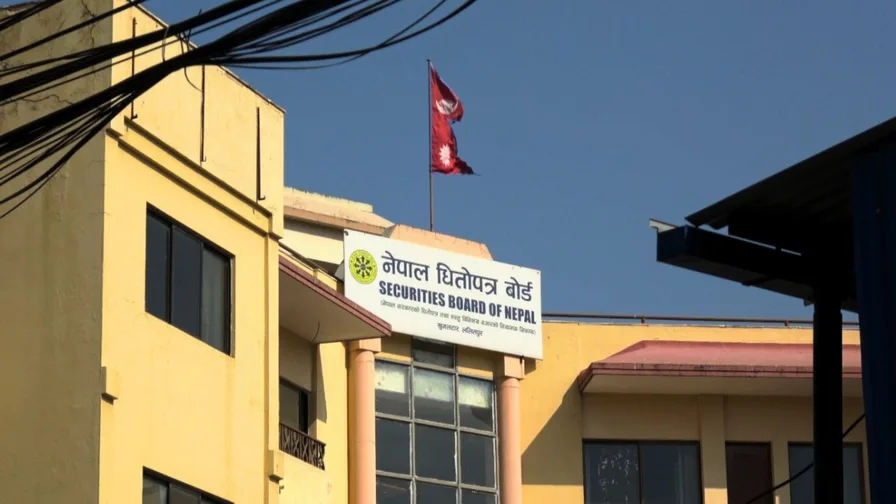
Kathmandu — Nepal’s primary market is facing a sizeable backlog, with 104 companies seeking approval from the Securities Board of Nepal (SEBON) to raise capital through initial public offerings. The applications together cover about 472.89 million shares worth Rs 69.31 billion, according to the latest IPO pipeline published by the regulator.
The scale of the pipeline indicates that Nepal’s IPO market could see a significant increase in the supply of new securities if a substantial portion of the applications eventually receives approval. But the figures also reveal a changing structure in the primary market: large hydropower and manufacturing companies now account for most of the proposed shares, while several industrial firms are seeking to enter the market at premium valuations.
Hydropower remains the largest segment by proposed share volume. Thirty-four hydropower companies are seeking to issue about 171.48 million shares, equivalent to roughly 36 percent of all shares in the IPO pipeline. Manufacturing and processing companies are close behind, with 30 applicants proposing about 166.43 million shares, or around 35 percent of the total. Together, the two sectors account for more than seven out of every 10 shares awaiting approval.
That concentration is significant for Nepal’s capital market. For years, hydropower companies have been prominent among new listings, but the growing presence of cement, steel, pharmaceuticals, agro-processing and other manufacturing businesses could gradually broaden the sectoral composition of the stock exchange if the issues are approved and listed.
Among individual applicants, Siuri Nyadi Power Limited has proposed the largest IPO by number of shares. The hydropower company is seeking approval to issue 30.36 million shares at Rs 100 each, taking the proposed issue size to approximately Rs 3.04 billion.
The next tier is dominated by industrial and consumer-facing companies. Shubhashree Agni Cement Udhyog Limited has applied to issue 20.21 million shares worth Rs 2.02 billion, while Jagdamba Steels Limited is seeking to issue 20.07 million shares. Dish Media Network Limited has proposed 19.71 million shares, while Mahashakti Cement Limited is seeking approval for about 17.85 million shares.
Combined, these five companies account for approximately 108.2 million shares, equivalent to about 22.9 percent of the entire IPO pipeline. Although that is a substantial concentration, it is lower than the 25 percent figure sometimes cited in reports based on the same pipeline data.
Manufacturing is particularly notable within the group. Shubhashree Agni Cement, Jagdamba Steels and Mahashakti Cement alone propose to issue around 58.13 million shares. Their presence illustrates the growing use of equity financing by companies outside Nepal’s traditional banking, insurance and hydropower-dominated listed sectors.
The value of an IPO, however, cannot be judged by share count alone.
Jagdamba Steels is seeking to issue its shares at Rs 330 per share, including a premium over the Rs 100 face value. Its proposed 20.07 million-share offer is therefore valued at approximately Rs 6.62 billion, making it considerably larger in monetary terms than Siuri Nyadi despite having fewer shares. SEBON’s list says the company revised its premium to Rs 330 and increased the proposed issue to 30 percent of its capital.
Premium issues represent an important development for the market because investors are being asked to pay substantially more than the conventional Rs 100 face value. That places greater importance on earnings quality, net worth, future cash generation and the justification of the valuation rather than on the popularity of an IPO alone.
Jagdamba is not an isolated case. SEBON’s pipeline contains several manufacturers seeking premium pricing, including Shaurya Cement Industries at Rs 333 per share, Maruti Cements at Rs 426, Riddhisiddhi Cement at Rs 246, Ambe Steels at Rs 303 and Hulas Iron Industries at Rs 255.
The trend could make Nepal’s upcoming primary market materially different from the traditional IPO market in which investors often encountered issues priced uniformly at Rs 100. With premium offerings, investors will have to distinguish much more carefully between a company’s face value and the economic value implied by its offer price.
Dish Media Network is another major applicant in the pipeline. SEBON’s latest list shows the company seeking approval to issue 19.71 million shares worth Rs 1.97 billion to the general public. It is the largest applicant in the “others” category by share volume.
The overall pipeline is also broader than the five largest companies. Hotel and tourism businesses have proposed around 58.21 million shares, investment companies 21.40 million shares, and micro-insurance companies 6.75 million shares. Other businesses—including media, hospitals, aviation, renewable energy and hire-purchase companies—account for another 48.62 million shares.
For investors, however, a pipeline of nearly 473 million shares should not be interpreted as an imminent supply of the same volume to the market.
SEBON explicitly states that inclusion in the application list does not mean an applicant has qualified for an IPO. Approval is granted only after submitted documents, prospectuses and other disclosures satisfy applicable legal and regulatory requirements. Some companies may therefore remain in the pipeline for an extended period, revise their applications or fail to obtain approval.
That distinction is important when assessing the potential impact on market liquidity. If dozens of large offerings were approved within a short period, they could absorb substantial investor funds from the secondary market. But if approvals are staggered over months or years, the liquidity impact would be more gradual.
The Rs 69.31 billion value of the pipeline also overstates what would be required from ordinary retail investors at any single point in time. Issues may include allocations to project-affected locals, employees, mutual funds and the general public, while the applications themselves are at very different stages of regulatory review.
From a broader capital-market perspective, however, the pipeline carries a potentially positive structural signal. If financially sound manufacturing and service companies successfully enter the exchange, investors would gain alternatives to the sectors that currently dominate Nepal’s listed market.
The more difficult question is quality rather than quantity.
A large IPO pipeline does not automatically mean a stronger capital market. If companies enter at stretched valuations, have weak governance or use public offerings primarily as an exit route for existing owners rather than to finance productive expansion, a larger supply of shares could expose investors to additional risk.
Conversely, well-governed companies that use public capital to expand factories, create productive capacity and strengthen their balance sheets could deepen Nepal’s equity market and provide businesses with an alternative to bank borrowing.
The latest SEBON figures therefore point to two developments occurring simultaneously: Nepal has a historically large pool of companies seeking access to public capital, and the composition of that pool is becoming increasingly industrial.
Whether that translates into a stronger market will depend less on the headline number of 104 applicants and more on which companies receive approval, the prices at which their shares are offered, the quality of their financial disclosures and how effectively the money raised is ultimately deployed.
Advertisement
Written by
Dipesh Ghimire