Hydropower Project
Tanahu Hydropower Project Hits 78% Completion, Promises Major Boost to Dry-Season Energy Grid
From a macroeconomic perspective, the rapid realization of the Tanahu Hydropower Project is a vital stabilizing factor for the Nepal Electricity Authority (NEA). Unlike run-of-the-river (RoR) projects, which see their output plummet dramatically during the dry season, Tanahu’s reservoir will store water during the monsoons to generate reliable peak-hour electricity in the winter. Once all three packages converge for the final testing and commissioning phase, Nepal will take a significant leap toward true energy self-sufficiency, drastically reducing its reliance on winter power imports from India.
Dipesh Ghimire
3 min read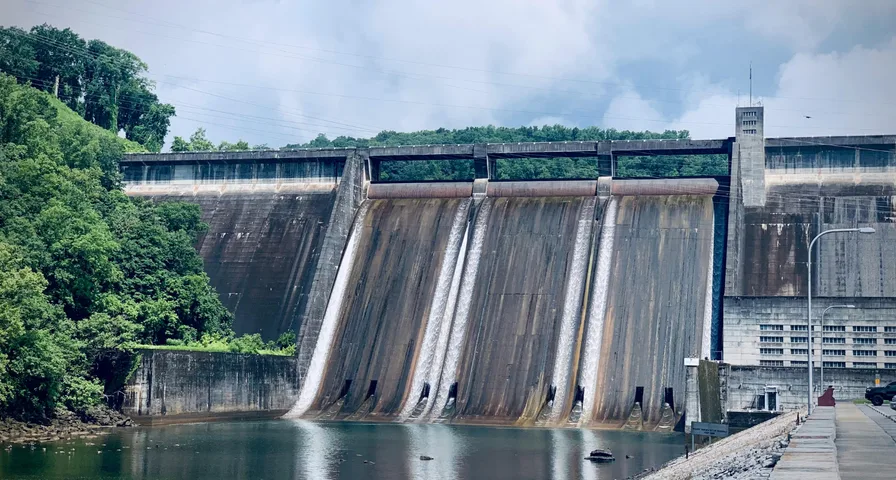
Moving closer to realizing one of Nepal’s most critical energy infrastructures, the 140-megawatt (MW) Tanahu Hydropower Project has reported a massive 78 percent overall physical completion. As a reservoir-type project, its steady advancement is being closely watched by energy analysts, as it is expected to play a crucial role in mitigating the country's severe power deficits during the dry winter months.
Situated at Jhaputar in Rishing Rural Municipality-1, the project is being executed in three distinct contractual packages. According to Project Chief Shyamji Bhandari, work across all three fronts—the headworks, the powerhouse, and the transmission line—has gained significant momentum, overcoming typical delays that often plague mega-infrastructure projects in the country.
The Dam: Intensive Concreting Underway
Under Package 1, which entails the construction of the formidable 140-meter-tall concrete gravity dam and other headworks, the project has achieved a 63 percent physical progress rate. This segment is being undertaken by the Song Da-Kalika Joint Venture. Preliminary, yet challenging, civil works such as hill cutting, the construction of access roads, and the building of two diversion tunnels to alter the course of the Seti River have already been completed.
The focus has now shifted entirely to raising the dam structure. Since the placement of the first concrete on Chaitra 7, 2081 BS, the pace of construction has been aggressive. Highlighting the accelerated workflow, project officials noted that 33,681 cubic meters of concrete were poured in the month of Bhadra alone. To date, a staggering 507,442 cubic meters of concrete work has been finished, indicating that the most labor-intensive phase of the dam is well on schedule.
Underground Works Nearing Finish Line
The electromechanical and tunneling works, categorized under Package 2 and managed by China’s Sinohydro Corporation, are currently leading the structural progress with a 79 percent completion rate. This package is technically demanding as it involves carving out the heart of the hydropower station.
According to Bhandari, the majority of the civil construction for this phase is already done. Essential components such as the underground powerhouse, cable tunnels, search tanks, and the tailrace have completed their primary concreting phases. A major milestone in this package is the main tunnel, which will channel the reservoir’s water directly into the powerhouse. Out of the required 1,418.75 meters of concrete lining, an impressive 1,407.75 meters has already been completed, leaving merely 11 meters of final lining work.
Clearing the Transmission Hurdles
Perhaps the most encouraging news comes from Package 3, which involves the energy evacuation infrastructure. Executed by India’s KEC International, the 33-kilometer-long Damauli-Bharatpur 220 kV transmission line has recorded an 82 percent physical progress.
In Nepal, transmission line projects are notoriously delayed by right-of-way disputes and bureaucratic red tape regarding forest land use. However, Project Chief Bhandari confirmed that following the necessary tree-felling and site-entry permits from the Division Forest Offices of both Chitwan and Tanahu, construction has surged forward without hindrance. Out of the 94 transmission towers required for the line, the foundations for 83 have been laid, and 80 towers have already been successfully erected.
Analytical Takeaway
From a macroeconomic perspective, the rapid realization of the Tanahu Hydropower Project is a vital stabilizing factor for the Nepal Electricity Authority (NEA). Unlike run-of-the-river (RoR) projects, which see their output plummet dramatically during the dry season, Tanahu’s reservoir will store water during the monsoons to generate reliable peak-hour electricity in the winter. Once all three packages converge for the final testing and commissioning phase, Nepal will take a significant leap toward true energy self-sufficiency, drastically reducing its reliance on winter power imports from India.
Advertisement
Written by
Dipesh Ghimire