Asian Batteries IPO
Asian Batteries Expands Capacity with Rs 530 Million VRLA Plant as Revenue Surges and IPO Awaits Approval
If approved, the IPO will mark a new phase in the company’s growth journey, allowing public investors to participate at a time when the company is expanding capacity and strengthening its financial foundation.
Dipesh Ghimire
2 min read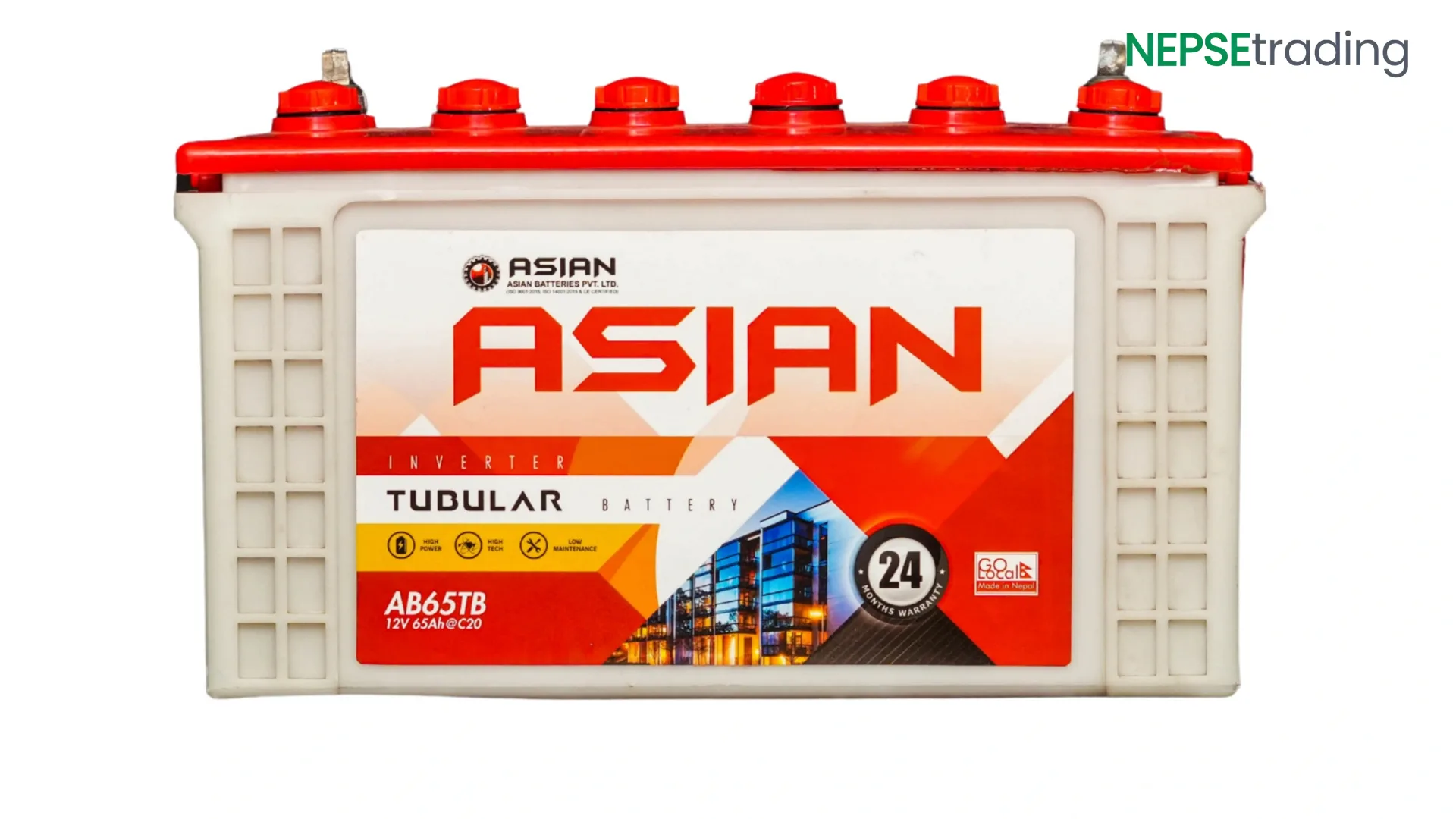
Kathmandu — Asian Batteries Limited has accelerated its production expansion with the construction of a new manufacturing plant worth around Rs 530 million, marking a significant step in strengthening its position in Nepal’s growing battery market.
The new facility, based on fully automated Valve Regulated Lead Acid (VRLA) technology, has already achieved around 30 percent financial progress. The company plans to begin commercial production from mid-January 2027, according to its expansion timeline.
Alongside its capacity expansion, the company has reported strong financial growth. In the first 11 months of the current fiscal year, Asian Batteries earned Rs 656 million in revenue, surpassing its total income from the previous year, reflecting a continued upward financial trajectory.
Credit rating data shows consistent growth over recent years, with revenue increasing from Rs 431 million in 2023 to Rs 517 million in 2024, and further to Rs 621 million in 2025. The current fiscal year’s performance suggests that the growth momentum has remained intact.
The company attributes this improvement to expanded production capacity and a strengthened distribution network across the country, which has helped boost overall sales performance.
Based on its financial improvement, CARE Ratings Nepal has reaffirmed the company’s issuer rating at CARE-NP BB (IS). The rating indicates a moderate level of credit risk, suggesting that while the company remains stable, it is still exposed to financial and operational uncertainties.
The rating report highlights several risk factors, including high dependence on working capital financing, interest rate volatility, regulatory challenges related to lead-based production, and intense competition in the battery sector. It also notes risks associated with debt-funded expansion projects and execution challenges in large-scale capacity building.
Despite these concerns, the rating agency has acknowledged key strengths such as experienced management, improving financial performance, stronger capital structure, and better debt repayment capacity. Recent capital infusions have also contributed to strengthening the company’s net worth position.
Operational indicators have also shown mild improvement. The operating profit margin rose from 12 percent to 12.42 percent, while cash generation capacity has improved over the review period.
Headquartered in Biratnagar, the company manufactures automotive, electric vehicle (EV), and tubular batteries, supported by a distribution network of more than 400 dealers and 10 branch offices nationwide. Its operations benefit from relatively lower raw material import costs due to open-border trade advantages with India.
The rating agency has emphasized that timely project completion, cost control, stable profitability, and effective debt management will be crucial in determining the company’s future financial outlook.
Meanwhile, Asian Batteries has moved forward with its Initial Public Offering (IPO) plan, seeking approval to issue 1.3 million ordinary shares worth Rs 130 million. The application for IPO approval was submitted on Mangsir 20, 2082 BS to the Securities Board of Nepal.
If approved, the IPO will mark a new phase in the company’s growth journey, allowing public investors to participate at a time when the company is expanding capacity and strengthening its financial foundation.
Advertisement
Written by
Dipesh Ghimire