Top
Budget Session Opens Amid Pressure to Revive Nepal’s Slowing Economy
Budget Session Opens Amid Pressure to Revive Nepal’s Slowing Economy Nepal’s federal parliament is set to begin its budget session on Monday at a time when the country’s economy is facing mounting pressure from weak capital expenditure, declining private-sector confidence and growing public debt obligations. The upcoming session is expected to carry significance far beyond the annual presentation of revenue and expenditure estimates, as policymakers confront rising demands to deliver a budget capable of restoring economic momentum and rebuilding investor confidence.
Dipesh Ghimire
4 min read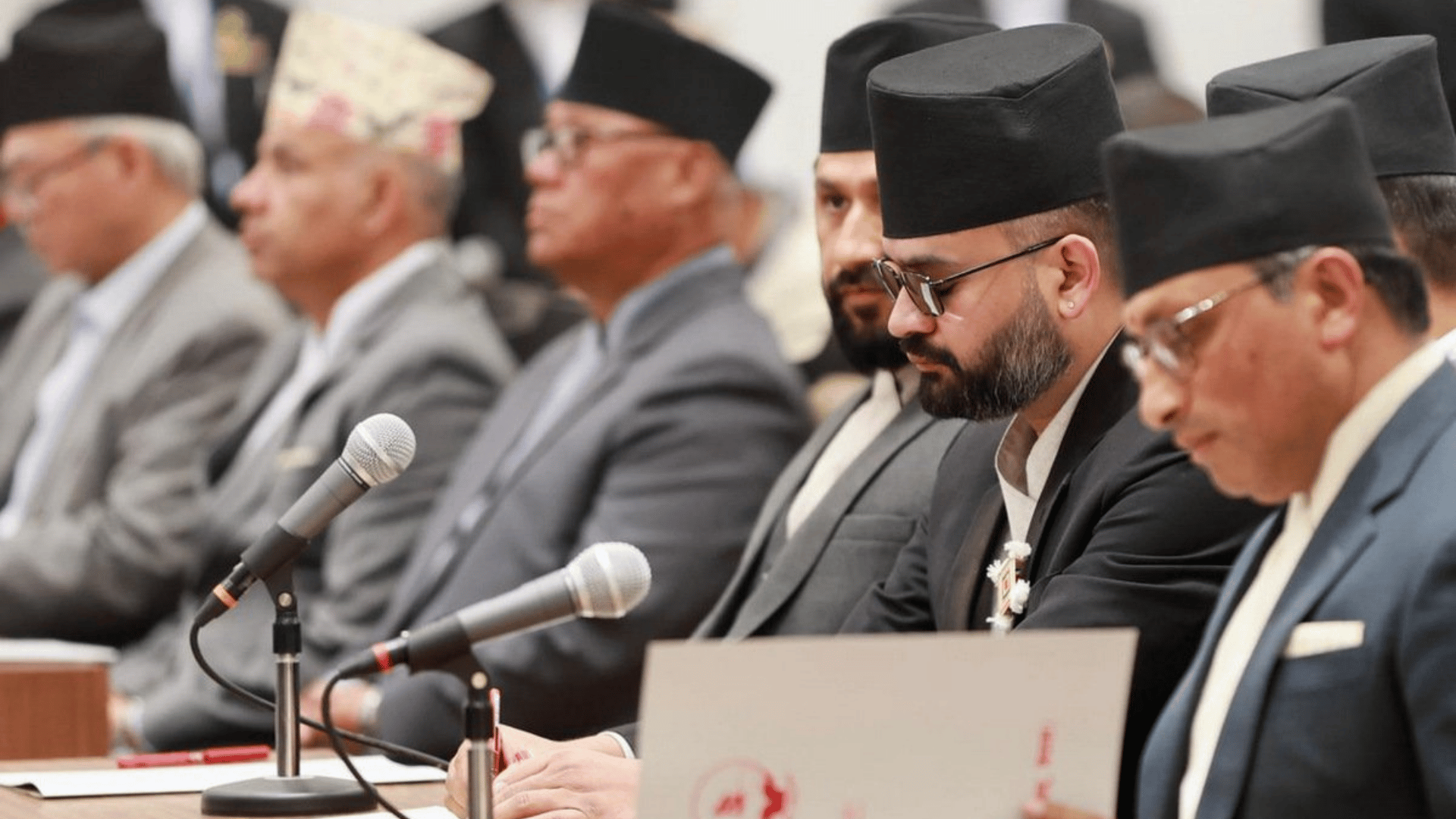
Nepal’s federal parliament is set to begin its budget session on Monday at a time when the country’s economy is facing mounting pressure from weak capital expenditure, declining private-sector confidence and growing public debt obligations. The upcoming session is expected to carry significance far beyond the annual presentation of revenue and expenditure estimates, as policymakers confront rising demands to deliver a budget capable of restoring economic momentum and rebuilding investor confidence.
President Ram Chandra Paudel has summoned the joint session of the federal parliament for Monday afternoon following a cabinet recommendation. Although the session had earlier been scheduled for Baisakh 17, it was postponed due to what officials described as special circumstances. The new parliamentary calendar now places economic recovery, governance reform and legislative restructuring at the center of national attention.
The government is entering the budget session under intense scrutiny from citizens, businesses and international development partners alike. Expectations have risen further because the current ruling coalition enjoys near two-thirds strength in parliament, giving it a relatively stable political environment to push through structural reforms. Economists and policy observers argue that this stability leaves little room for excuses if the government once again fails to improve spending efficiency and stimulate domestic production.
Unlike previous years, the debate surrounding this year’s budget is increasingly focused on implementation rather than announcements. Nepal has long struggled with the inability to spend allocated development funds on time. Large portions of capital expenditure routinely remain unused until the final months of the fiscal year, resulting in rushed spending, weak project quality and limited economic impact. Because of this recurring pattern, pressure is growing on the government to allocate funds only to projects with completed preparation, land acquisition and environmental clearances.
Analysts believe the upcoming budget must move away from the traditional distribution-oriented approach that disperses resources across numerous small and politically influenced projects. Instead, there is growing demand for concentrated investment in sectors capable of generating employment and reducing import dependency. Agriculture, tourism and hydropower are emerging as the government’s likely priority areas, particularly because these sectors possess both export potential and domestic multiplier effects.
The private sector, which contributes the largest share to Nepal’s economy, is also closely watching the government’s next steps. Business leaders have repeatedly warned that unstable policies, administrative hurdles and unpredictable taxation have weakened investment sentiment over the past few years. Calls are growing for tax incentives, simplified regulatory systems and policy continuity to encourage domestic and foreign investment. Without stronger private-sector participation, economists argue, the government alone cannot generate sustainable economic growth.
Another major issue expected to dominate the session is the management of public expenditure. Concerns over rising administrative costs and non-productive spending have intensified as government revenue growth remains under pressure. Policy experts are urging the administration to reduce unnecessary operational expenses and redirect state resources toward productive infrastructure, industrial expansion and digital transformation initiatives.
Information technology and digital infrastructure are also likely to receive greater policy attention this year. With neighboring countries rapidly modernizing their digital economies, Nepal faces increasing pressure to invest in innovation, digital governance and technology-driven employment opportunities. Policymakers are being urged to treat the IT sector not merely as a support industry but as a core pillar of long-term economic transformation.
The parliamentary session will also carry important legislative responsibilities beyond the budget itself. President Ram Chandra Paudel is expected to present the government’s annual policies and programs before the formal budget process begins. Following that, lawmakers will hold discussions on the principles and priorities of the budget, commonly referred to as the pre-budget debate, which must legally conclude at least 15 days before the annual budget presentation.
According to constitutional provisions, Finance Minister Swarnim Wagle is scheduled to present the national budget in parliament on Jestha 15. The session is also expected to deliberate on eight ordinances recently issued by the government, including their approval and replacement through parliamentary procedures.
Alongside economic debates, the government is accelerating work on the long-awaited Federal Civil Service Bill, which has become a major issue among government employees and administrative reform advocates. The Ministry of Federal Affairs and General Administration has intensified consultations and drafting work in an effort to present the bill within the timeline announced under the government’s governance reform agenda.
The proposed legislation includes several potentially transformative provisions. Among them are plans to increase the retirement age of civil servants from 58 to 60 years, introduce a two-year “cooling period” for officials after leaving office, and limit the tenure of secretaries to two years. Officials say the draft is currently being refined after collecting extensive stakeholder feedback and will soon be forwarded for consultation with the Public Service Commission before parliamentary registration.
The bill is being viewed as part of a broader attempt to modernize Nepal’s bureaucracy, though some observers warn that structural reform alone will not improve governance unless accompanied by stronger accountability mechanisms and performance evaluation systems. Questions also remain over whether the government can maintain political consensus once contentious administrative reforms enter parliamentary debate.
For now, attention remains fixed on whether the budget session can rise above political rhetoric and produce policies with measurable economic impact. After years of ambitious announcements and weak execution, the coming weeks may determine whether the government can convince citizens that economic recovery is finally moving from slogans to implementation.
Advertisement
Written by
Dipesh Ghimire