Budget
Budget Signals Nepal’s Push for Structural Economic Reform
The real test, however, will begin once the government formally presents its budget principles and priorities at the end of Baisakh, followed by the full budget announcement on Jestha 15. The broader economic debate now centers on whether the ambitious reforms signaled by Finance Minister Swarnim Wagle can realistically move beyond policy language and translate into practical execution within Nepal’s complex political and bureaucratic environment.
Dipesh Ghimire
5 min read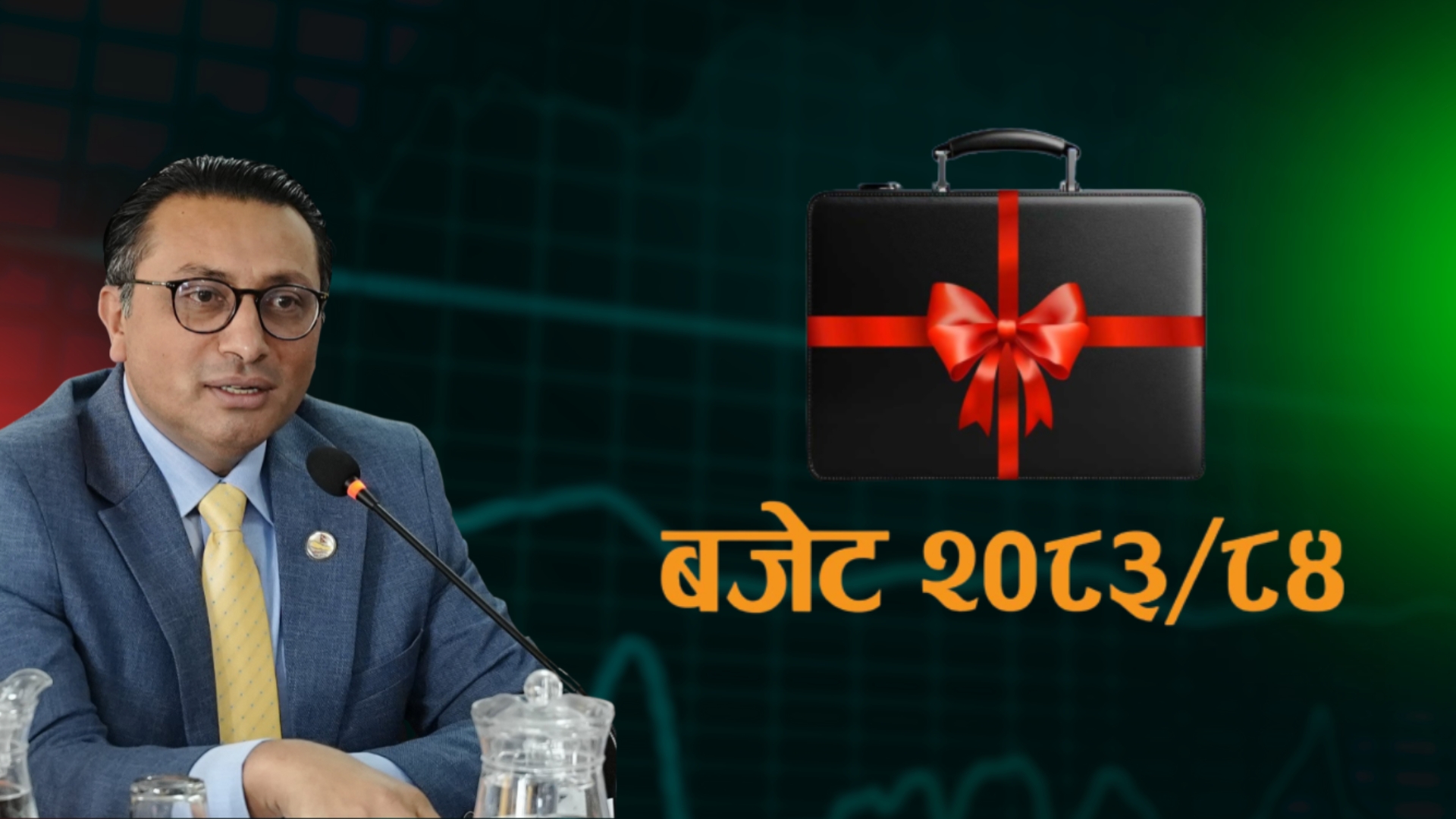
The government appears to be preparing one of the most politically and economically sensitive budgets in recent years. Finance Minister Swarnim Wagle has indicated that the upcoming fiscal year 2083/84 budget will not merely function as a conventional statement of revenue and expenditure, but as a broader instrument for structural economic reform. His recent remarks at the parliamentary Finance Committee suggest that the government is attempting to reposition Nepal’s economy at a time when fiscal pressure, weak private investment and slowing economic momentum have become increasingly difficult to ignore.
At the center of the discussion lies a severe resource constraint. The finance minister publicly acknowledged that the government’s regular obligations alone have already climbed to nearly Rs 1.33 trillion, while the state faces an estimated financing gap of around Rs 700 billion. The disclosure has exposed the scale of pressure under which the upcoming budget is being drafted.
The figures also reveal a deeper structural weakness within Nepal’s public finance system. Revenue growth has remained sluggish, recurrent expenditure continues to rise and capital spending efficiency remains poor. For several years, the economy has relied heavily on remittance inflows to sustain consumption, while productive sectors such as manufacturing and industrial expansion have failed to grow at the same pace. Against this backdrop, the government now appears to be searching for alternative ways to finance development without relying solely on traditional taxation and public borrowing.
This is why the finance minister’s repeated emphasis on “creative financing mechanisms” has drawn significant attention in economic circles. His remarks suggest that the upcoming budget may shift away from a purely distribution-oriented model and move toward alternative financing structures, greater private sector participation and external investment mobilization.
The government’s plan to introduce legislation related to alternative finance is being viewed as part of that broader transition. Policymakers increasingly appear to recognize that conventional revenue sources alone may no longer be sufficient to sustain Nepal’s expanding fiscal commitments. As a result, the state is exploring instruments such as public-private partnerships, infrastructure bonds, blended financing and long-term development partnerships to generate capital for large-scale projects.
Although the finance minister did not fully disclose the five major “themes” around which the budget is being designed, his remarks strongly hinted at a framework centered on governance reform, economic restructuring, infrastructure expansion, production-oriented growth and digital connectivity. Together, these priorities indicate that the government is attempting to shift policy attention from short-term consumption management toward long-term economic capacity building.
Particular emphasis appears to be placed on transforming Nepal’s remittance-dependent economy into a more production-based system. For years, remittance inflows have acted as the backbone of foreign exchange stability and domestic consumption. However, economists have repeatedly warned that dependence on overseas income without corresponding growth in domestic production, employment and exports leaves the economy structurally fragile. The finance minister’s comments suggest that sectors such as industry, agriculture, hydropower and export-oriented manufacturing could receive greater priority in the upcoming fiscal framework.
The government’s attempt to expand private sector involvement in road and infrastructure construction also signals a broader redefinition of the state’s economic role. Many large public projects in Nepal have historically suffered from delays, weak execution and funding shortages. By encouraging private participation in infrastructure expansion, the government appears to be acknowledging that public institutions alone may no longer have the fiscal or administrative capacity to drive large-scale development independently.
The energy sector is also emerging as one of the central pillars of the government’s long-term economic strategy. Officials have reiterated an ambitious target of producing 30,000 megawatts of electricity in the coming years. To support that vision, the government is considering amendments to environmental and forestry laws while also promoting a model in which project-affected local communities would receive equity shares instead of solely cash compensation. Analysts view this as an attempt to create local ownership in hydropower development while reducing social resistance around major projects.
Another major signal from the finance minister relates to border control and revenue leakage. He stated that the government would take a “ruthless” approach against smuggling and illegal imports, especially in border areas where customs evasion has long weakened domestic industry and state revenue collection. The administration is reportedly preparing to deploy technology-driven surveillance systems including AI-based monitoring, facial recognition systems, night-vision equipment and integrated camera networks to strengthen border oversight.
At the same time, the government’s evolving stance toward Nepal’s capital market has attracted considerable attention among investors. The finance minister described the government as maintaining a “liberal policy” toward the securities market and indicated that the reform agenda outlined in the government’s recent policy document would gradually be implemented through the budget.
The mention of restructuring the Nepal Stock Exchange has further intensified speculation about possible structural reforms in the capital market. Discussions surrounding institutional investor participation, bond market expansion, technological modernization and market transparency have gained momentum in recent months. Many market participants now see the government’s statements as an indication that Nepal’s capital market could undergo deeper institutional reform in the coming years.
Yet the finance minister’s message toward the market was not entirely accommodative. He simultaneously accused certain groups of manipulating the stock market through insider trading and artificial transactions, claiming that billions of rupees belonging to ordinary investors had been misused. His remarks that some financially powerful groups had attempted to influence even political institutions suggest that the government may also be preparing for stronger regulatory intervention within the capital market.
Analysts believe this dual approach — encouraging market expansion while warning against manipulation — reflects an attempt to institutionalize Nepal’s securities market over the long term. A more transparent and rule-based market structure could improve investor confidence and attract broader participation. However, in the short term, tougher regulatory scrutiny may also make some large investors more cautious, potentially affecting market sentiment and liquidity behavior.
Overall, the signals emerging from the finance ministry suggest that the upcoming budget may focus less on immediate expansionary spending and more on structural correction. Faced with weak revenue growth, slowing private investment, rising fiscal pressure and limited productive capacity, the government appears to be trying to reposition the economy through reform-oriented policies rather than short-term populist measures.
The real test, however, will begin once the government formally presents its budget principles and priorities at the end of Baisakh, followed by the full budget announcement on Jestha 15. The broader economic debate now centers on whether the ambitious reforms signaled by Finance Minister Swarnim Wagle can realistically move beyond policy language and translate into practical execution within Nepal’s complex political and bureaucratic environment.
Advertisement
Written by
Dipesh Ghimire