Top
Finance Minister Admits Market Manipulation and Institutional Capture, Signals Aggressive Reform Agenda
the finance minister’s statement represents more than a political criticism of past market behavior. It reflects a broader recognition that Nepal’s economic institutions face structural credibility challenges. While investors have welcomed the government’s increasingly reform-oriented language, the real test, analysts say, will lie in whether these commitments lead to measurable institutional change or remain limited to political rhetoric amid growing public frustration over financial governance and accountability.
Dipesh Ghimire
4 min read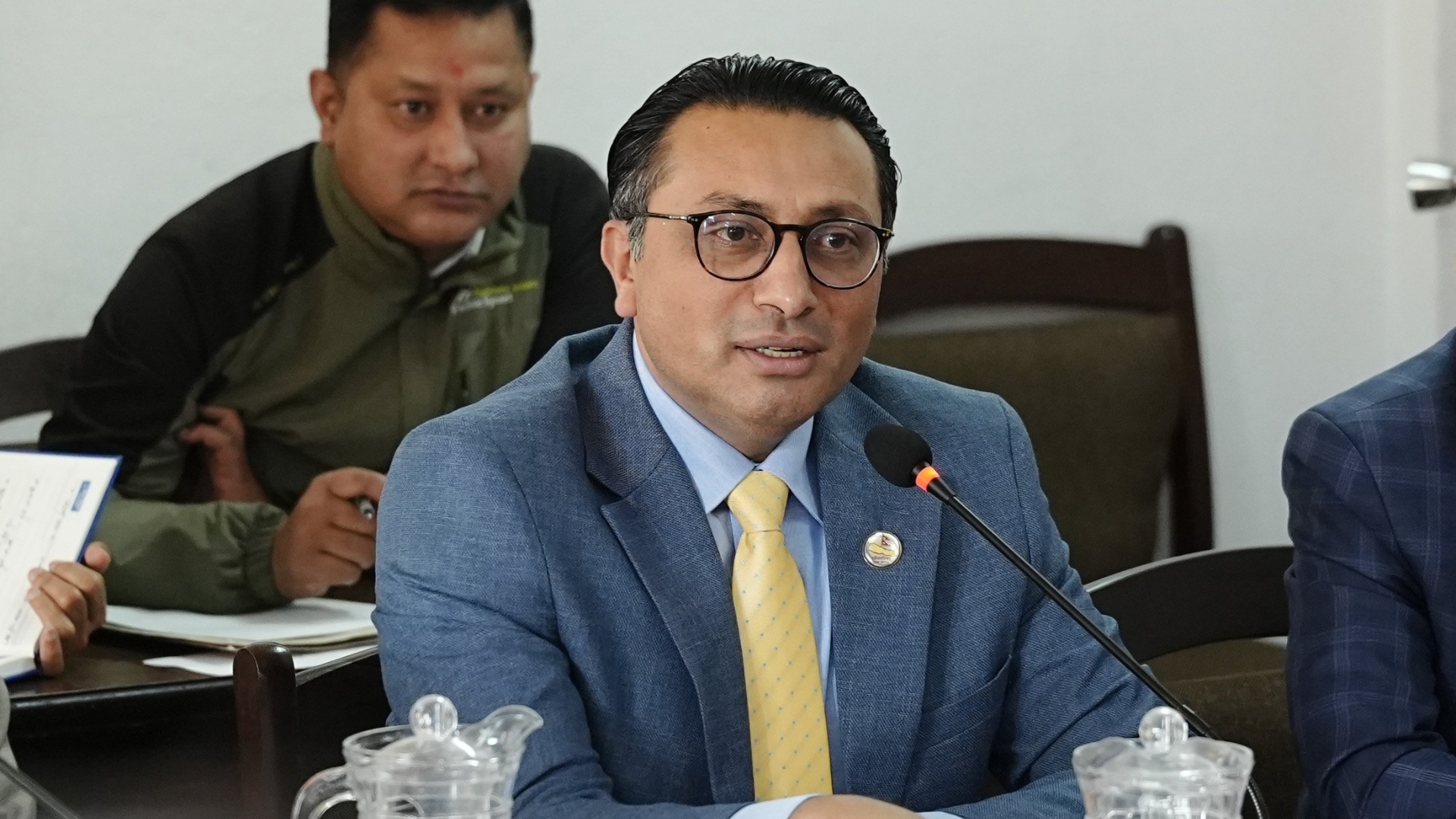
Nepal’s government has publicly acknowledged deep structural problems within the country’s financial and capital market system, with Finance Minister Swarnim Wagle accusing a limited group of individuals of manipulating the stock market, misusing billions of rupees in public funds and exerting influence over both political and economic institutions. His remarks, delivered during Tuesday’s parliamentary Finance Committee meeting, are being viewed by analysts as one of the strongest official admissions yet regarding institutional weaknesses inside Nepal’s financial sector.
Speaking before lawmakers, Wagle stated that Nepal’s capital market and several financial institutions had gradually fallen under the control of a small network of powerful actors over the past few years. According to him, these groups engaged in insider trading, artificial market manipulation and misuse of public funds while accumulating enormous wealth and expanding their influence into political structures. He alleged that public money worth nearly Rs. 15 to 16 billion had been improperly used in market-related activities, creating distortions that damaged both investor confidence and institutional credibility.
The finance minister’s statement comes at a time when Nepal’s capital market has been attempting to recover from prolonged volatility, weak investor sentiment and declining public trust. Over the past several years, concerns surrounding insider trading, operator-driven speculation, unequal access to information and weak regulatory enforcement have repeatedly surfaced in the market. Wagle’s comments appear to indicate that the government now sees these problems not merely as isolated irregularities, but as systemic governance failures that require structural reform.
Analysts say the significance of the minister’s remarks lies not only in the allegations themselves, but in the broader political message behind them. For years, criticism surrounding market manipulation largely remained confined to investors, analysts and independent observers. A senior government official publicly acknowledging that economic and political institutions may have been influenced by financial interest groups signals a major shift in official discourse surrounding Nepal’s financial governance.
The finance minister also linked the issue directly to governance and state restructuring. He argued that the country narrowly avoided falling into deeper institutional crisis due to growing public pressure and intervention movements. Referring to the so-called “Gen Z movement,” Wagle suggested that civic activism played an important role in exposing institutional weaknesses and preventing further concentration of financial and political influence among limited groups.
At the center of the government’s proposed reform agenda is the restructuring of the Nepal Stock Exchange. Wagle confirmed that recommendations submitted by a committee formed to study stock exchange reform would now move toward implementation. According to him, the government aims to transform Nepal’s capital market into a more professional, transparent and internationally aligned financial system rather than allowing it to function as a speculative platform dominated by limited operators.
The remarks also align with the government’s broader policy signals announced recently through the President’s annual policy and program. In recent weeks, authorities have repeatedly indicated plans to expand institutional participation in the stock market, strengthen regulatory oversight, introduce market-oriented reforms and modernize the overall capital market structure. Analysts believe the upcoming national budget could now include more concrete measures targeting financial governance, institutional investment and market regulation.
Wagle’s comments additionally reflect growing concern within the government regarding the relationship between economic influence and political power. His allegation that some market players managed to influence powerful political leaders suggests that the government sees financial sector reform as closely tied to broader governance reform. This narrative fits within the administration’s repeated emphasis on “good governance” as its primary political and economic agenda.
Quoting the Prime Minister during the committee meeting, the finance minister stated that the government’s immediate focus is on establishing governance discipline before aggressively expanding development projects. According to him, strengthening governance structures is viewed as the foundation upon which economic development and institutional reform can later progress more sustainably.
Market analysts say the government’s willingness to openly discuss institutional capture and financial manipulation may initially improve investor confidence, particularly among smaller retail investors who have long complained about unequal market practices. However, they also caution that public statements alone will not be enough to restore credibility unless they are followed by concrete regulatory action, transparent investigations and stronger enforcement mechanisms.
The remarks have also renewed debate regarding the effectiveness of Nepal’s financial regulators, particularly the Securities Board of Nepal. Critics have frequently argued that weak oversight, delayed investigations and leadership instability allowed unhealthy speculative practices to expand unchecked over recent years. Expectations are now growing that the government may attempt broader regulatory restructuring alongside stock exchange reforms.
Economists believe the next phase of Nepal’s capital market development will depend heavily on whether authorities can successfully reduce operator-driven market practices and encourage greater institutional participation. Long-term investors, pension funds and regulated institutional capital are still relatively underrepresented in Nepal’s secondary market, making the market highly sensitive to speculation and sentiment swings.
Overall, the finance minister’s statement represents more than a political criticism of past market behavior. It reflects a broader recognition that Nepal’s economic institutions face structural credibility challenges. While investors have welcomed the government’s increasingly reform-oriented language, the real test, analysts say, will lie in whether these commitments lead to measurable institutional change or remain limited to political rhetoric amid growing public frustration over financial governance and accountability.
Advertisement
Written by
Dipesh Ghimire