#NepalEconomy #FoodInflation #
Food Inflation Turns Negative: A Relief or a Risk?
Nepal’s food inflation has turned negative (-2.28% in mid-August 2082/83), offering short-term relief to consumers but raising long-term risks for farmers and rural incomes. While households benefit from lower prices, sustained deflation could discourage agricultural production, weaken rural demand, and undermine growth. Policymakers must balance consumer relief with strategies that support farmers and stabilize food markets.
Sandeep Chaudhary
2 min read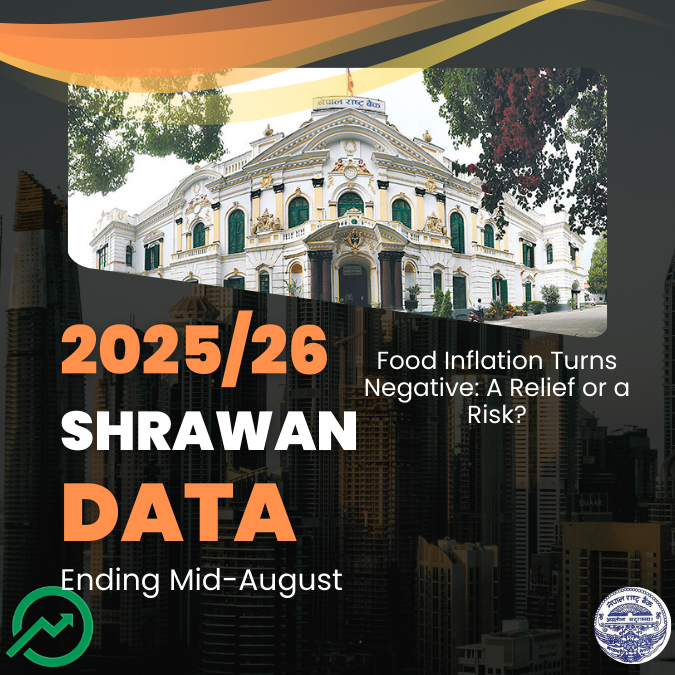
Nepal’s latest macroeconomic data shows that food inflation has turned negative, raising an important debate about whether this is a relief for consumers or a risk for the broader economy. In FY 2024/25, the food CPI fell to -1.19%, and by mid-August 2082/83 (2025/26) it declined further to -2.28%. At first glance, this decline seems like welcome news for households, as it lowers the cost of essential goods and eases pressure on family budgets. For a country where food accounts for a large share of household spending, cheaper food prices help improve living standards, reduce short-term inflationary pressures, and allow more room for savings or non-food consumption.
However, persistent food deflation also signals underlying risks. A key concern is that falling food prices may reflect weak agricultural productivity, oversupply in certain crops, or reduced domestic demand, all of which could hurt farmers’ incomes. Since a large share of Nepal’s population is dependent on agriculture for their livelihoods, sustained negative food inflation could discourage production, lower rural earnings, and deepen poverty in farming communities. This imbalance becomes even more significant when paired with Nepal’s high reliance on imported food items, which creates volatility and undermines domestic food security.
From a macroeconomic perspective, food price deflation contributes to overall disinflation—pushing CPI to just 1.68% by mid-August 2082/83—and reduces pressure on monetary policy. While this is good for price stability and financial planning, it can also indicate sluggish aggregate demand, which dampens private sector investment and job creation. Thus, while consumers may enjoy lower grocery bills, the long-term risks lie in depressed agricultural incomes and weaker economic activity in rural areas.
The challenge for Nepal is to manage this balance. Policymakers need to ensure that falling food prices do not harm rural producers by investing in productivity, storage, and export markets, while at the same time protecting consumers from volatility. If managed well, negative food inflation could provide breathing space for households and help anchor stable overall inflation. If left unchecked, however, it could become a drag on agricultural growth and rural welfare.
Advertisement
Written by
Sandeep Chaudhary