Former Governors
Former Governors Warn Against Political Interference in Nepal Rastra Bank, Stress Central Bank Autonomy
Economists say the discussion reflects a broader policy tension in Nepal’s financial governance — between maintaining institutional independence and responding to government-led development priorities.
Dipesh Ghimire
2 min read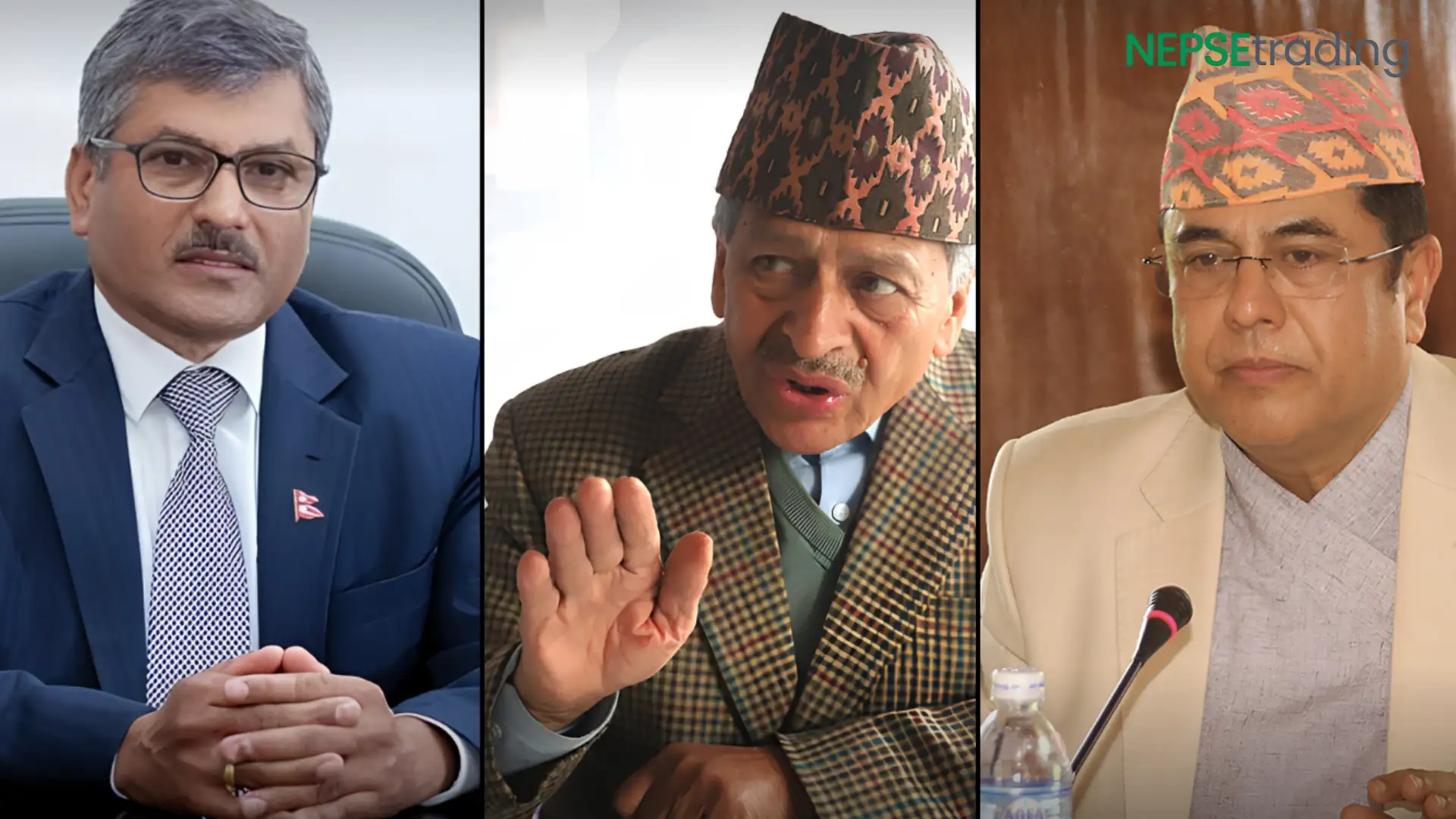
Kathmandu — Former governors of Nepal Rastra Bank have cautioned against growing political or institutional interference in monetary policy, stressing that the effectiveness of Nepal’s financial system depends heavily on the independence of the central bank.
Speaking during a discussion on monetary policy at the House of Representatives’ Finance Committee, former governor Mahaprasad Adhikari and former governor Dipendra Bahadur Kshetry emphasized that weakening the autonomy of Nepal Rastra Bank could undermine policy effectiveness and financial stability.
Adhikari stated that the more independent the central bank is, the easier it becomes for the Ministry of Finance to implement broader economic policies. He argued that monetary policy works best when coordination is based on guidance and consultation rather than direct instruction.
“The central bank becomes more effective when it is autonomous,” he said, adding that a situation where the government issues directives that the central bank does not follow creates policy inconsistency and institutional tension.
He also noted that despite ample liquidity in the banking system, low interest rates, and strong remittance inflows, credit expansion has remained weak. According to him, this reflects structural issues rather than monetary tightening alone.
Adhikari pointed out that changing consumption patterns, including the rise of online commerce, may also be influencing borrowing behavior and reducing traditional credit demand. He warned against loosening regulatory frameworks solely based on temporary macroeconomic comfort, arguing that policy discipline must be maintained even in favorable conditions.
He further emphasized that monetary policy is highly technical and should be guided by domestic and external economic indicators rather than short-term political expectations. Given current macroeconomic stability, he suggested that there is no strong justification for major tightening in policy rates.
Former governor Dipendra Bahadur Kshetry also underscored the importance of maintaining clear institutional boundaries between fiscal and monetary authorities. He stated that while fiscal policy falls under the government’s jurisdiction, interest rates and exchange rate management remain core responsibilities of Nepal Rastra Bank.
He warned that excessive government interference in monetary decision-making could weaken the central bank’s autonomy and reduce policy credibility.
“The government handles fiscal policy, but interest rates and exchange rates are the responsibility of the central bank,” he said, adding that this separation must be respected to ensure stability in the financial system.
Kshetry also highlighted the need for monetary policy to reflect social realities, noting that debt distress among vulnerable groups, including women facing repayment difficulties, should be considered in policy design.
He called for clearer regulatory clarity regarding the central bank’s role in overseeing the cooperative sector, while also pointing out that Nepal’s foreign exchange reserves remain strong largely due to remittance inflows.
The remarks from both former governors come at a time when Nepal is reviewing its monetary policy framework amid concerns over sluggish credit growth, rising non-performing loans, and ongoing debates over the balance between regulatory control and financial sector flexibility.
Economists say the discussion reflects a broader policy tension in Nepal’s financial governance — between maintaining institutional independence and responding to government-led development priorities.
Advertisement
Written by
Dipesh Ghimire