Top
From Architect of Nepal’s Open Economy to Alzheimer’s Struggle: The Rise, Influence and Controversy of Dr. Ram Sharan Mahat
From Architect of Nepal’s Open Economy to Alzheimer’s Struggle: The Rise, Influence and Controversy of Dr. Ram Sharan Mahat When Nepal entered a new democratic era after the 1990 People’s Movement (2046 BS), Girija Prasad Koirala—then a towering political personality—was preparing to lead the first democratic government. Although highly influential politically, Koirala was not known for economic expertise. In search of a capable economist who could design Nepal’s new economic framework, he initially approached Sukdev Shah, an economist based in the United States. According to political accounts, Koirala offered him the position of Finance Minister. But when Shah asked, “How much salary does a finance minister earn?”, Koirala reportedly became upset and hung up the phone—a revealing anecdote that has become part of Nepal’s political folklore.
Dipesh Ghimire
3 min read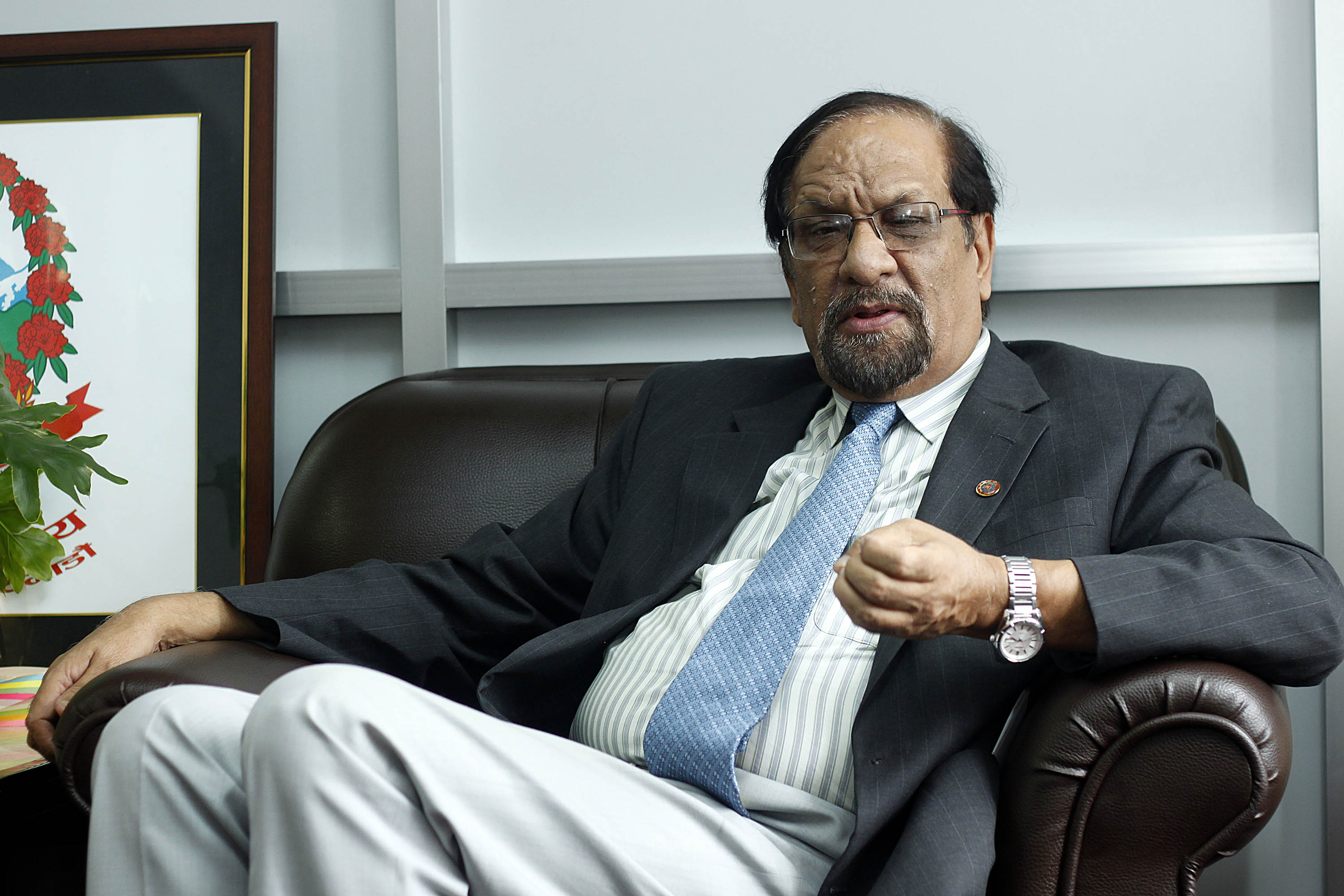
When Nepal entered a new democratic era after the 1990 People’s Movement (2046 BS), Girija Prasad Koirala—then a towering political personality—was preparing to lead the first democratic government. Although highly influential politically, Koirala was not known for economic expertise. In search of a capable economist who could design Nepal’s new economic framework, he initially approached Sukdev Shah, an economist based in the United States. According to political accounts, Koirala offered him the position of Finance Minister. But when Shah asked, “How much salary does a finance minister earn?”, Koirala reportedly became upset and hung up the phone—a revealing anecdote that has become part of Nepal’s political folklore.
After that, Koirala turned to another promising young economist studying in the U.S.—Dr. Ram Sharan Mahat. He was brought back to Nepal to contest the 1991 (2048 BS) election with the intention of making him Finance Minister. Although Mahat lost the election, Koirala appointed him Vice Chair of the National Planning Commission, allowing him to shape Nepal’s economic transition from behind the scenes. While Dr. Mahesh Acharya served as the Finance Minister at the time, the blueprint for Nepal’s new open-market economic policy was largely drafted by Mahat.
Dr. Mahat would later go on to become the chief architect of Nepal’s shift from a state-controlled economy to a liberal, market-oriented model. The policies he introduced in the 1990s—privatization, deregulation, and opening the financial sector for private investment—were unprecedented in Nepal. His ideas marked the first major departure from planned socialism towards competitive capitalism. Over the next decades, Mahat became one of the most influential economic policymakers in the country, serving as Finance Minister six times and once as Foreign Minister.
During his early years in economic leadership, Nepal’s state-owned enterprises were in a dire state. Government investment in public enterprises exceeded Rs 10 billion, yet the returns were negligible—only Rs 12.4 million in dividends, less than 0.1 percent of the total investment. Most government-owned industries survived only through continuous subsidies. To address this unsustainable situation, Mahat pushed strongly for privatization, arguing that Nepal’s economic growth depended on entrepreneurship, innovation and private-sector dynamism rather than government control.
He also introduced reforms to simplify industrial permits. To encourage investment and reduce bureaucratic delays, Mahat’s budget provision allowed industries requiring less than 50 percent convertible foreign currency for raw materials to operate without obtaining a formal industrial license. This reform was intended to boost domestic raw material use and support Nepal’s manufacturing capacity—an idea ahead of its time for a developing economy.
Mahat similarly championed the creation of private finance companies and commercial banks, which opened Nepal’s financial sector to competition for the first time. His belief was clear: without a strong and competitive private sector, Nepal could not achieve meaningful economic growth. Several other reforms—including foreign exchange adjustments and improvements to banking regulations—were introduced under his guidance, shaping Nepal’s economic architecture for decades to come.
However, the man who once designed Nepal’s economic future now struggles to remember large parts of his own. In recent years, Dr. Mahat has been suffering from Alzheimer’s, a degenerative disease that affects memory and cognitive function. People close to him describe his condition as severe; he has not appeared publicly for the last four years. The economist who once steered Nepal’s fiscal direction now battles the gradual loss of memory, identity and recognition.
Despite his ill health, Mahat has recently been drawn into controversy due to a corruption case filed by the Commission for the Investigation of Abuse of Authority (CIAA). The case involves alleged irregularities in the cost revision for the Pokhara Regional International Airport. According to CIAA’s statement, a meeting held in Mahat’s office on Kartik 3, 2071, recommended forwarding a revised cost estimate of USD 21.59 million to the cabinet. The following day, the Finance Ministry conveyed the decision to the Tourism Ministry, which then submitted the proposal for cabinet approval on Kartik 9 with the involvement of Minister Deepak Chandra Amatya.
While other former ministers—including Post Bahadur Bogati, Ram Kumar Shrestha and Bhim Acharya—are also named in the case, Mahat’s fragile health raises significant questions about the implications of the legal process. Supporters argue that the economist who shaped Nepal’s open economy should not be dragged into courtroom battles during the most vulnerable stage of his life. Others, however, insist that legal accountability must apply uniformly, regardless of personal circumstances.
Dr. Mahat’s story embodies both the transformative vision and the contradictions of Nepal’s political evolution. He modernized Nepal’s economy, championed private-sector reforms, and introduced the liberal policies that continue to define the country today. Yet he now stands at a crossroads where history, illness and controversy converge—his legacy being debated even as his memory fades.
Advertisement
Written by
Dipesh Ghimire