From Trash to Treasure
From Trash to Treasure: Govt Tables Landmark Bill to Turn Waste into a Multi-Billion Rupee Industry
At the grass-roots level, the bill introduces innovative mechanisms such as community-based "waste banks," recycling centers, and mandatory buy-back schemes requiring manufacturers to repurchase reusable packaging and products from consumers. If passed and vigorously implemented through multi-tiered government coordination, this legislative reform promises not only to resolve the chronic garbage crises plaguing Nepal's major urban hubs, but also to establish a sustainable economic model where waste becomes a continuous source of national revenue.
Dipesh Ghimire
2 min read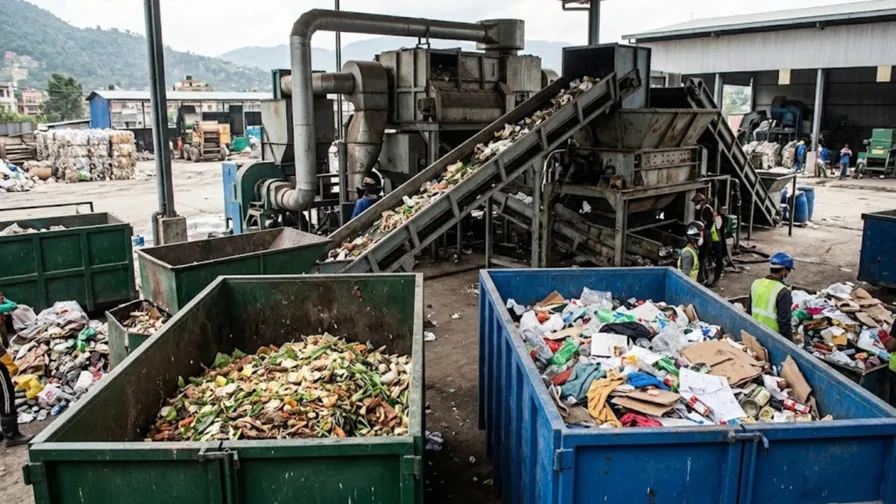
In a major policy shift aimed at turning long-standing urban sanitation challenges into economic opportunities, the government has registered a landmark Waste Management Bill in the House of Representatives. Introduced by Minister for Infrastructure Development Sunil Lamsal, the proposed legislation seeks to overhaul Nepal’s traditional waste disposal framework by replacing stink-ridden landfill dumping sites with resource recovery centers, embedding the principles of a "circular economy" directly into national law.
The bill departs fundamentally from the conventional practice of waste dumping, prioritizing waste reduction, reprocessing, and resource recovery. Grounded in constitutional guarantees—specifically Article 30 (right to a clean environment) and Article 35 (right to drinking water and sanitation)—the draft law sets an ambitious "Zero Waste" target. Under this framework, garbage will no longer be treated as a foul nuisance to be discarded, but as a valuable raw material to produce organic fertilizer, biogas, electricity, and industrial inputs.
To ensure immediate structural changes on the ground, the bill mandates that within three months of its enactment, local governments must install covered, segregated dustbins—categorized for organic, inorganic, and hazardous waste—across all public roads, parks, exhibition grounds, and transit stops. The legislation imposes strict obligations on citizens to refrain from littering, while enforcing stringent requirements on hospitals, industrial units, and electronics manufacturers to safely reprocess and manage their own hazardous and electronic waste.
Opening significant avenues for private sector investment and community involvement, the bill empowers local levels to delegate waste management operations to private companies through competitive bidding. Licenses will be awarded based on clear operational plans, technical capacity, and financial feasibility for generating energy, organic compost, or reusable raw materials. This framework is expected to unlock billions of rupees in private investment and create thousands of "green jobs," elevating waste management from a costly municipal burden into a viable commercial sector.
To mitigate market risks that previously deterred waste-to-energy ventures, the proposed law introduces a robust package of state incentives. The government will offer an "off-take guarantee" to purchase energy or fuel generated from waste at fixed minimum prices. Furthermore, enterprises involved in producing organic fertilizer, energy, or recycled materials will receive tax exemptions, subsidies, and concessional loans across federal, provincial, and local levels. To streamline logistics, local taxes on the transit of recyclable goods will be prohibited, and public institutions will be legally required to give priority to recycled and eco-friendly products in state procurement.
At the grass-roots level, the bill introduces innovative mechanisms such as community-based "waste banks," recycling centers, and mandatory buy-back schemes requiring manufacturers to repurchase reusable packaging and products from consumers. If passed and vigorously implemented through multi-tiered government coordination, this legislative reform promises not only to resolve the chronic garbage crises plaguing Nepal's major urban hubs, but also to establish a sustainable economic model where waste becomes a continuous source of national revenue.
Advertisement
Written by
Dipesh Ghimire