Top
Global Alcohol Consumption Falls to Historic Low, Shaking an $830 Billion Industry
Global Alcohol Consumption Falls to Historic Low, Shaking an $830 Billion Industry The global alcohol industry is facing one of its most profound disruptions in modern history as the number of people consuming alcohol continues to decline worldwide. What was once considered a recession-proof industry is now confronting structural change driven by shifting consumer behaviour, rising health awareness, and geopolitical pressures. Recent data indicate that the combined market value of major alcohol producers has shrunk by approximately $830 billion, underscoring the scale of the slowdown.
Dipesh Ghimire
4 min read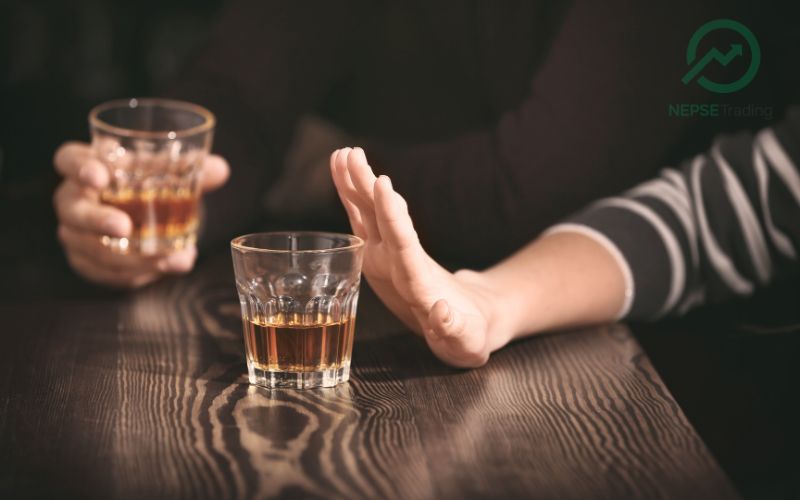
The global alcohol industry is facing one of its most profound disruptions in modern history as the number of people consuming alcohol continues to decline worldwide. What was once considered a recession-proof industry is now confronting structural change driven by shifting consumer behaviour, rising health awareness, and geopolitical pressures. Recent data indicate that the combined market value of major alcohol producers has shrunk by approximately $830 billion, underscoring the scale of the slowdown.
A striking symbol of this downturn emerged from the United States, where Jim Beam, one of the oldest and most iconic bourbon producers, announced a temporary halt in production at its flagship Clermont distillery in Kentucky for at least one year beginning in 2026. Founded more than 230 years ago, the brand has never before paused production at its main facility, making the decision historically significant for both the company and the wider bourbon industry.
Trade Tensions Trigger Immediate Shock
The production halt is closely linked to recent trade disruptions between the United States and Canada. Following the imposition of a 25 percent tariff on Canadian exports by the US in early 2025, Canadian liquor boards abruptly stopped purchasing American spirits. The impact was swift: US alcohol exports to Canada reportedly fell by 85 percent in the second quarter of 2025, dropping below $10 million.
For Kentucky’s bourbon producers, whose business models depend on long-term export contracts, the sudden loss of a key market proved destabilising. Unlike other consumer goods, bourbon production cannot be easily adjusted in the short term. Whiskey barrels filled years earlier cannot be redirected overnight to alternative buyers, leading to an unprecedented stockpile of aging inventory.
From Bourbon Boom to Oversupply
Industry data show that Kentucky distilleries are now sitting on a record 16.1 million aging barrels, the result of aggressive expansion over the past two decades. Producers had long assumed that global demand—especially from North America, Europe, and Asia—would continue to grow well into the 2030s. This confidence triggered what industry insiders often described as a “bourbon gold rush.”
Jim Beam’s parent company, Suntory Global Spirits, now finds itself grappling with both excess supply and weakening demand. While the company has said it will avoid immediate layoffs, the pause affects around 1,500 Kentucky-based jobs linked to the Clermont facility. Other global players, including Diageo, have also scaled back whiskey production in Kentucky, Tennessee, and Texas, indicating that the issue extends far beyond a single brand.
Are People Really Drinking Less?
Beyond trade disputes and oversupply, a deeper question is unsettling the industry: are consumers fundamentally changing their relationship with alcohol? Increasingly, evidence suggests the answer is yes.
According to recent findings from Gallup, alcohol consumption in the United States has fallen to its lowest level since records began in the 1930s. Only 54 percent of American adults now report drinking alcohol, down from 62 percent in 2023 and 58 percent in 2024. For the first time, a majority of Americans also believe that even moderate drinking is harmful to health.
The decline is particularly sharp among women and younger adults. Consumption among young adults has dropped to around 50 percent, reflecting a broader cultural shift toward wellness-oriented lifestyles. Analysts note that this demographic change is critical, as younger consumers traditionally drive long-term demand growth.
Health, Lifestyle and New Alternatives
Health awareness has emerged as a central factor behind the decline. Younger generations, especially Gen Z, are increasingly embracing alcohol-free lifestyles or turning to alternatives such as mocktails, cannabis-based products, and fitness-focused social activities. The growing use of GLP-1 weight-loss drugs, which suppress appetite and alcohol cravings, has also contributed to reduced consumption. Estimates suggest that one in eight adults globally now uses such medication.
These behavioural shifts have had a measurable financial impact. The Bloomberg Alcohol Industry Index, which tracks around 50 major global alcohol companies, has fallen 46 percent from its 2021 peak, wiping out nearly $830 billion in market value.
Global Brands Under Pressure
Major European alcohol producers such as Diageo, Pernod Ricard, and Rémy Cointreau are trading near multi-decade lows. In China, premium baijiu producer Kweichow Moutai has lost more than 40 percent of its market value from its peak, weighed down by restrictions on alcohol use at official functions. Companies from Brown-Forman in the US to Australia’s Treasury Wine Estates are also reporting weaker sales and declining investor confidence.
While alcohol demand has historically survived wars, pandemics, prohibition and economic crises, analysts argue that the current downturn is different. This time, the shift appears cultural rather than cyclical.
A Turning Point for the Industry
As 2026 approaches, the alcohol industry faces what many consider a defining test. With consumers redefining social life around productivity, longevity and mental well-being, alcohol producers are under pressure to adapt their business models. Some are investing in low-alcohol and alcohol-free products, while others are rethinking production scale and geographic exposure.
For an industry long accustomed to steady growth, the current moment represents both a crisis and an opportunity. Whether producers can successfully navigate this transition will determine if alcohol remains a central feature of global consumption—or becomes a smaller, more specialised segment of a rapidly evolving lifestyle economy.
Advertisement
Written by
Dipesh Ghimire