Budget 2084/84
Government Allocates Rs 101.95 Billion for Health, Free Cancer Treatment for Children
The Finance Minister said the night duty allowance of nursing staff has been doubled, and the transport expense provided to female community health volunteers has been increased by fifty percent.
Dipesh Ghimire
3 min read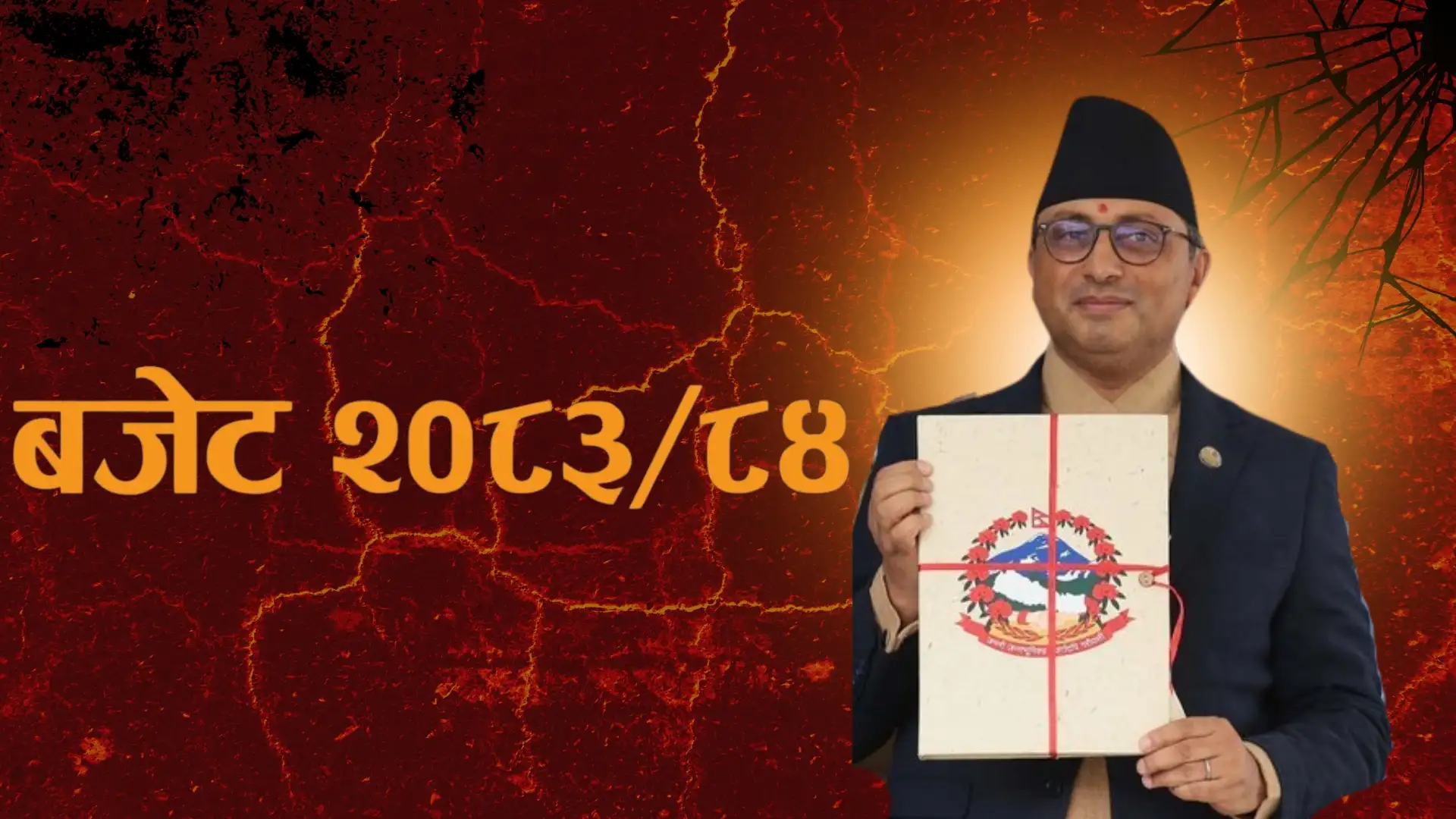
Kathmandu — Finance Minister Dr. Swarnim Wagle has announced various plans and allocations for the accessible health services sector through the budget.
Wagle said Rs 101.95 billion has been allocated to the health sector to ensure all citizens' access to and use of quality basic health services. Of this, Rs 15 billion has been set aside for the health insurance programme.
The Finance Minister said Rs 13.15 billion has been allocated for health-related social security programmes, including treatment for the poor, the Safe Motherhood Programme, and free medicines.
He said the basic health service package will be revised based on the changing nature and burden of diseases and cost-effectiveness.
Wagle said the 336 basic hospitals whose construction has begun will be completed within the next three years. He said basic hospitals will be built at suitable locations in one local government in each province with a low Human Development Index, while hospitals whose construction has not yet begun will be built only after scientific mapping. Rs 5.90 billion has been allocated for the operation of basic hospitals and infrastructure construction.
The Finance Minister said a "National Health Accreditation Authority" will be established to measure, certify, and accredit the quality of health institutions and services.
He said telemedicine services will be expanded and specialist health care ensured through video consultation in remote areas including Karnali and Sudurpaschim.
Wagle said a burn treatment unit will be established at the federal specialised hospital, and the capacity of Bir Hospital and Kirtipur Hospital will be developed for intensive burn treatment.
The Finance Minister said the construction of a kidney disease treatment centre and a trauma centre will begin in Madhesh province. He said arrangements have been made for free treatment of childhood cancer at government hospitals.
He said health institutions established at the citizen level that have earned international recognition for providing exemplary, accessible health services will be encouraged. Under this, the budget has been allocated to upgrade Dhulikhel Community Hospital and the Kathmandu Institute of Child Health. Tax concessions have been provided to encourage the Tilganga Eye Institute in lens production.
Wagle said high-altitude sickness treatment services will be expanded, and rapid response teams will be mobilised in affected areas for epidemic prevention and response.
The Finance Minister said a "Food and Drug Administration" will be established to ensure the quality and regulation of medicines, diagnostics, and other health-related food materials produced or supplied within the country.
He said a "one citizen, one digital profile" system will be implemented for real-time monitoring across all health institutions.
Wagle said "affordable pharmacies" will be operated in all health institutions in collaboration with the community, cooperative, and private sectors, and the National Medicine Laboratory will be upgraded.
The Finance Minister said Rs 320 million has been allocated as a capital grant to purchase and install a PET scan and cyclotron machine at the BP Koirala Memorial Cancer Hospital.
He said Ayurveda and alternative medicine will be linked with health tourism by bringing into operation the National Ayurveda Panchakarma and Yoga Service Centre in Budhanilkantha, the National Ayurveda Research and Training Centre in Kirtipur, and an Ayurveda hospital with natural and alternative medicine in Pokhara.
Wagle said the infrastructure development of Narayani Hospital, Gajendra Narayan Singh Hospital, and the Ram Raja Prasad Singh Health Sciences Academy in Madhesh province will be advanced, and that an air ambulance service will be launched in remote areas of Karnali province.
The Finance Minister said the night duty allowance of nursing staff has been doubled, and the transport expense provided to female community health volunteers has been increased by fifty percent.
Advertisement
Written by
Dipesh Ghimire