Cooperatives
Government Begins Returning Deposits to Victims of Crisis-Hit Cooperatives
First phase benefits 688 small savers, but billions still remain unpaid across troubled cooperative sector
Dipesh Ghimire
3 min read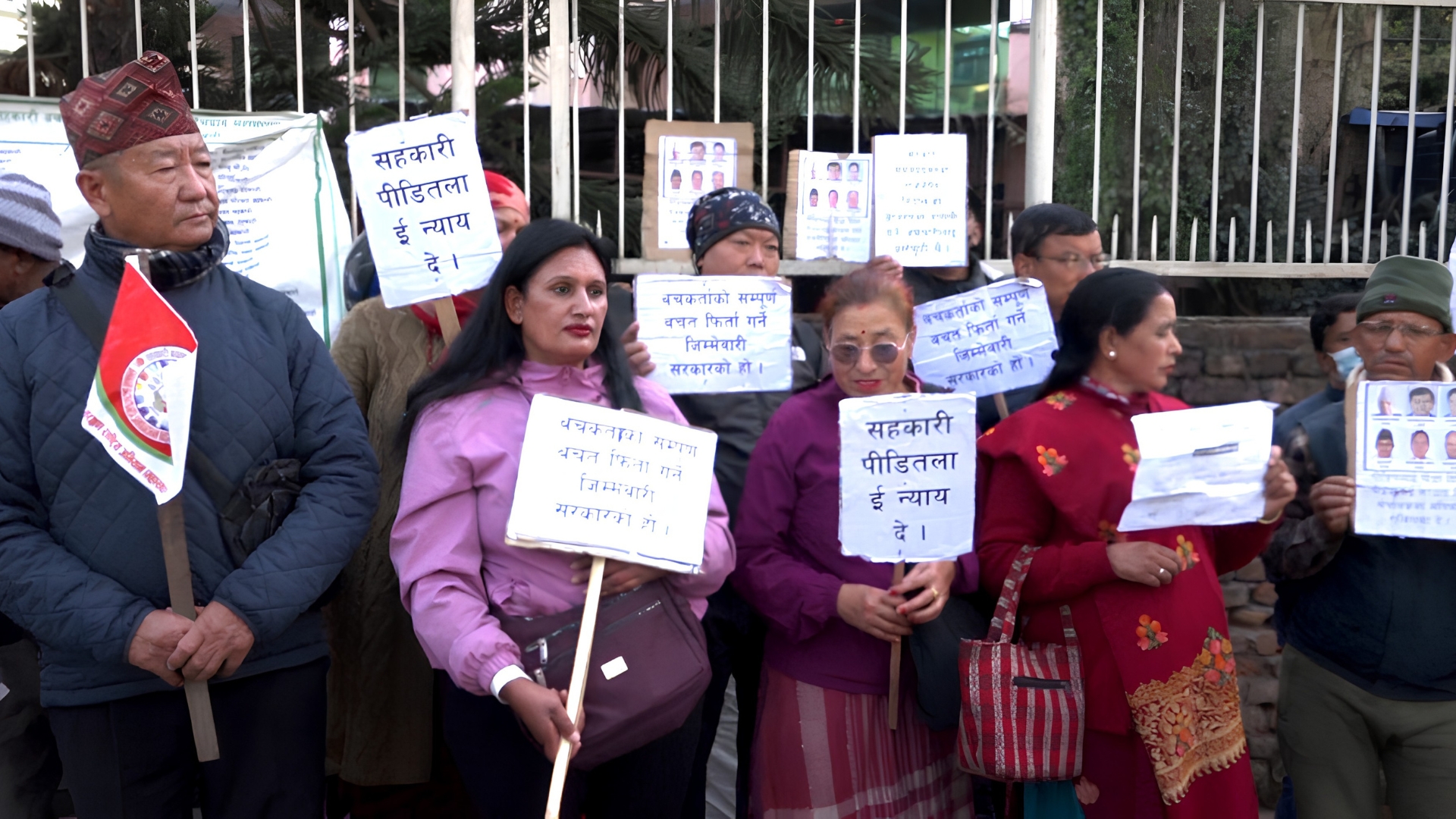
The government has begun returning savings to depositors affected by Nepal’s long-running cooperative crisis, offering partial relief to hundreds of victims who had been unable to access their money for years. In the first phase of the repayment process, 688 depositors from five troubled cooperatives have received refunds through the Problematic Cooperative Management Committee.
According to the committee, the repayments have so far covered 215 depositors of Kantipur Cooperative, 372 depositors of Shiva Shikhar Multipurpose Cooperative, seven depositors of Pashupati Cooperative, 88 depositors of Krishi Bikash Multipurpose Cooperative, and six depositors of Nagarik Kalyan Cooperative. The move marks the first visible effort by authorities to address growing public frustration surrounding Nepal’s cooperative sector collapse.
Officials say the current repayment process has prioritized small depositors, many of whom had invested life savings into cooperatives expecting higher returns and easier access to financial services. Member Secretary Rabin Dhakal said the government is currently focusing on depositors with lower savings balances before gradually expanding repayments based on deposit size classifications.
The repayment initiative comes amid mounting pressure on the government to respond to one of Nepal’s largest financial trust crises in recent years. Thousands of cooperative depositors across the country have accused operators of mismanagement, misuse of funds, and financial irregularities after many institutions failed to return savings on time. In several cases, cooperative collapses triggered protests, legal disputes, and political controversy.
Despite the latest repayments, the scale of the crisis remains severe. According to official figures, nearly 76,000 depositors are still waiting to recover close to NPR 46 billion trapped in problematic cooperatives. The data highlights the enormous financial burden facing both the government and the recovery mechanism established to manage failing cooperatives.
The numbers also reveal the deep social impact of the crisis. A large portion of affected depositors are believed to be small savers, including retirees, migrant worker families, lower-middle-income households, and rural citizens who viewed cooperatives as safer and more accessible than formal banking institutions. For many families, frozen deposits disrupted healthcare expenses, education payments, business operations, and daily household finances.
The cooperative sector had expanded rapidly over the past decade, particularly in semi-urban and rural areas where formal banking penetration remained relatively limited. Many cooperatives attracted depositors by offering higher interest returns than commercial banks and promoting themselves as community-based financial institutions. However, weak regulation, poor governance, political protection, and inadequate financial oversight gradually exposed structural weaknesses within the sector.
Analysts say the current crisis reflects not only financial mismanagement at individual cooperatives but also broader regulatory failures. Oversight mechanisms failed to detect liquidity problems, risky lending practices, and possible fund diversion until several institutions had already become financially unsustainable. The situation eventually eroded public confidence in large parts of Nepal’s cooperative system.
The government has also intensified loan recovery efforts from borrowers linked to problematic cooperatives. According to the committee, more than NPR 250 million has already been recovered from borrowers so far. Authorities believe aggressive recovery of outstanding loans will be critical if repayments to depositors are to continue in the coming months.
However, experts warn that the repayment process itself may remain slow and financially challenging. With liabilities running into tens of billions of rupees, the government faces pressure to balance public expectations with limited recovery resources. Some analysts argue that unless institutional reforms are introduced alongside repayments, public trust in the cooperative sector may remain weak even after compensation efforts continue.
The crisis has also reignited debate over Nepal’s broader financial governance system. Economists say the cooperative sector expanded far more rapidly than regulatory capacity, allowing many institutions to operate without strong financial discipline or transparent accountability. The result, they argue, was a parallel financial system carrying significant public deposits but lacking the risk controls normally applied to commercial banks.
For now, the first phase of repayments offers limited but symbolic relief to affected savers. Yet with tens of thousands of depositors still awaiting their money and billions of rupees yet to be recovered, Nepal’s cooperative crisis remains far from resolved.
Advertisement
Written by
Dipesh Ghimire