Cooperative
Government Clarifies Cooperative Refunds — Depositors Are Getting Back Their Own Money, Not Yours
That distinction matters enormously — both as a matter of fiscal policy and as a signal of what depositors who have not yet received anything can realistically expect. If refunds are entirely dependent on how much money the government can recover from defaulting borrowers, then the pace and completeness of those refunds are directly tied to the speed and success of debt recovery operations. For the thousands of Nepalis still waiting to see their savings returned, that is not a reassuring framework.
Dipesh Ghimire
6 min read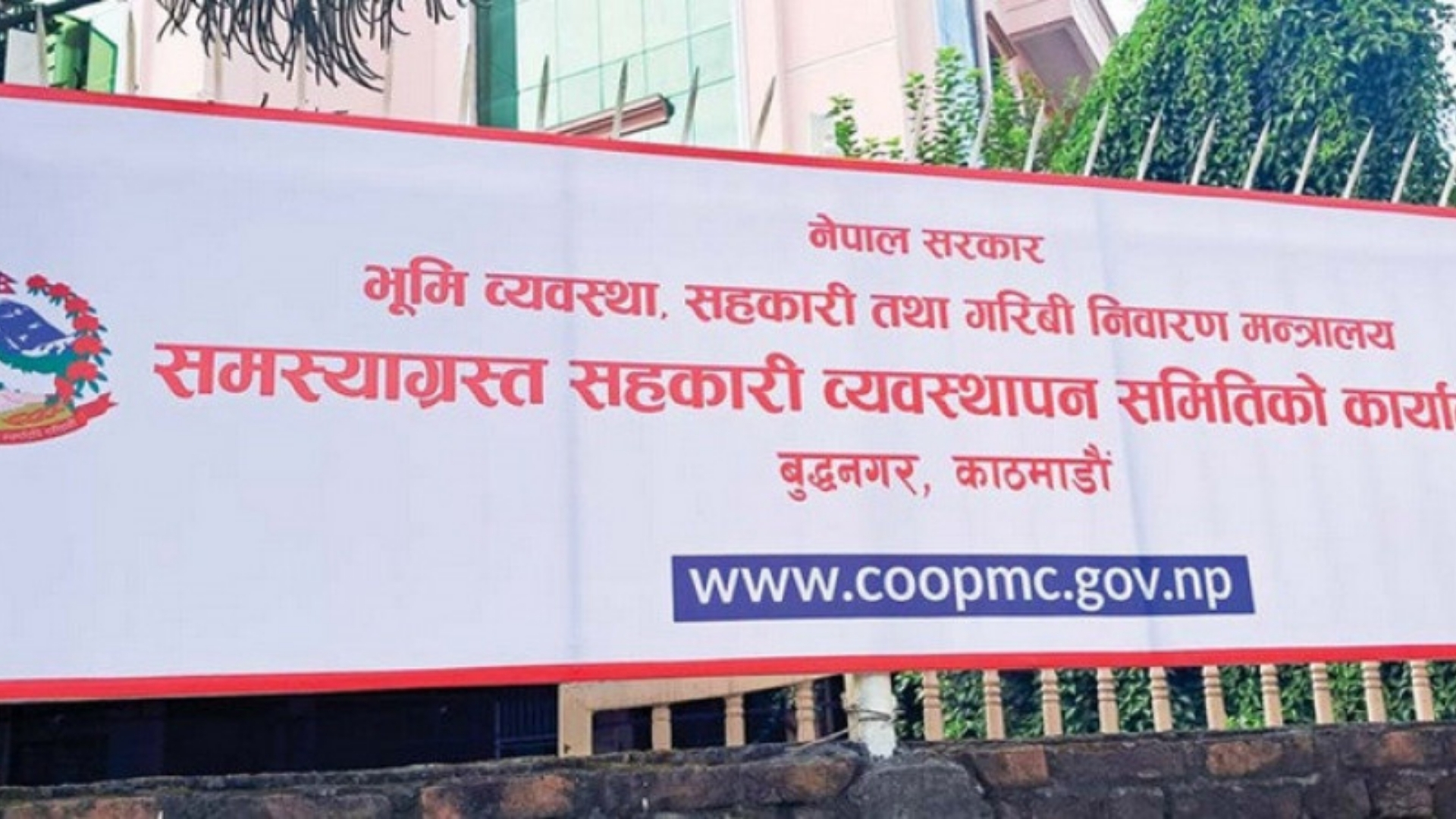
KATHMANDU — A clarification issued by the government this week on the cooperative crisis may have answered one question while quietly raising several others. The statement was intended to correct what officials described as a public misconception — the belief that the state treasury was being used to compensate depositors of failed cooperative institutions. The government's position is clear: not a single rupee from the national exchequer has gone toward these refunds. What depositors are receiving back is money recovered from the same borrowers who took loans from their cooperatives in the first place.
That distinction matters enormously — both as a matter of fiscal policy and as a signal of what depositors who have not yet received anything can realistically expect. If refunds are entirely dependent on how much money the government can recover from defaulting borrowers, then the pace and completeness of those refunds are directly tied to the speed and success of debt recovery operations. For the thousands of Nepalis still waiting to see their savings returned, that is not a reassuring framework.
The clarification came from the Distressed Cooperative Management Committee, which operates under the Ministry of Land Management, Cooperatives, Federal Affairs, and General Administration. In a formal press release, the committee stated that it had noted with concern the public complaints and confusion circulating about the source of refund funds. The statement was an attempt to set the record straight, but its language also revealed the limits of what the government is currently able to offer.
Twenty cooperatives have been formally designated as distressed institutions. Among their depositors, those with savings claims below ten thousand rupees — the smallest and most financially vulnerable group — are being prioritized for refunds, the committee said, with the process being carried out in stages. This tiered approach reflects a pragmatic recognition that the total liability far exceeds the funds currently available for distribution. Starting with the smallest depositors limits the immediate financial exposure while allowing the government to demonstrate visible progress.
The mechanism being used to generate refund funds is straightforward in principle, though considerably more complicated in practice. As the committee recovers loans from borrowers of the distressed cooperatives and liquidates assets held by those institutions, the proceeds are channeled directly back to depositors of the same cooperative from which the recovery was made. There is no cross-subsidization between cooperatives — money recovered from borrowers of one institution goes back to that institution's depositors, not to a general pool.
This institution-specific approach has an internal logic. It preserves a direct accountability relationship between a cooperative's assets, its liabilities, and its members. It also avoids the moral hazard of using well-managed cooperative recoveries to compensate for the failures of worse-managed ones. But it also means that depositors in cooperatives with fewer recoverable assets — those where borrowers have absconded, hidden assets, or simply have nothing left to recover — face a structurally worse outcome than depositors in cooperatives where debt recovery is proceeding more effectively.
One of the more significant admissions buried in the committee's statement concerns the revolving fund. Nepal's Council of Ministers approved a specific procedural framework — the "Distressed Cooperative Institution Members' Savings Refund Revolving Fund Establishment and Operation Procedure, 2083" — through a cabinet meeting held on 2082/12/13. This framework was listed as item 99 in a hundred-point action agenda approved by the government and was meant to provide a structured, sustainable mechanism for processing refunds over time.
The revolving fund, as envisioned, would have created a dedicated account through which recovered funds could flow in and refunds could flow out in a systematic, auditable manner. It would also have provided a clearer institutional home for the refund process and a more transparent accounting of how much has been recovered, how much has been distributed, and how much remains outstanding.
The committee's press release acknowledges, almost in passing, that this fund has not yet been established and that no account has been opened under it. The procedure exists on paper. The operational mechanism it was designed to create does not yet exist. In the meantime, refunds are continuing under existing legal provisions — which means the process is technically lawful, but it is operating without the dedicated institutional infrastructure that was specifically designed for it.
The cooperative crisis in Nepal is not a peripheral financial problem. It is one of the most widespread economic injuries that ordinary Nepali households have suffered in recent years. Cooperatives were, for many working-class and lower-middle-class families, the only accessible savings institution — closer to home than commercial banks, simpler in their procedures, and embedded in the social fabric of communities in ways that formal banking is not.
When dozens of these institutions collapsed under the weight of mismanagement, fraud, and connected lending — where institutional insiders directed loans to themselves and their associates without meaningful security or repayment plans — the losses fell disproportionately on people who had neither the financial sophistication to detect the warning signs nor the resources to absorb the blow. For many of these depositors, the money trapped in failed cooperatives was not an investment. It was their emergency reserve, their children's education fund, or the savings of years of labor.
The government's assurance that refunds are ongoing is therefore not merely a technical financial matter. It is a question of trust between the state and a segment of the population that has already been badly let down by institutions it was encouraged to trust.
What the committee's statement does not address — and what may be more important than anything it does address — is the question of timeline and total coverage. How many depositors across the twenty distressed cooperatives remain uncompensated? What is the total outstanding liability? At the current pace of debt recovery and asset liquidation, how long will it take to reach all eligible depositors? And what happens in cases where the assets of a particular cooperative are insufficient to cover its deposit obligations even after complete recovery?
These are not abstract questions. They are the questions that tens of thousands of Nepali families are asking every day, and the government's press release does not answer them. The statement confirms the mechanism and clarifies the source of funds. It does not provide a timeline, a coverage estimate, or a plan for cases where recovery falls short of liability.
The absence of the revolving fund is particularly worth scrutinizing in this context. A properly functioning revolving fund would, in theory, allow for a more predictable and potentially more generous refund process — one where recovered funds from higher-performing cooperative resolutions could be used to accelerate refunds in cases where recovery is slower. It would also create a clearer public accounting of the entire process, allowing depositors, civil society, and parliament to track progress with some degree of precision.
Without it, the refund process remains dependent on the committee's internal management practices and existing legal provisions that were not specifically designed for this situation. The committee says it is prioritizing loan recovery and working continuously. Whether that continuous work is translating into meaningful progress for the majority of waiting depositors is a question the government has not yet answered in sufficient detail.
The government's clarification was necessary and appropriate. The confusion it sought to correct — the belief that public money was being used for cooperative refunds — had potential political consequences, and setting the factual record straight is the right thing to do. But a clarification of what is not happening is not the same as a transparent account of what is.
Nepal has thousands of cooperative depositors who are waiting for money that is legally theirs. The institutions that held that money failed. The state has assumed responsibility for managing the resolution process. The fundamental obligation that flows from that assumption of responsibility is not merely to avoid misusing public funds — it is to ensure that the people who were harmed by institutional failure are made whole as completely and as quickly as the available resources allow.
The committee's statement this week moved the conversation slightly forward. What depositors need — and what the government owes them — is considerably more than a clarification. They need a plan, a timeline, a coverage commitment, and a functioning revolving fund that was approved months ago and still does not exist.
Until those things are in place, the statement reads less like reassurance and more like an acknowledgment that the process is working — just not fast enough, not transparently enough, and not with the institutional infrastructure that was specifically designed to make it work properly.
Advertisement
Written by
Dipesh Ghimire