Top
Government Fails to Meet Revenue Targets Again, Raising Fears of Inability to Cover Daily Expenditures
Government Fails to Meet Revenue Targets Again, Raising Fears of Inability to Cover Daily Expenditures Nepal’s revenue crisis has deepened further, with the government once again failing to collect revenue as targeted. Officials and economists warn that this shortfall may soon make it difficult for the state to even sustain its daily administrative expenses. The latest revenue performance indicates that the government’s fiscal machinery is weakening at a time when public expectations and expenditure commitments are at historic highs.
Dipesh Ghimire
3 min read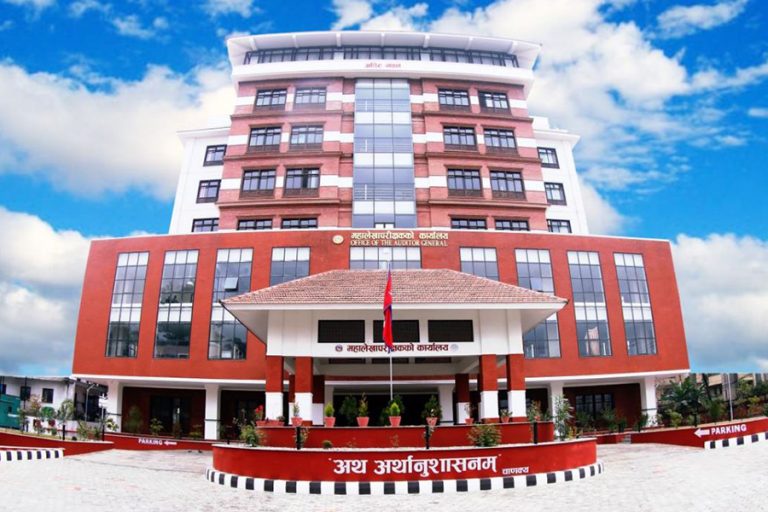
Nepal’s revenue crisis has deepened further, with the government once again failing to collect revenue as targeted. Officials and economists warn that this shortfall may soon make it difficult for the state to even sustain its daily administrative expenses. The latest revenue performance indicates that the government’s fiscal machinery is weakening at a time when public expectations and expenditure commitments are at historic highs.
Revenue is the backbone of national governance—providing the essential funds to run the state, pay public-sector salaries, service debt, and deliver basic services. While foreign aid serves as a supplementary source, a country cannot function sustainably without strong internal revenue generation. However, the government appears to be increasingly unsuccessful in fulfilling even the minimum revenue benchmarks needed to support state operations.
According to the Finance Ministry, the government collected only Rs 249 billion in revenue during the first quarter of the current fiscal year. The target for the same period—by the end of Ashoj—was Rs 321 billion. Although the collection is slightly higher compared to the same period last year, the increment is negligible and far below what is required to sustain fiscal stability. Last fiscal year, revenue collection during this period stood at Rs 248 billion, meaning the year-on-year growth is a mere 0.32 percent, an alarming indicator of the government’s lack of urgency and efficiency in revenue mobilization.
The government’s full-year revenue target for the current fiscal year is Rs 1.48 trillion, but the first quarter data paints a starkly pessimistic picture. Not a single major revenue category has achieved its projected target, reflecting severe under-performance across customs, VAT, excise duty, income tax and non-tax revenue.
Customs revenue has been one of the hardest-hit areas. Against a target of more than Rs 70 billion, the government managed to collect only Rs 56.85 billion. VAT collection also lagged significantly—only Rs 81.23 billion was collected against a target of Rs 94.11 billion. Excise duty, another major contributor to the treasury, saw a shortfall as well: Rs 47.83 billion collected versus a target of Rs 48.65 billion.
Income tax collection also fell dramatically short. While the government hoped to collect Rs 71.22 billion by Ashoj-end, the actual collection was only Rs 46.90 billion, indicating weak corporate profitability and insufficient tax compliance. The situation is even worse for non-tax revenue, where the government targeted Rs 35.52 billion but received only Rs 14.72 billion—less than half the target.
Experts warn that missing revenue targets in the first quarter is a strong indicator of deeper fiscal trouble ahead. The first quarter is typically considered one of the stronger periods for revenue inflow; failing even at this stage signals that upcoming quarters may face more serious challenges. The government may soon encounter situations where available revenue cannot cover routine expenditures, including salaries, administrative functions, and essential services.
According to data from the Office of the Auditor General, the government’s daily recurrent expenditure is nearly Rs 3 billion, while daily revenue inflow stands at only Rs 2.80 billion. This imbalance highlights an unsustainable pattern where expenditure is growing faster than income. If unaddressed, such a gap could force the government into higher borrowing, delayed payments, or cuts in essential services—each carrying long-term economic consequences.
Economists interpret the situation as a structural failure of the revenue administration. Weak enforcement, declining imports, sluggish economic activity, and poor tax compliance have jointly contributed to the crisis. The government’s inability to implement tax reforms, streamline customs procedures, and expand the tax base has also worsened the revenue outlook.
As Nepal’s fiscal deficit widens and expenditure pressures intensify, the government faces a critical test: either recalibrate its revenue strategy with bold administrative reforms or risk an economic environment where the treasury struggles to pay even for its day-to-day operations. The first quarter numbers have made one reality unmistakably clear—without immediate corrective action, Nepal’s fiscal stability could be at serious risk.
Advertisement
Written by
Dipesh Ghimire