Top
Government Intensifies Efforts to Remove Nepal from FATF Grey List Amid Governance and Financial Reform Push
Government officials insist progress is underway, but the coming months are expected to be critical in determining whether Nepal can convince international monitoring bodies that its reforms are both credible and sustainable.
Dipesh Ghimire
3 min read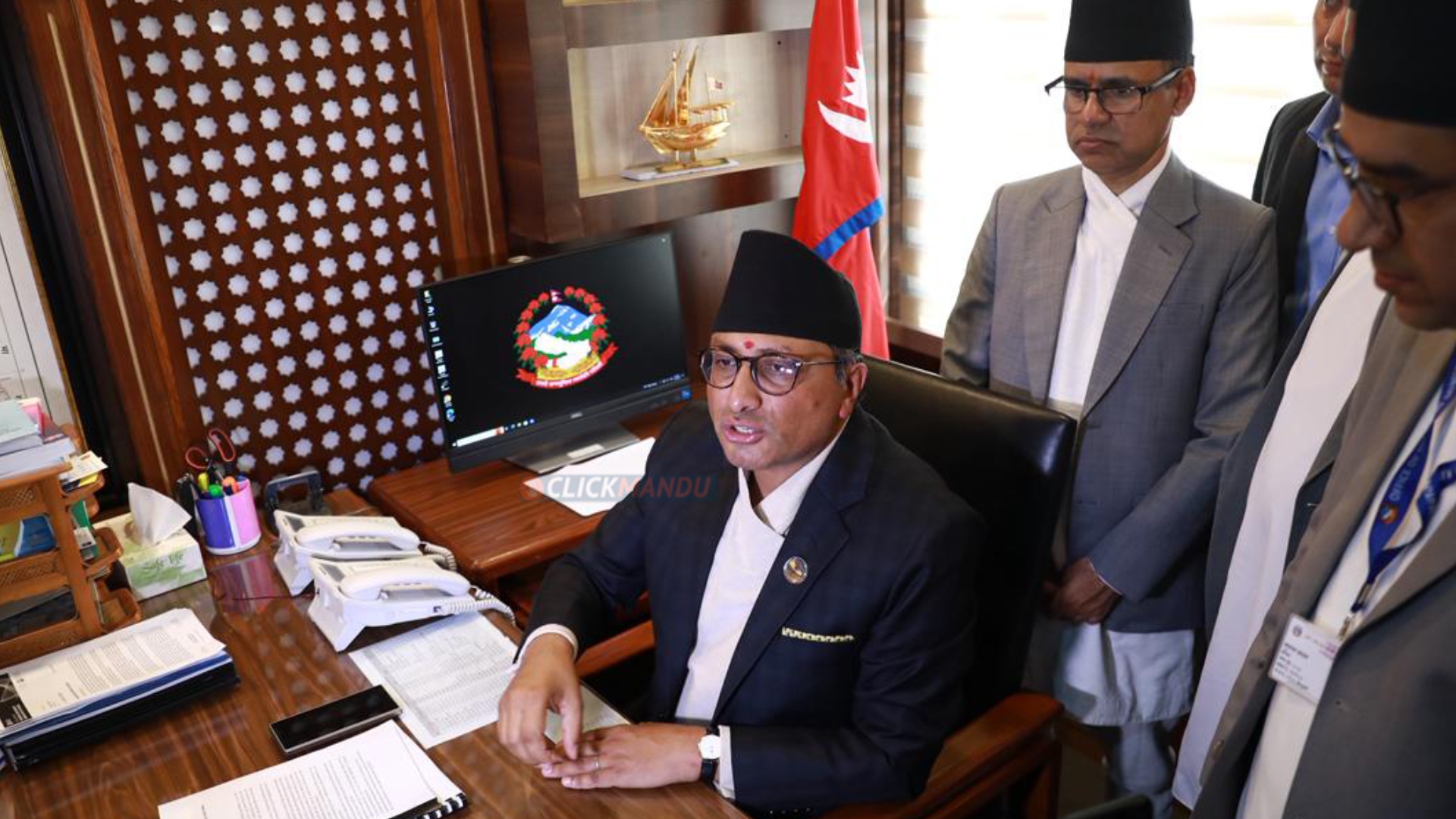
Nepal’s government has pledged to take all possible measures to secure the country’s removal from the international anti-money laundering grey list, signaling growing urgency within the state machinery to restore confidence in the country’s financial governance system. Speaking at a high-level discussion held at the Ministry of Finance on Tuesday, Finance Minister Dr. Swarnim Wagle said the government remained fully committed to implementing the reforms required to exit the “Jurisdictions Under Increased Monitoring” category.
The discussion, coordinated by the Office of the Prime Minister and Council of Ministers under the framework of the Asia Pacific Group on Money Laundering (APG)’s International Cooperation Review Group (ICRG), comes at a time when Nepal is facing increasing international scrutiny over weaknesses in its anti-money laundering and counter-terrorist financing mechanisms. Officials say the government has accelerated coordination among regulatory and enforcement agencies following Nepal’s inclusion in the grey list earlier this year.
During interactions with APG representatives, Finance Minister Dr. Wagle stated that the government was mobilizing its full institutional capacity to improve governance, transparency and financial monitoring systems. According to him, strengthening governance has become one of the central priorities of the current administration, not only to satisfy international compliance standards but also to rebuild public trust in state institutions. He argued that citizens had already begun to feel the effects of governance-related reforms introduced after the formation of the new government.
The minister also indicated that multiple government agencies had already begun implementing both immediate and long-term corrective measures required under the FATF-linked action plan. He said regular monitoring and evaluation mechanisms were being used to track progress and claimed that Nepal’s indicators had improved compared to previous review periods. Although officials did not publicly disclose specific benchmarks achieved so far, the statement suggests that Nepal is attempting to demonstrate measurable institutional progress before future international evaluations.
However, international observers remain cautious about Nepal’s pace of reform. During the same meeting, David Shannon, Deputy Executive Secretary of the APG, remarked that Nepal still has substantial work left to complete before it can qualify for removal from the grey list. His statement reflects concerns that structural weaknesses in financial oversight, enforcement coordination, suspicious transaction monitoring and prosecution capacity may still persist despite recent policy efforts.
Analysts say Nepal’s placement on the grey list has implications extending far beyond regulatory compliance. Countries placed under increased monitoring often face reputational risks in the global financial system, including tighter scrutiny of international transactions, higher compliance costs for banks and reduced investor confidence. In Nepal’s case, experts believe the issue is particularly sensitive because the country relies heavily on remittance inflows, foreign aid, development financing and external investment. Any prolonged perception of weak financial oversight could affect cross-border financial relationships and increase transaction friction for banks and businesses.
The issue is also becoming increasingly linked with broader debates on governance and institutional credibility inside Nepal. In recent years, concerns surrounding tax evasion, informal financial transactions, cooperative fraud, misuse of banking channels and market-related financial irregularities have intensified public pressure for stronger regulatory enforcement. Financial regulators, including Nepal Rastra Bank and other oversight agencies, are now under growing pressure to demonstrate effective supervision and coordination.
Nepal was officially placed on the Financial Action Task Force (FATF) grey list in Falgun 2081 BS for a two-year monitoring period. To secure removal from the list, the country has committed to implementing a 15-point action plan focused on improving anti-money laundering controls, strengthening regulatory enforcement, enhancing inter-agency coordination and increasing transparency in financial transactions. Government officials insist progress is underway, but the coming months are expected to be critical in determining whether Nepal can convince international monitoring bodies that its reforms are both credible and sustainable.
Advertisement
Written by
Dipesh Ghimire