Top
Mill
Hetauda Textile Mill Revival Remains Stuck Between Political Promises and Industrial Reality
Yet analysts say any serious revival effort would require far more than political speeches. Restarting the industry would likely demand complete replacement of machinery, modernization of production systems and a commercially viable management structure capable of competing in today’s textile market. Without those reforms, experts warn, the revival narrative may continue to remain limited to budget announcements and political rhetoric.
Dipesh Ghimire
3 min read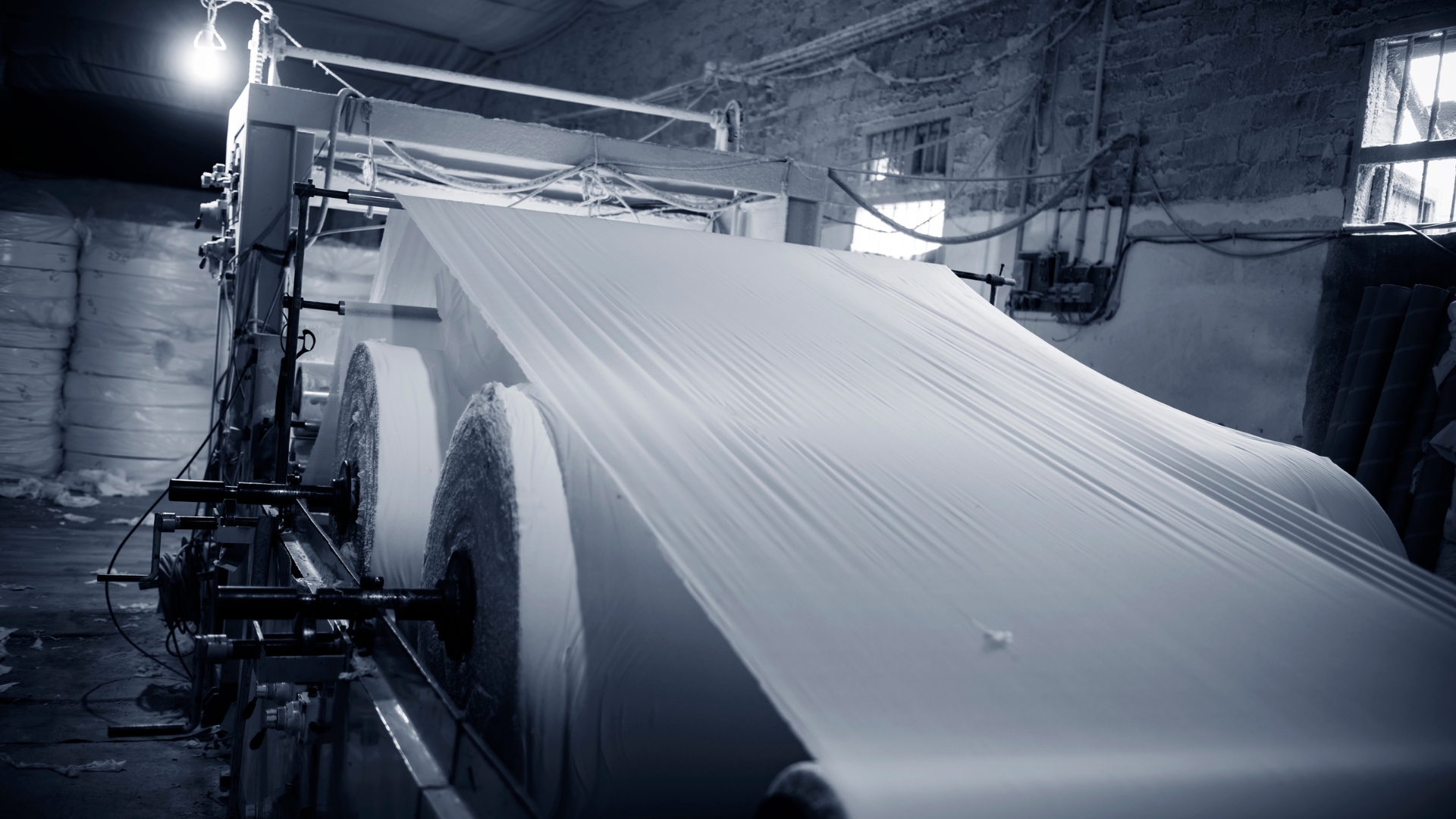
For nearly two decades, successive governments in Nepal have repeated the same promise in budget speeches — the revival of the once-iconic Hetauda Textile Mill. Yet despite being mentioned repeatedly in national policies and political speeches, the factory that once symbolized Nepal’s industrial ambition continues to stand abandoned, its buildings crumbling and machines rusting under layers of dust and neglect.
The latest government has once again brought the issue back into focus. Industry, Commerce and Supplies Minister Gauri Kumari Yadav recently inspected the Hetauda Industrial Area and stated that the government was serious about reviving the long-shuttered factory. According to the ministry, technical studies, investment modalities and infrastructure assessments are currently under discussion as part of a broader strategy to reactivate sick and closed state-owned industries.
However, for many observers, the announcement sounded familiar. This is now the seventh time a government has publicly committed to restarting the factory through budgetary or policy statements. Earlier administrations had made similar commitments, including plans to operate the industry under a public-private partnership model. Even former Prime Minister K. P. Sharma Oli had once claimed that new machinery would be installed to bring the factory back into operation. Yet no meaningful progress followed those declarations.
The mill’s decline reflects a larger story of political interference, weak management and the collapse of Nepal’s state-owned industrial sector. Established with Chinese assistance and formally brought into operation in 1979, the Hetauda Textile Mill was once regarded as one of Nepal’s proudest manufacturing institutions. It produced cotton yarn, colored fabrics and processed textiles that enjoyed strong demand in domestic markets. At its peak, the industry provided direct employment to nearly 1,500 workers and significantly contributed to the economy of Makwanpur district.
The downfall began in the 1990s, when trade union politics and party-based recruitment increasingly influenced the factory’s administration. Political appointments weakened managerial efficiency, while operational losses continued to grow. By 2001, the government officially shut down the factory and offered collective retirement to workers and staff. The closure not only displaced hundreds of families dependent on the industry, but also marked the symbolic decline of Nepal’s industrial self-reliance.
Attempts to revive the factory have repeatedly failed. Different industry ministers pushed separate plans, while former Finance Minister Baburam Bhattarai had even approved a subsidy package worth Rs 90 million for revival efforts. That investment, however, produced no visible outcome. In 2013, during a political convention in Hetauda, former Prime Minister Pushpa Kamal Dahal publicly pledged to reopen the mill “at any cost.” Ironically, around the same period, the Cabinet moved forward with decisions related to liquidation and asset management instead of actual production revival.
Government records show that the Industrial District Management Limited was later authorized to auction machinery and infrastructure assets. The machinery alone was valued at more than Rs 81 million, while physical infrastructure was estimated at over Rs 80 million. Since then, the factory premises have continued to deteriorate.
Today, the condition of the industrial site presents perhaps the biggest obstacle to any revival plan. Spread across nearly 192 ropanis inside the Hetauda Industrial Area, the factory complex resembles an abandoned ruin. Water has accumulated inside damaged buildings, electrical systems have collapsed, and textile threads remain decayed inside old machines. Torn fabrics still hang from equipment left untouched for decades. Business leaders and industrial experts argue that operating the factory with existing infrastructure is practically impossible.
Many local residents, however, still view the mill as a symbol of lost economic potential. For older generations in Makwanpur, the textile factory represented not only industrial pride but also social stability and employment security. Locals believe that reopening such industries could help reduce unemployment and revive manufacturing activity within the country at a time when Nepal heavily depends on imports.
Yet analysts say any serious revival effort would require far more than political speeches. Restarting the industry would likely demand complete replacement of machinery, modernization of production systems and a commercially viable management structure capable of competing in today’s textile market. Without those reforms, experts warn, the revival narrative may continue to remain limited to budget announcements and political rhetoric.
The debate has now also shifted toward privatization. The previous government initiated discussions on classifying the factory for possible privatization procedures. A committee led by former Deputy Prime Minister and Finance Minister Bishnu Prasad Paudel had recommended moving the institution into a formal restructuring process. If approved by the Cabinet, the next step would involve asset valuation and identification of a privatization model based on expert recommendations.
Whether the Hetauda Textile Mill is eventually revived, privatized or permanently dissolved, the factory remains one of Nepal’s clearest examples of how political instability and institutional weakness can dismantle even the country’s most promising industrial projects.
Advertisement
Written by
Dipesh Ghimire