Hydropower Stocks
Hydropower Stocks Now Drive Nepal's Capital Market, Commanding 45 Percent of All Trading Activity
None of this diminishes the genuine achievement that hydropower's capital market journey represents. Private sector energy companies tapping public savings to build national infrastructure is exactly the kind of financial deepening that developing economies need. The challenge now is whether Nepal's regulators and policymakers have the wisdom to encourage diversification of the listed universe before the market's dependence on a single sector creates vulnerabilities that even the most enthusiastic hydropower investor would prefer to avoid.
Dipesh Ghimire
4 min read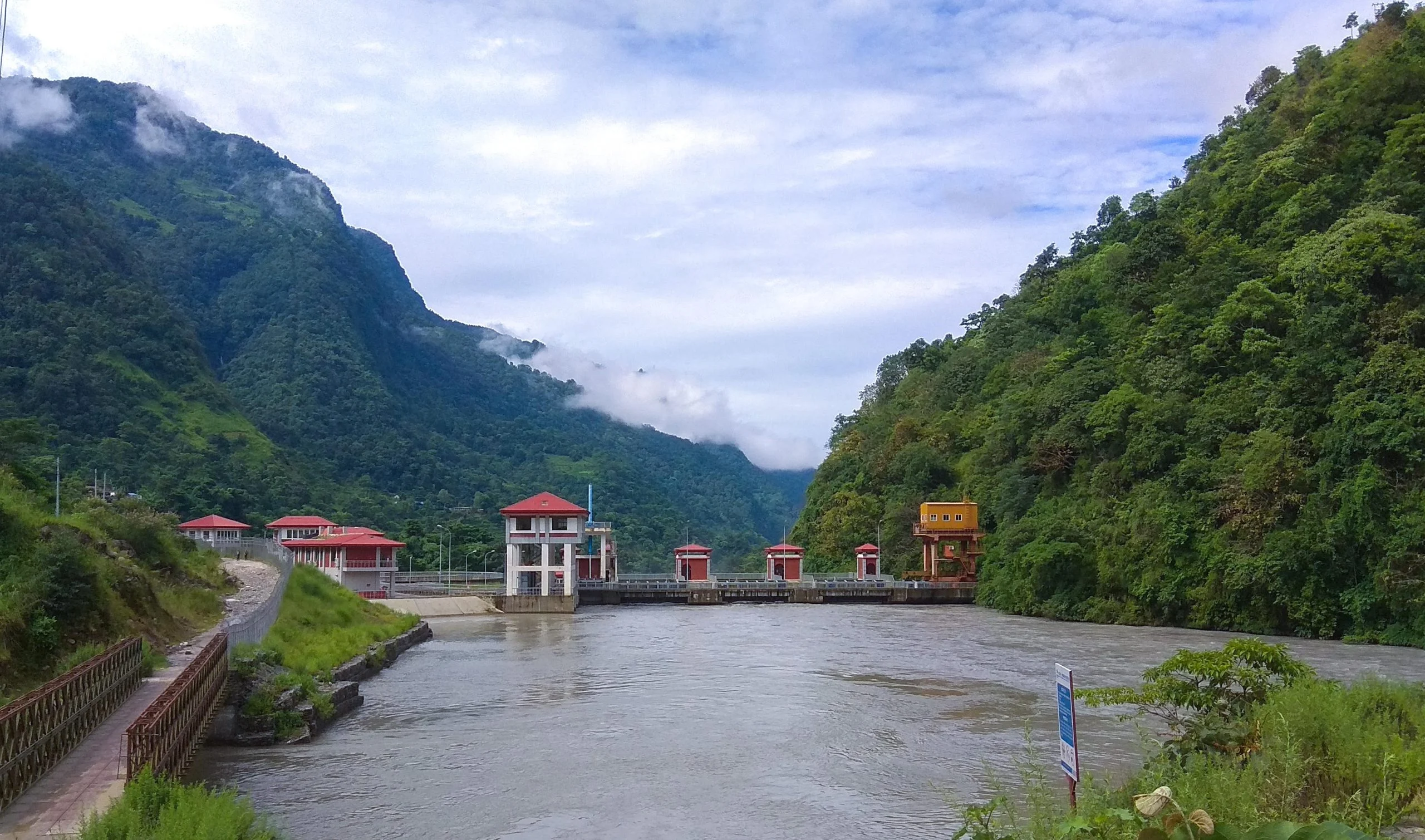
What began as a cautious experiment in fiscal year 2060/61 has transformed into the defining force of Nepal's stock market. Hydropower companies, which first entered the securities market just over two decades ago, now account for 103 listed entities — more than 35 percent of all companies on the Nepal Stock Exchange — and are responsible for an extraordinary 45.20 percent of total trading volume. The numbers tell a story of a sector that has not merely joined the capital market but has come to dominate it.
Nepal's hydropower story itself stretches back to 1911, when Prime Minister Chandra Shumsher oversaw the commissioning of the Pharping hydropower plant — the country's first. The sector's commercial potential was formally acknowledged in the Hydropower Development Policy of 2058, which identified approximately 83,000 megawatts of theoretical potential and estimated around 42,000 megawatts as economically and technically viable for development. As of Falgun 2082, total installed capacity has reached 4,105 megawatts, with hydropower contributing 3,798 megawatts of that figure. Private sector projects now supply 2,587 megawatts to the national grid, outpacing the Nepal Electricity Authority's own generation capacity of 1,409.97 megawatts — a significant milestone in the privatization of energy production.
The financial scale of hydropower's presence in the capital market is striking. From fiscal year 2060/61 through Baisakh 2083, the Securities Board of Nepal approved public share issuances worth a cumulative Rs 50 billion 857.5 million from hydropower companies alone. The sector's market capitalization as of Baisakh 2082/83 stands at Rs 813 billion 990 million, representing 17.48 percent of the total market capitalization of the Nepal Stock Exchange. Trading in hydropower shares during the same period reached Rs 642 billion 290 million — nearly half of every rupee traded on the exchange changing hands in this single sector.
The pace of new entrants shows no sign of slowing. Of the 98 companies waiting in the queue for initial public offering approval as of Baisakh 17, 2083, fully 32 — nearly one in three — are hydropower firms. Among the 23 companies that applied for rights share issuance as of Falgun 18, 2082, 12 were from the hydropower sector, accounting for more than 52 percent of applicants. These figures suggest that the pipeline of hydropower IPOs will continue feeding the market for years to come, deepening the sector's already substantial footprint.
The cost of building these projects varies considerably, and that variation carries important implications for investors. Among companies that received Securities Board approval, construction costs ranged from a minimum of Rs 134.3 million per megawatt to a maximum of Rs 310.3 million per megawatt. This more than twofold difference in per-megawatt cost reflects the enormous variability in project geography, construction complexity, and financing arrangements across Nepal's diverse terrain. Investors relying solely on the fact that a company has received regulatory approval without examining its cost structure may be taking on more risk than they realize.
The historical trajectory of the sector's market presence is equally revealing. When Nepal Stock Exchange first created a separate hydropower category in fiscal year 2064/65, only three companies were listed, generating trading volume of Rs 3.19 billion — 14.02 percent of total market turnover at the time. Market capitalization at the end of that year stood at Rs 25.86 billion, representing just seven percent of the total market. The sector's own index stood at 1,324 points while the broader NEPSE index sat at 963.4. Two decades later, the same sector commands nearly half of all trading activity and nearly one fifth of total market capitalization — a transformation of remarkable speed and scale.
What does this concentration actually mean for Nepal's capital market and for investors? The answer is not entirely comfortable. When a single sector generates 45 percent of all trading volume, the health of the broader market becomes tightly coupled to the fortunes of that one industry. A regulatory change, a drought affecting water flows, a dispute over power purchase agreement tariffs, or a shift in government energy policy can simultaneously depress the valuations of more than a hundred listed companies. Investors who believe they are diversifying by holding multiple hydropower stocks may be building a portfolio that behaves like a single bet on Nepal's energy sector weather and politics.
There is also the question of what is missing from this picture. While hydropower has flooded the exchange, manufacturing companies, technology firms, and consumer-facing businesses remain largely absent from the listed universe. The Nepal Stock Exchange was designed to channel savings into productive investment across the breadth of the economy. Instead it has evolved into something closer to a specialized energy fund, with retail investors pouring money into run-of-river projects whose commercial performance depends on rainfall patterns and NEA power purchase prices as much as on managerial competence.
None of this diminishes the genuine achievement that hydropower's capital market journey represents. Private sector energy companies tapping public savings to build national infrastructure is exactly the kind of financial deepening that developing economies need. The challenge now is whether Nepal's regulators and policymakers have the wisdom to encourage diversification of the listed universe before the market's dependence on a single sector creates vulnerabilities that even the most enthusiastic hydropower investor would prefer to avoid.
Advertisement
Written by
Dipesh Ghimire