Pokhara International Airport
Incentives for Pokhara Airport Mark Policy Shift to Unlock Nepal's Underused International Gateway
The policy therefore represents more than a temporary discount programme; it signals a strategic shift in Nepal's aviation policy toward decentralising international air services beyond Kathmandu. If supported by stable passenger demand, efficient airport operations and continued government engagement with foreign airlines, Pokhara International Airport could gradually evolve from an underutilised infrastructure project into a functional regional aviation gateway. Such a transition would strengthen tourism, improve regional connectivity and enhance the economic return on one of Nepal's most significant public infrastructure investments.
Dipesh Ghimire
3 min read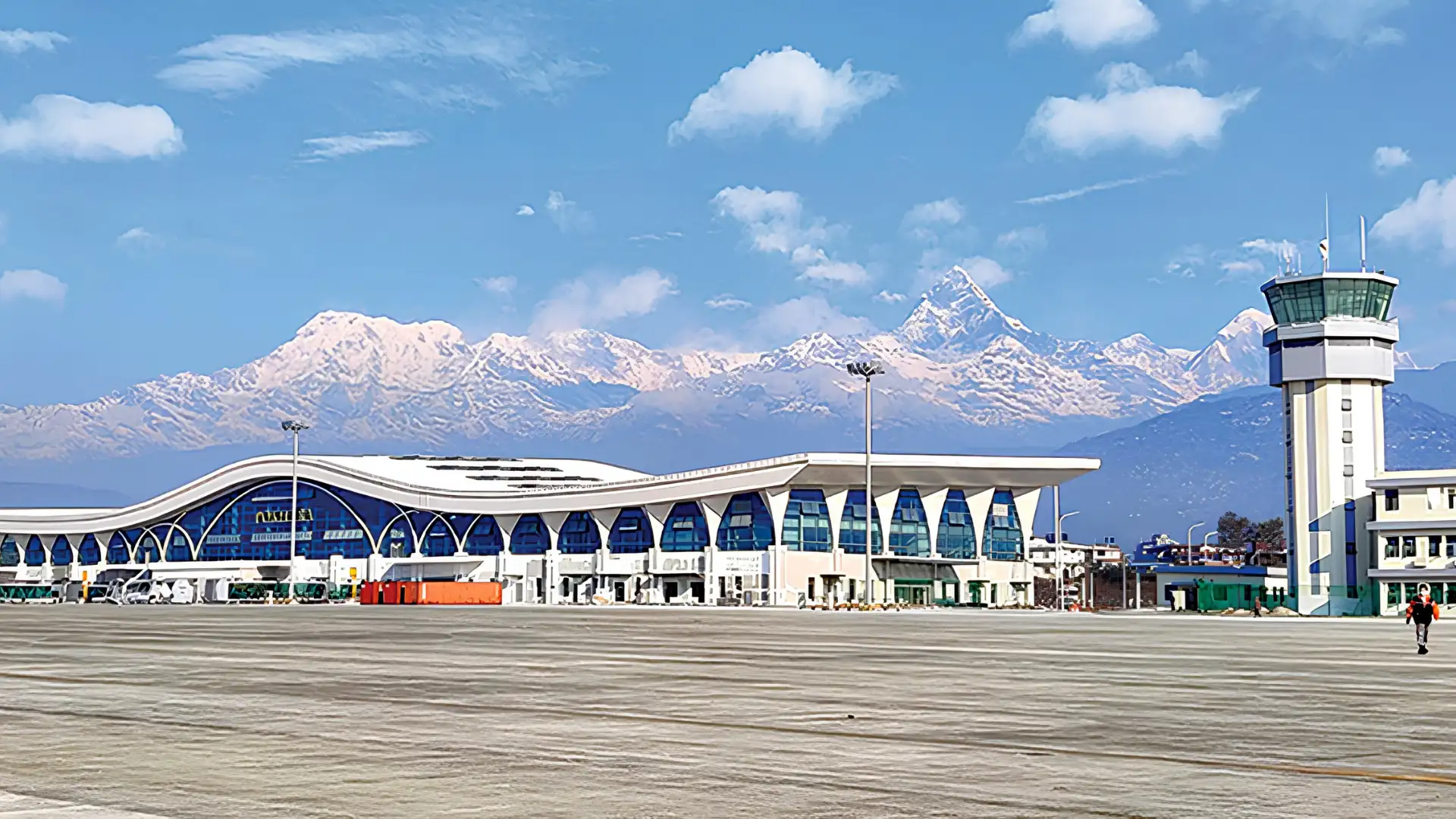
Kathmandu: The government's decision to waive key airport charges for international airlines operating from Pokhara International Airport represents its strongest attempt yet to transform the country's newest international gateway into a commercially viable aviation hub. By offering substantial financial incentives until mid-September 2028, policymakers are seeking to overcome one of the airport's biggest challenges—its inability to attract regular international carriers despite being operational for nearly three years.
The Cabinet on Wednesday approved a package of incentives that eliminates landing, parking and air navigation charges for international airlines while providing a 50 percent discount on ground handling fees. The measures target one of the primary cost barriers faced by airlines when evaluating new international routes. For carriers entering relatively untested markets, lower airport operating costs can significantly improve route profitability during the initial years of operation.
The announcement comes at a strategically important time, as Flydubai prepares to launch direct Pokhara–Dubai flights on September 23, 2026 (Asoj 7, 2083 BS). Airport authorities have already approved the airline's operating schedule, and ticket sales have begun. If the service performs well commercially, it could become the first sustainable scheduled international route from Pokhara, providing a practical demonstration that the airport can support regular overseas operations.
Beyond the immediate launch of a single route, the government's incentive package reflects a broader effort to reposition Pokhara within Nepal's aviation network. Dubai serves as one of the world's largest international aviation hubs, connecting passengers to Europe, North America, the Middle East, Africa and Asia through a single transit point. Direct access to Dubai therefore extends Pokhara's connectivity far beyond one destination, reducing the need for passengers from western Nepal to travel first to Kathmandu before boarding international flights.
The economic implications extend well beyond aviation. Pokhara is Nepal's leading tourism destination after Kathmandu, yet international visitors have traditionally been required to enter the country through Tribhuvan International Airport before taking a domestic flight. Direct international services could shorten travel times, improve convenience and increase the attractiveness of Pokhara as a primary entry point for foreign tourists. The policy also benefits thousands of migrant workers, students and business travellers from Gandaki Province and neighbouring regions by reducing both travel costs and transit time.
The incentives also acknowledge the commercial reality facing the airport. Constructed at a cost of approximately Rs 22 billion, Pokhara International Airport has faced persistent criticism for its limited utilisation. Apart from occasional charter operations to neighbouring countries, the airport has not succeeded in securing scheduled international services since its inauguration. The absence of regular international flights has raised concerns over the financial sustainability of one of Nepal's largest infrastructure investments and intensified calls for stronger government intervention.
Rather than relying solely on diplomatic negotiations with airlines, the latest policy adopts an economic approach by directly lowering operating expenses. Such incentive programmes are widely used by emerging international airports worldwide to attract airlines during their market development phase. While the government will temporarily forgo airport revenue through fee waivers, policymakers appear to be betting that increased passenger traffic, tourism receipts and wider regional economic activity will generate far greater long-term returns than the immediate loss of airport charges.
Success, however, will depend on factors beyond financial incentives alone. Airlines ultimately assess passenger demand, route profitability, cargo potential and operational efficiency before committing aircraft to new destinations. If Flydubai achieves sustainable passenger loads and demonstrates consistent commercial performance, other foreign carriers may be encouraged to evaluate Pokhara as a viable destination. Conversely, incentives alone may not be sufficient if demand remains below commercial expectations.
The policy therefore represents more than a temporary discount programme; it signals a strategic shift in Nepal's aviation policy toward decentralising international air services beyond Kathmandu. If supported by stable passenger demand, efficient airport operations and continued government engagement with foreign airlines, Pokhara International Airport could gradually evolve from an underutilised infrastructure project into a functional regional aviation gateway. Such a transition would strengthen tourism, improve regional connectivity and enhance the economic return on one of Nepal's most significant public infrastructure investments.
Advertisement
Written by
Dipesh Ghimire