#NepalInflation #CPI2025 #Cost
Inflation in Nepal: What Rising Prices Mean for Consumers and Investors
Nepal’s CPI stood at 104.96 in July–August 2025, up 1.68% year-on-year. Consumers benefited from cheaper vegetables and spices, but faced higher costs for oil, fruit, milk, and cereals. Investors should note the structural rise in education (+7.67%), clothing (+6.84%), and services (+10.60%), signaling where long-term inflation—and opportunities—are headed.
Sandeep Chaudhary
2 min read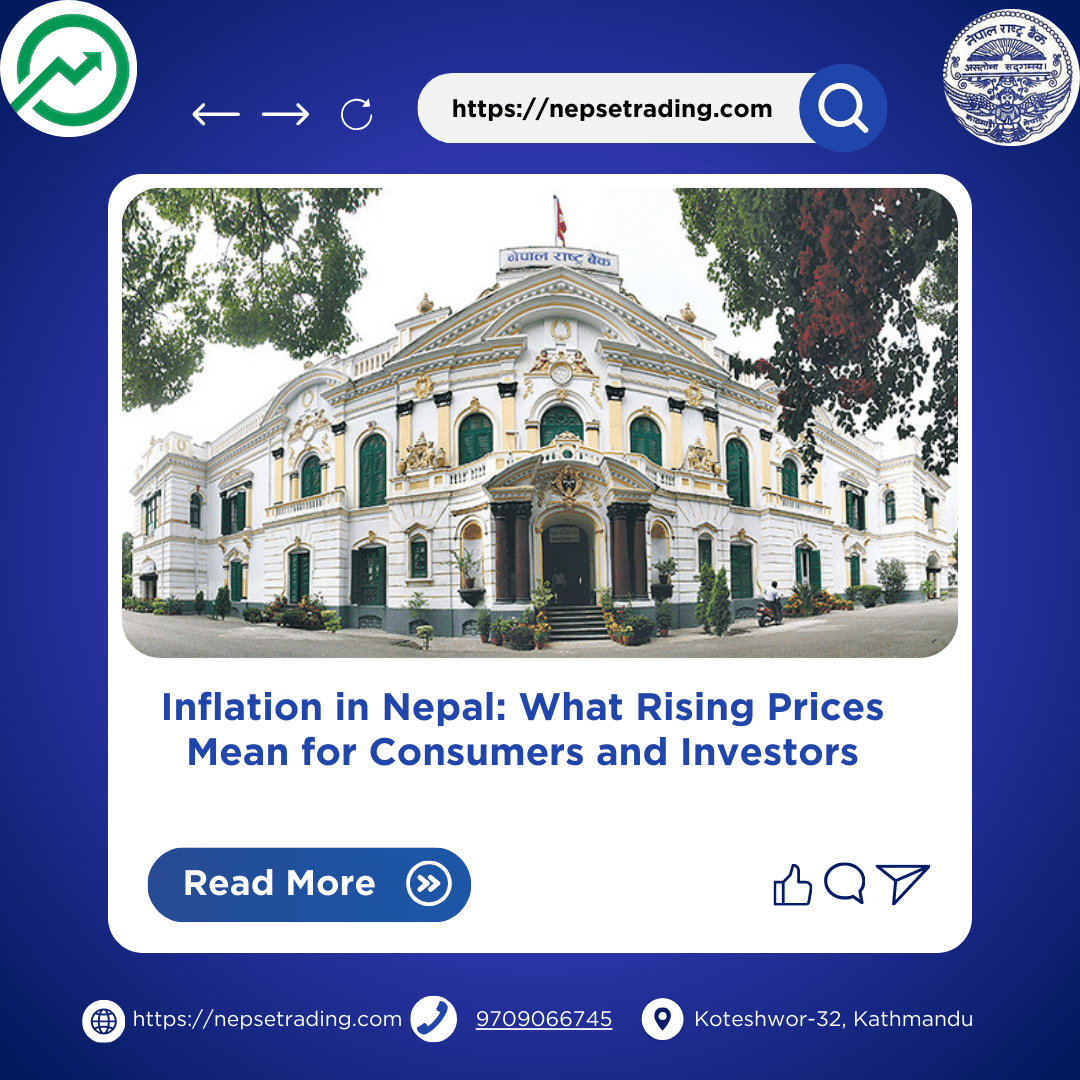
Nepal’s inflation in the first month of FY 2025/26 highlights both relief in some food categories and persistent upward pressure from essential services. The overall Consumer Price Index (CPI) reached 104.96, which is 1.68% higher than July–August 2024/25 and 4.09% higher than three years ago. On a monthly basis, the CPI grew only 0.39%, suggesting that while inflationary pressure exists, its pace is steady rather than accelerating. For households and investors alike, the sectoral breakdown of this data carries important implications.
On the consumer side, the Food and Beverages group (35.49% weight) provided partial relief, falling -2.28% year-on-year. The drop was led by vegetables (-18.56%), spices (-4.81%), and meat & fish (-2.41%), which temporarily eased household budgets. However, structural food pressures remain: ghee and oil surged 10.97%, fruit rose 3.01%, and milk and eggs climbed 1.83%. Cereals, while slightly cheaper than last year, are still 9.15% higher compared to three years ago, underscoring long-term cost burdens. For families, this means monthly kitchen relief is short-lived, while staples and nutritional essentials remain costly.
On the investor side, the Non-food and Services group (64.51% weight) tells a story of sticky inflation. Prices rose 3.95% year-on-year, driven by education (+7.67%), clothes and footwear (+6.84%), and miscellaneous goods & services (+10.60%). These categories represent structural spending that households cannot easily cut, meaning cash flow pressures are shifting from food to services. For investors in the Nepal Stock Exchange (NEPSE), this trend signals opportunities in education, consumer goods, and service sectors, while higher household costs may limit discretionary spending and affect retail businesses. Moderate increases in housing (+1.02%), transport (+3.94%), and health (+2.98%) further add to sustained inflation.
For policymakers and investors, the message is clear: while food inflation volatility may offer short-term relief, service-led inflation is the new structural challenge. For consumers, this translates into persistent cost-of-living increases; for investors, it suggests that companies in non-food sectors—especially education, services, and utilities—may see stronger demand resilience, even as household budgets tighten.
Advertisement
Written by
Sandeep Chaudhary