SEBON
IPO Pipeline Swells, but Dividend Record Remains Thin
The next phase of Nepal’s IPO boom, therefore, may be determined less by the number of companies lining up for public issues and more by the financial strength of those that eventually reach the market.
Dipesh Ghimire
5 min read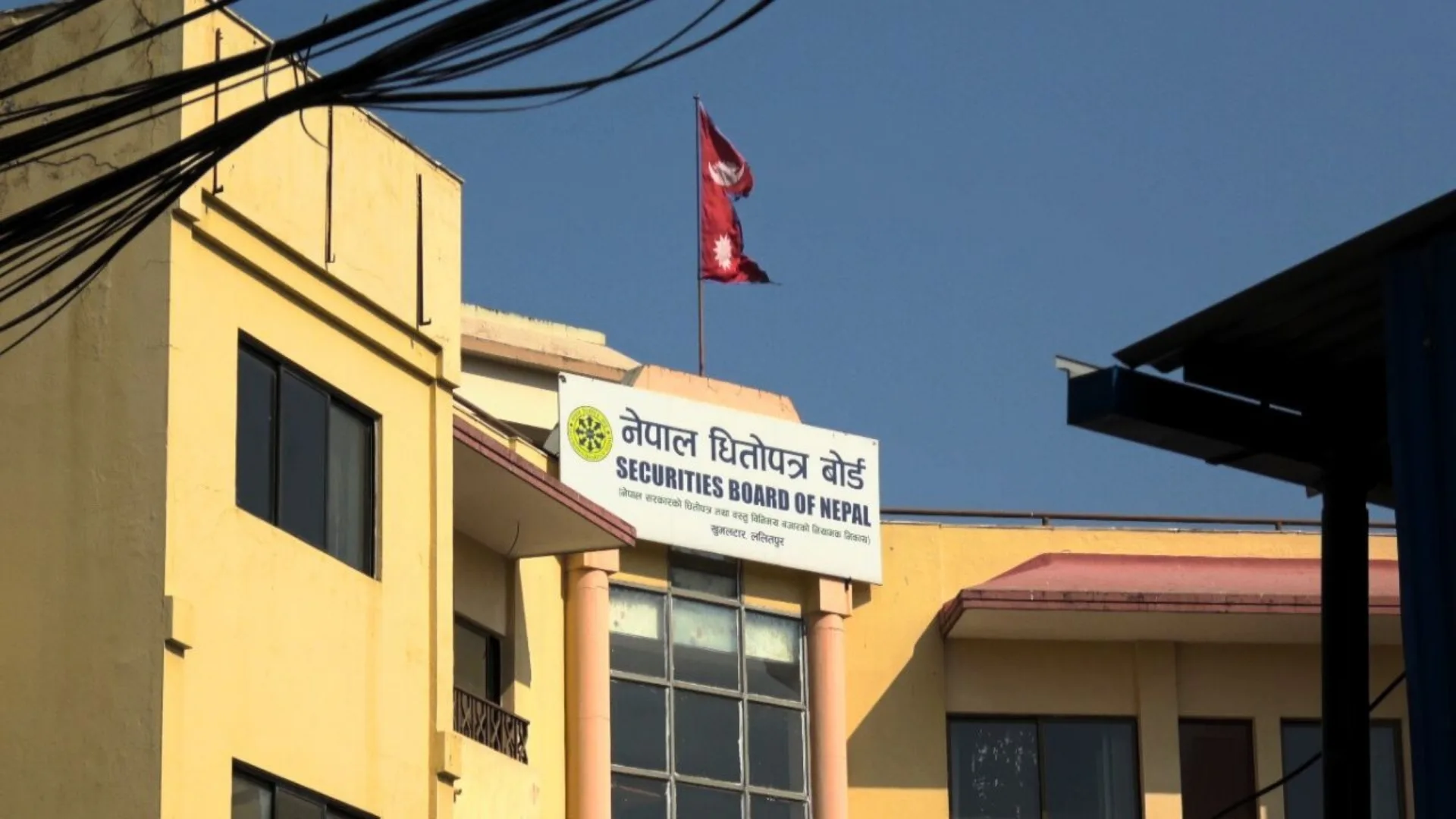
KATHMANDU — Nepal’s pipeline of companies seeking to enter the share market is expanding rapidly, but the financial returns reported by many prospective issuers remain limited. An analysis of companies that advanced initial public offering (IPO) proposals in fiscal year 2082/83 shows that only 21 out of around 150 companies declared dividends for their shareholders.
That means just 14 percent of the companies proposing IPOs announced a dividend, while about 86 percent, or 129 companies, did not. The gap is notable at a time when an increasing number of private companies are looking to tap public savings through the capital market.
The figure does not, by itself, mean that the remaining companies are financially weak. Companies preparing for expansion may retain earnings rather than distribute them, while some may still be in an investment-heavy stage of their business cycle. Still, for prospective investors, the low proportion of dividend-paying companies raises an important question: how many of the businesses approaching the public market have already established a consistent capacity to generate distributable profits?
The data also show that returns are highly uneven even among the 21 companies that announced dividends. Dividend rates are available for 13 of them, while eight have announced a distribution without specifying the rate in the available data.
Among companies with disclosed rates, Professional Holdings Limited tops the list with a dividend of 52.63 percent. Norvic International Hospital and Medical College follows with 40.21 percent, while Century Energy Limited has announced 35 percent and Highland Distillery Limited 26.31 percent.
The next group offers comparatively moderate returns. Fonepay Payment Service Limited has announced a 19 percent dividend, followed by the Banking Finance and Insurance Institute of Nepal at 14.73 percent and Venture Hire Purchase Limited at 10 percent.
The remaining disclosed dividend rates are in single digits. Sumeru Polymers has announced 9.02 percent, Business Interest Group of Industries 6.32 percent, Uniglobe Higher Secondary School Kathmandu 5.26 percent, National Fund Management 4.21 percent, Chandragiri Investment Group 4 percent and Seed Energy 3.15 percent.
An analysis of the 13 companies for which dividend rates are available shows an average declared dividend of about 17.68 percent. But the median—the middle point of the group—is only 10 percent. The difference between the average and median is significant because a handful of companies with very high dividend rates push up the overall average. In other words, the typical dividend-paying IPO aspirant in this group is offering a considerably lower return than the headline average suggests.
The distribution is similarly concentrated at the upper end. Only four of the 13 companies with disclosed rates have announced dividends above 25 percent. Seven have announced at least 10 percent, while six remain below the 10 percent mark. The range stretches from 3.15 percent to 52.63 percent, showing wide differences in profitability and dividend policies among businesses moving towards the public market.
Eight other companies—Simrik Air, Hospital for Advanced Medicine and Surgery, KB-SAM Aluminium Industries, Annapurna Rathi Cables Industries, All Nepal Infrastructure Development Company, R.K.D. Holdings, Sangay Bidhyut Company and Shangrila Energy—are recorded as having announced dividends, but the dividend percentages are not specified in the available data.
The dividend picture becomes more relevant when viewed alongside the speed at which new companies are seeking access to the public market. In the first eight days of the new fiscal year alone, HAMS Hospital, Gemini Recycle, Greenply Nepal and Makalu Wine Industries called general or special general meetings that included IPO-related proposals.
HAMS Hospital is taking both its dividend and IPO proposals to shareholders. The hospital had previously secured shareholder approval for an IPO-related proposal. The other three companies are preparing to use special general meetings to clear the corporate approvals required to move their public-issue plans forward.
The pipeline is already substantial. Some companies that approved IPO proposals last year have completed their public offerings, while others have submitted applications to the Securities Board of Nepal (SEBON). More than 100 companies are reported to be seeking IPO approval from the securities regulator, with additional firms still at the stage of appointing issue managers and preparing applications.
This growing queue indicates that Nepal's primary market could see a significant increase in the supply of shares if regulatory approvals accelerate. But a larger number of IPOs does not automatically translate into a stronger capital market. The quality of companies entering the exchange will be just as important as the number of new listings.
Dividend history is one way of assessing that quality, but it cannot be used in isolation. A company that pays no dividend may be reinvesting earnings into expansion, reducing debt or building productive assets. Such decisions can potentially create greater value over the long term. Conversely, a high dividend in one year does not necessarily prove that earnings are sustainable.
For investors, more important questions include whether profits come from the company's core business, whether revenue and earnings are growing consistently, how much debt the company carries, whether operating cash flow supports reported profit, and whether its governance and disclosures are reliable.
The distinction becomes particularly important in an IPO market where investors often have limited trading histories on which to judge newly listed companies. Unlike established companies on the Nepal Stock Exchange, prospective issuers may have little or no market track record. Investors therefore depend more heavily on financial statements, prospectuses, credit information, governance disclosures and the assumptions behind IPO pricing.
The data from fiscal year 2082/83 consequently point to a broader issue for Nepal's capital market. Of roughly 150 companies seeking a route towards public ownership, only one in seven announced a return to existing shareholders. While this cannot be interpreted as evidence that the other six in seven are unprofitable, it does underline the need to look beyond the excitement surrounding new IPOs.
As the IPO pipeline expands, regulatory scrutiny of earnings quality, capital structure, use of IPO proceeds, business sustainability and corporate governance will become increasingly important. For retail investors, too, the central question is likely to shift from simply “Which company is issuing an IPO?” to “What kind of company is entering the market, and can its earnings justify public investment?”
The next phase of Nepal’s IPO boom, therefore, may be determined less by the number of companies lining up for public issues and more by the financial strength of those that eventually reach the market.
Advertisement
Written by
Dipesh Ghimire