#NepalEconomy #BalanceOfPaymen
Loan Outflows Total USD 42M: External Repayments Mount in Nepal’s BoP
Nepal paid USD 42 million in external loan repayments in the first month of 2025/26, led by the government sector. The repayments, while healthy for debt sustainability, have added pressure on short-term reserves and liquidity.
Sandeep Chaudhary
1 min read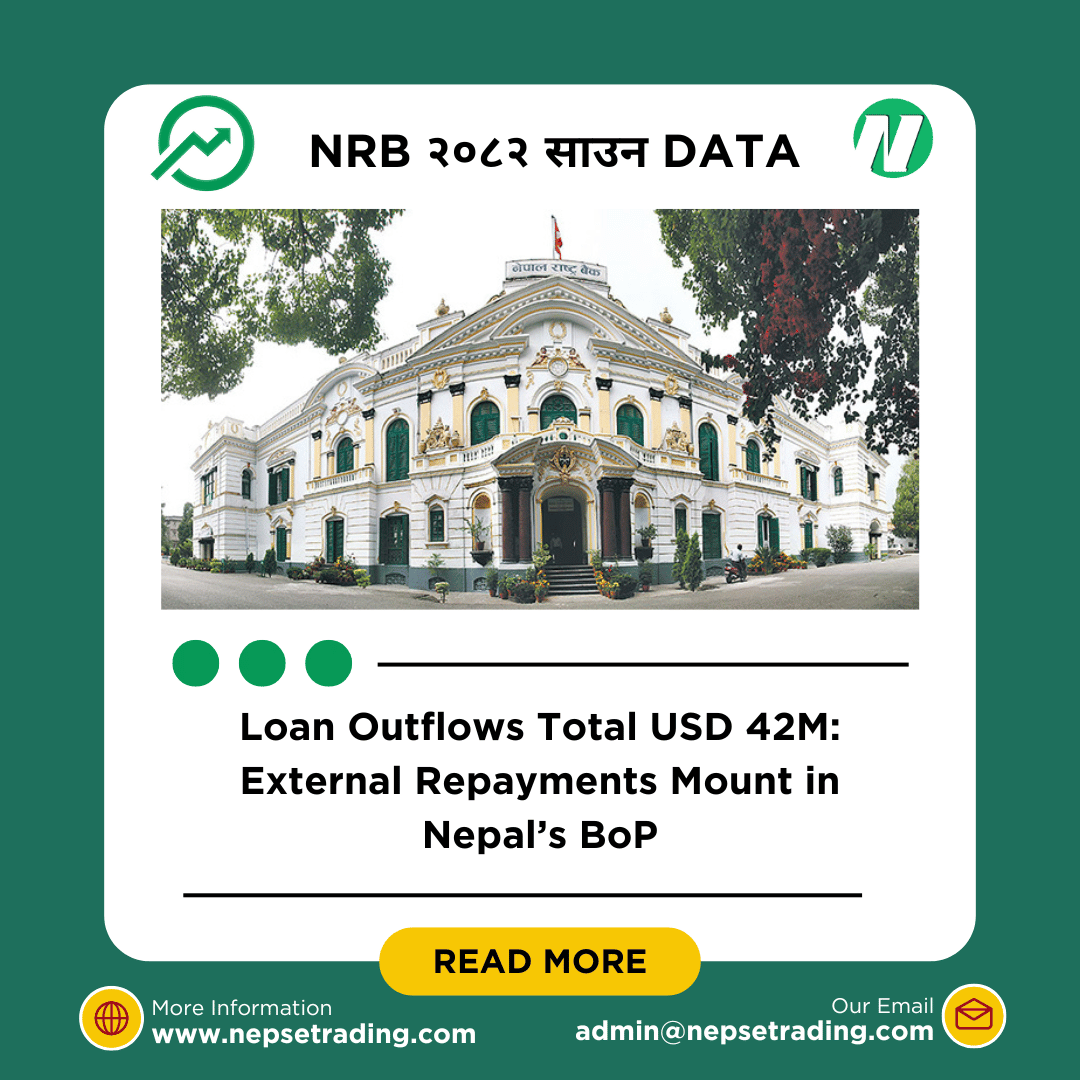
Nepal’s Balance of Payments (BoP) report for the first month of fiscal year 2025/26 shows that loan outflows have reached USD 42 million, highlighting mounting external repayment obligations amid moderate borrowing.
According to Nepal Rastra Bank (NRB), the loans category under the financial account recorded no new significant inflows, but saw substantial debt repayments by the government and other sectors. The general government alone accounted for around USD 33 million in repayments, while the private and non-financial sectors contributed roughly USD 9 million.
This growing repayment burden reflects the maturity schedule of earlier concessional and multilateral loans from international partners such as the World Bank, ADB, and IMF. Economists note that while these repayments reduce foreign liabilities and improve Nepal’s creditworthiness, they also create short-term pressure on foreign exchange reserves and the liquidity of the financial system.
The rise in outflows comes despite Nepal’s strong current account surplus and remittance inflows, suggesting that the country is still balancing between foreign debt servicing and external stability. As global interest rates remain elevated, Nepal’s debt-servicing cost is expected to remain high through mid-2026, unless new concessional borrowing replaces older, more expensive loans.
Advertisement
Written by
Sandeep Chaudhary