Top
Loan Quality Review Raises Red Flags for Nepal’s Banking Sector
Loan Quality Review Raises Red Flags for Nepal’s Banking Sector Kathmandu — A comprehensive loan quality assessment conducted by a Bangladeshi consulting firm has raised serious concerns about credit management practices in Nepal’s major commercial banks. The review, carried out by Houladar Yunus & Company, found weaknesses in loan classification and risk control systems, prompting Nepal Rastra Bank to consider stricter regulatory measures. The findings come at a time when rising bad loans are already putting pressure on the country’s financial system. According to the central bank, several banks have failed to strictly follow regulatory guidelines while categorizing their loans as performing, watchlist, substandard, doubtful, or bad. As a result, Nepal Rastra Bank is preparing to require additional loan-loss provisioning from institutions that do not correct these weaknesses. Officials say that banks will first be asked to clarify their positions before any formal enforcement action is taken.
Dipesh Ghimire
3 min read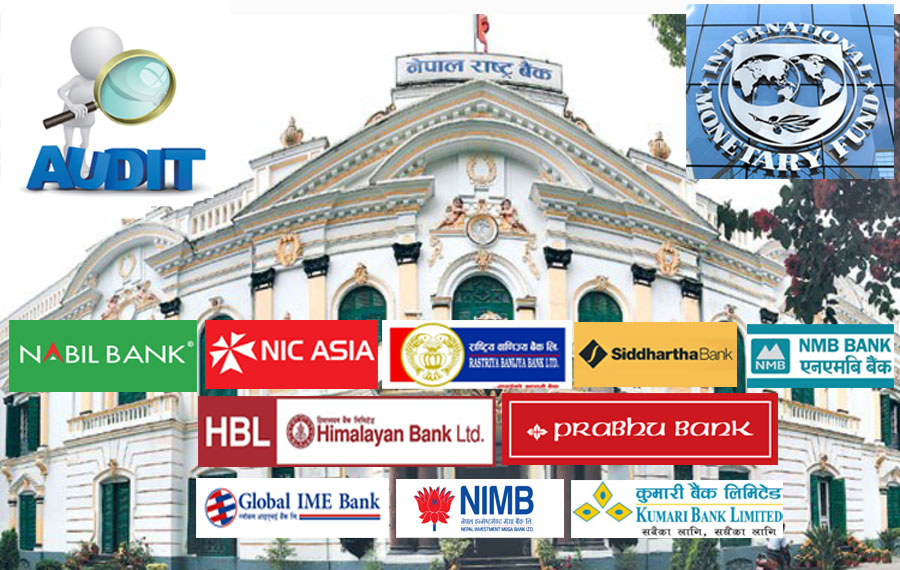
Kathmandu — A comprehensive loan quality assessment conducted by a Bangladeshi consulting firm has raised serious concerns about credit management practices in Nepal’s major commercial banks. The review, carried out by Houladar Yunus & Company, found weaknesses in loan classification and risk control systems, prompting Nepal Rastra Bank to consider stricter regulatory measures. The findings come at a time when rising bad loans are already putting pressure on the country’s financial system.
According to the central bank, several banks have failed to strictly follow regulatory guidelines while categorizing their loans as performing, watchlist, substandard, doubtful, or bad. As a result, Nepal Rastra Bank is preparing to require additional loan-loss provisioning from institutions that do not correct these weaknesses. Officials say that banks will first be asked to clarify their positions before any formal enforcement action is taken.
The loan portfolio review shows that the average non-performing loan ratio among the assessed banks stands at 7.70 percent, a level considered high by regional standards. More concerning is the fact that two banks have crossed the 10 percent mark, indicating severe stress in their credit portfolios. The review covered ten major lenders, including Global IME, Nabil, Nepal Investment Mega, Rastriya Banijya, Kumari, Laxmi Sunrise, Prabhu, Himalayan, NMB, and NIC Asia.
One of the most critical observations in the report relates to lending practices in large infrastructure and industrial projects. The consultants found that some banks extended additional credit to troubled projects mainly to keep them classified as “performing.” In many cases, physical progress at project sites did not match the amount of financing provided, and proper documentation was missing. This has raised concerns that fresh loans may have been used to service old debts, increasing hidden risks in the banking system.
Under existing regulations, Nepal Rastra Bank requires banks to classify overdue loans based on the length of default and maintain specific levels of provisions. Performing loans require a 1 percent provision, while watchlist, substandard, doubtful, and bad loans require 5 percent, 25 percent, 50 percent, and 100 percent provisions respectively. These rules are designed to ensure that banks recognize losses early and maintain financial resilience.
However, the recent assessment indicates that some institutions have not fully complied with these standards. By keeping weak loans in better categories, banks may have delayed the recognition of potential losses. Analysts warn that this practice can temporarily protect profits but increases long-term vulnerability, especially during economic slowdowns.
The loan quality review was conducted as part of conditions linked to financial support from the International Monetary Fund. Before approving extended credit facilities, the IMF required Nepal to strengthen oversight of major banks and ensure transparency in their balance sheets. In response, Nepal Rastra Bank has announced plans to develop a corrective roadmap to address the identified shortcomings.
Meanwhile, official data shows that bad loans have been rising steadily. By the second quarter of the current fiscal year, the average NPL ratio of commercial banks reached 5.08 percent, up from 4.49 percent a year earlier. This upward trend reflects growing repayment difficulties among borrowers, particularly in sectors affected by slow economic recovery.
Some major banks are already facing elevated stress levels. Himalayan Bank, Prabhu Bank, NIC Asia, and Nepal Investment Mega have reported NPL ratios close to or above eight percent. Such levels can significantly erode capital buffers and limit the capacity of banks to extend new credit to productive sectors.
At the same time, a few institutions have shown signs of improvement. Several banks, including Siddhartha, Nepal SBI, and Nabil, have managed to reduce their bad loan ratios through stricter recovery measures and better credit screening. Everest Bank, with the lowest NPL ratio in the sector, is often cited as an example of conservative risk management.
Financial experts warn that rising non-performing loans will inevitably affect profitability and capital adequacy. Higher provisioning requirements reduce net earnings and may force banks to slow lending. This, in turn, could weaken investment, job creation, and overall economic growth.
Analysts link the current situation to multiple structural issues, including aggressive lending after the COVID-19 pandemic, heavy exposure to real estate and share markets, weak loan monitoring, and intense competition among banks. Sluggish business activity has further reduced borrowers’ ability to repay on time.
They emphasize that improving asset quality will require coordinated efforts, including stronger supervision, legal reforms to speed up loan recovery, better project evaluation, and more responsible lending practices. Without timely corrective measures, experts caution that persistent weaknesses in credit management could undermine confidence in Nepal’s banking system and pose broader risks to economic stability.
Advertisement
Written by
Dipesh Ghimire