Top
Latest
Popular
NEPSE Trading
Stock
Dipesh Ghimire
nepse
Monetary Policy 2082/83: Key Focus on Liquidity, Investment Imbalance, and Price Stability
Monetary Policy 2082/83: Key Focus on Liquidity, Investment Imbalance, and Price Stability "Monetary Reset 2082: NRB's Game Plan" "Liquidity vs Stability: The 2082/83 Balancing Act" "NRB's Big Bet: Inflation, Credit & Control" "Monetary Policy 2082: Stimulate or Stabilize?" "The Paudel Doctrine: First Policy, Bold Moves" "Fixing the Flow: NRB’s Liquidity Mission" "2082 Policy Pulse: Cash, Crisis & Control" "Rebooting Demand: NRB’s 2082 Game Plan" "NRB Reloaded: From Crisis to Confidence" "Policy at a Crossroads: Stimulus or Safety?" Nepal Rastra Bank (NRB) has kickstarted preparations for the Monetary Policy of Fiscal Year 2082/83, marking the first policy under Governor Prof. Dr. Bishwanath Paudel. The central bank has called for public suggestions by Ashadh 10, as per the Monetary Policy Drafting Procedure which mandates the policy to be announced within 15 Shrawan. This policy holds massive significance as the economy is currently grappling with low demand, poor asset quality, liquidity crunch, and rising interest rate instability. Governor Paudel has already begun on-site inspections to address deep-rooted financial sector challenges. The Monetary Policy is Nepal’s core macroeconomic tool to manage money supply, credit flow, price stability, inflation control, and liquidity management. It aims to stimulate economic growth, balance savings and investment, and maintain currency exchange stability. Key expectations from this year’s policy include: ⚠ Liquidity management through CRR, SLF, and Repo operations. 📉 Inflation control by restricting excess money supply. 📊 Targeted lending to productive sectors like agriculture, MSMEs, youth entrepreneurship. 🏦 Strict monitoring of financial institutions to safeguard public interest. 🌍 External sector stability via foreign exchange reserve diversification and remittance utilization. 🎯 Focus on economic reactivation, without sacrificing price and financial stability. In essence, the Monetary Policy 2082/83 is expected to be a balancing act between stimulating demand and preserving macroeconomic discipline. All eyes are on NRB to deliver a bold, calculated, and forward-looking monetary roadmap that tackles inflation, liquidity, credit flow, employment, exchange stability, and financial literacy—the true pillars of a stable and growing economy.
Dipesh Ghimire
2 min read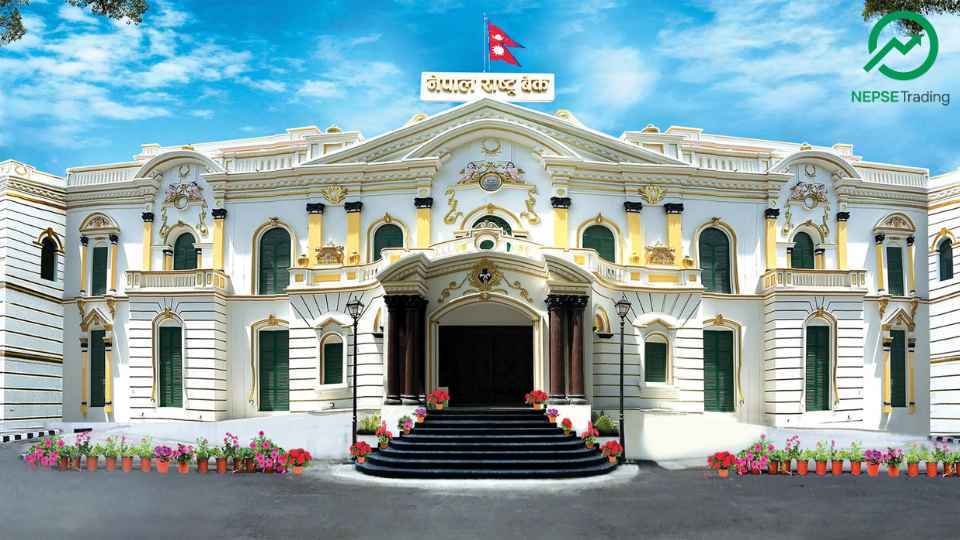
Nepal Rastra Bank (NRB), the central bank of Nepal, has formally initiated the preparation of the Monetary Policy for the upcoming fiscal year 2082/83. As per the central bank’s standard practice, the policy must be introduced within 15 days of the new fiscal year—by 15th Shrawan. In this context, NRB has publicly invited suggestions from stakeholders and the general public, with a submission deadline of 10th Ashad (June 24, 2025).
This monetary policy is significant, marking the first policy under the leadership of the new Governor, Prof. Dr. Bishwanath Paudel. He has already begun conducting on-ground inspections in response to existing financial challenges, signaling a hands-on approach to policy reform.
Monetary Policy: Framework and National Role
Monetary policy serves as the macroeconomic tool designed to ensure economic growth, price stability, and overall financial discipline. In Nepal, the central bank drafts and executes this policy annually, determining how much money should circulate in the economy and guiding its allocation across various sectors via banks and financial institutions.
The goal is to align money supply with actual demand. Over-supply can spur inflation, while under-supply can restrict investment and consumer spending. Therefore, the NRB uses monetary policy to fine-tune liquidity, manage inflation, balance savings and investments, and maintain currency exchange stability.
Why the 2082/83 Policy Matters
Nepal’s current economic scenario is marred by stagnant domestic demand and worsening asset quality in the financial sector. The liquidity crisis is evident, with banks experiencing mismatches between deposits and loan issuance. This has triggered erratic interest rates, destabilizing both saving and investment dynamics.
Stakeholders expect the upcoming monetary policy to address these issues pragmatically by injecting life into the slow-moving economy. However, any aggressive liquidity expansion must be handled cautiously to avoid inflationary pressures.
Interpretations and Anticipations:
Liquidity Management Is Critical:
With excess savings not translating into productive investments, NRB must tackle liquidity bottlenecks. This could involve revising the Cash Reserve Ratio (CRR), tweaking the Standing Liquidity Facility (SLF), or adopting repo/reverse repo operations more aggressively.Inflation and Interest Rates:
If money is pumped excessively, inflation will spike. Therefore, NRB’s monetary policy is expected to walk a tightrope—stimulating demand without fueling inflation.Credit Distribution:
There is a likelihood that the policy will emphasize targeted lending to productive sectors like agriculture, manufacturing, and youth entrepreneurship while discouraging speculative lending, especially in real estate and stocks.Foreign Exchange and External Stability:
With high remittance inflows but sluggish exports, NRB’s foreign exchange management strategy will be closely watched. The monetary policy may hint at diversifying foreign reserves and managing currency volatility.Macro Stability vs. Growth Push:
The dual objective of stabilizing the economy while also boosting growth will be the central theme. Ensuring financial stability through regulatory tightening may conflict with expansionary policy tools aimed at reviving consumption and investment.
The forthcoming monetary policy for 2082/83 is more than a routine document—it is a roadmap for stabilizing an economy facing liquidity stress, uneven credit flows, and demand-side stagnation. Governor Paudel’s administration is under the spotlight to balance inflation control, credit stimulation, and long-term macroeconomic sustainability. Stakeholders are hopeful but cautious, knowing that a well-calibrated policy is essential to prevent further economic drag and restore confidence in Nepal’s financial system.
Advertisement
Written by
Dipesh Ghimire