Monetary Policy
Monetary Policy Boosts Market Confidence, but Sustainability of Nepal’s Stock Market Recovery Remains to Be Tested
For investors, the new monetary policy has provided a positive signal, but caution remains necessary. The coming months will reveal whether the current market improvement represents the beginning of a stronger recovery cycle or merely a short-term reaction to policy optimism.
Dipesh Ghimire
4 min read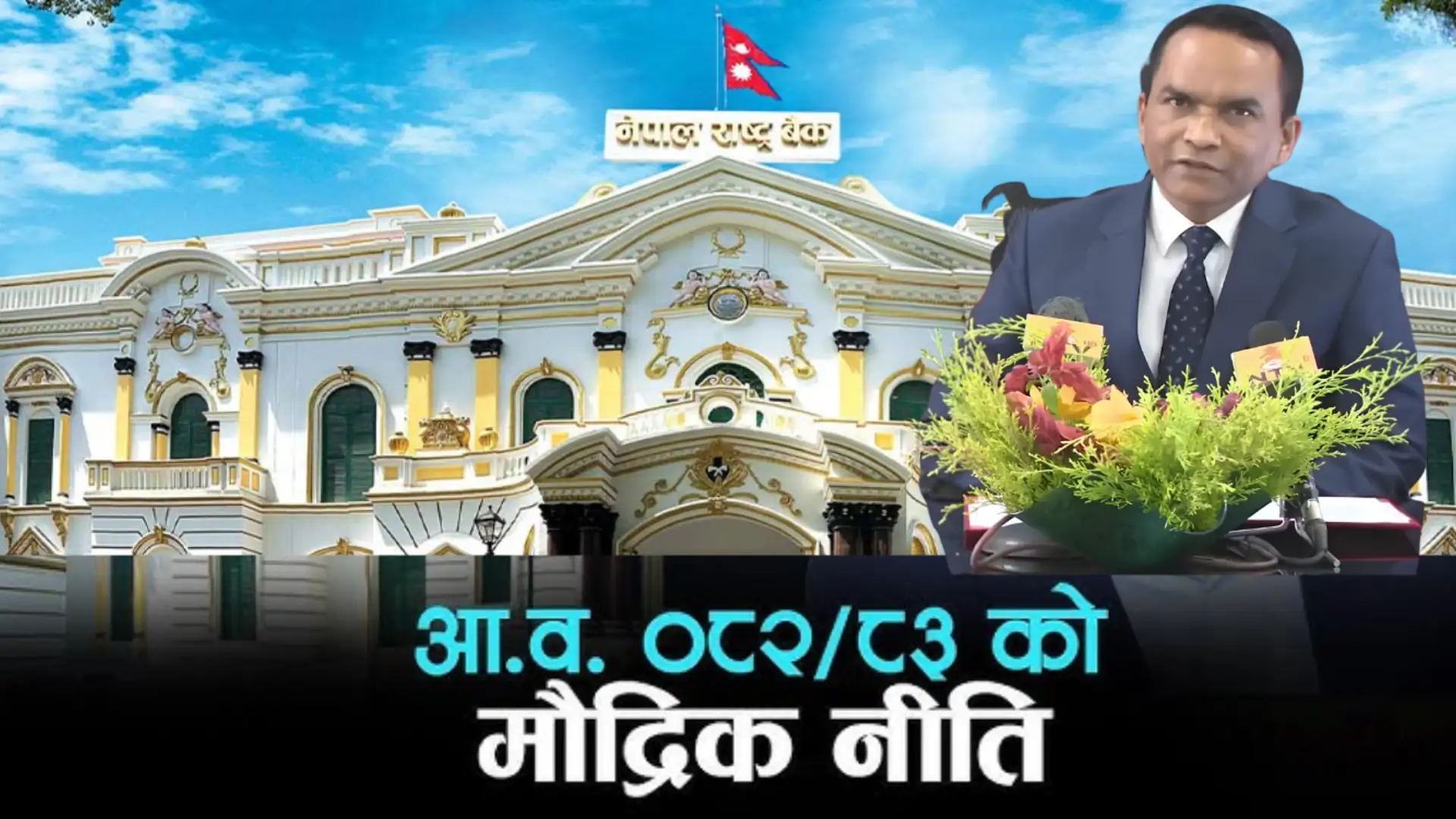
Kathmandu — Amid sluggish domestic economic activity and prolonged uncertainty in the investment environment, Nepal Rastra Bank’s monetary policy for the fiscal year 2083/84 has created renewed optimism in the financial market. The central bank’s decision to adopt a relatively flexible approach toward private sector credit expansion and indicate greater flexibility in share-backed lending has improved investor sentiment and provided short-term support to the stock market.
Nepal Rastra Bank has set a target of expanding private sector credit by 11 percent in the upcoming fiscal year. Over the past few years, high interest rates, weak credit demand, and declining confidence among businesses and investors have slowed economic momentum. Against this backdrop, the central bank’s latest policy appears aimed at encouraging private sector activity by improving access to finance.
The stock market had already started reflecting expectations of a supportive monetary policy before its announcement. On Tuesday, the Nepal Stock Exchange (NEPSE) index increased by 24.57 points to close at 2,651.68 points. The recovery came after two consecutive sessions of decline, indicating that investors have started returning to the market with renewed confidence.
However, the recent rise in NEPSE should not immediately be interpreted as the beginning of a long-term bullish trend. The current improvement appears largely driven by policy expectations and investor psychology rather than a complete recovery in economic fundamentals. The sustainability of the market’s direction will depend on how effectively the monetary policy is implemented and whether it translates into stronger economic activity.
Greater Flexibility in Share-Backed Lending Raises Investor Expectations
One of the major areas of interest in the new monetary policy is the proposed change in share-backed lending provisions. Previously, banks and financial institutions operated under a uniform lending limit for loans against shares. The new approach suggests that lending capacity may be determined based on individual institutions’ capital strength, risk management capability, and liquidity position.
The revised framework could allow financially stronger banks to expand share-backed lending according to their own capacity. This may encourage greater participation from institutional investors, which could improve market depth and stability over time.
Nevertheless, easier access to credit alone cannot guarantee a sustained stock market rally. The actual impact will depend on banks’ ability to increase lending, investors’ willingness to borrow, and the financial performance of listed companies.
Rising Trading Volume Reflects Increased Market Participation
Along with the rise in NEPSE, the increase in daily trading volume has also indicated improving market activity. Trading volume, which stood at around Rs. 3.55 billion on the previous trading day, increased to Rs. 4.40 billion on Tuesday.
More than 95 million shares of 352 securities were traded during the session, with over 72,000 transactions recorded. The increase in both turnover and transaction volume suggests that buyers have become more active following the policy announcement.
All 13 sectoral indices ended higher on Tuesday. The trading sector recorded the strongest gain, while banking and development banking groups also showed notable improvement. Since financial institutions hold a significant weight in Nepal’s stock market, positive movement in these sectors often influences overall market sentiment.
Possible Restructuring of Nepal’s Banking System
The latest monetary policy has also indicated a possible review of the existing classification system of banks and financial institutions. Currently, financial institutions are categorized into Class A, B, C, and D groups. However, changing market conditions, technological advancement, and evolving financial services have created a need to reconsider this traditional structure.
Nepal Rastra Bank has indicated plans to make financial institutions more specialized based on their services and business models. Such restructuring could reduce operational inefficiencies, encourage digital transformation, and improve competitiveness within the financial sector.
The expansion of digital banking services has also raised questions about the traditional branch-based banking model. Future banking development is likely to focus more on technology-driven services, efficiency, and specialized financial solutions.
NEPSE at a Critical Technical Stage
Technical indicators suggest that NEPSE is currently at an important turning point. During the early months of 2026, the index recorded a strong upward movement and reached around the 2,975–2,980 level before entering a correction phase.
Following that peak, the market gradually formed lower highs and lower lows, indicating continued selling pressure. Recently, however, the index has entered a narrowing trading pattern, suggesting that the market may be preparing for a significant directional movement.
From a technical perspective, the 2,801-point level remains a key resistance zone. A strong breakout above this level could create further momentum toward the next resistance areas around 2,879 and 2,911 points.
On the downside, the 2,609-point region is considered an important support level. A decline below this zone could increase selling pressure and weaken the current recovery attempt.
Policy Support Must Translate into Economic Recovery
The government has set a target of achieving 7 percent economic growth in the upcoming fiscal year while keeping inflation within 5.5 percent. The expansion-oriented monetary policy has been designed partly to support these broader economic objectives.
However, monetary policy alone cannot determine the long-term direction of the stock market or the economy. Sustainable recovery requires increased private sector investment, higher production, improved employment opportunities, and stronger consumer demand.
The recent improvement in NEPSE can currently be viewed as an initial response to positive policy expectations. Whether this recovery develops into a sustainable market trend will depend on actual improvements in corporate earnings, banking sector lending capacity, and overall economic performance.
For investors, the new monetary policy has provided a positive signal, but caution remains necessary. The coming months will reveal whether the current market improvement represents the beginning of a stronger recovery cycle or merely a short-term reaction to policy optimism.
Advertisement
Written by
Dipesh Ghimire