Top
Nepal Emphasizes the Importance of Regional Cooperation in a Changing Global Landscape
Nepal Emphasizes the Importance of Regional Cooperation in a Changing Global Landscape In the context of an increasingly complex and uncertain global environment, Nepal has underscored the necessity of regional cooperation not only as a requirement but as an absolute imperative. This statement was made by the Foreign Secretary and Chairperson of the South Asian Association for Regional Cooperation (SAARC) Standing Committee, Amrit Bahadur Rai, during the 62nd meeting of the SAARC Program Committee. Regional Cooperation as a Bridge Between National and Global Efforts Rai highlighted that amid today’s global challenges, regional cooperation is crucial for bridging the gap between national efforts and international processes. As nations face increasingly interconnected issues such as economic instability, climate change, and geopolitical tensions, strengthening regional collaboration within South Asia becomes essential. Rai emphasized that regional cooperation serves as a critical conduit through which countries can navigate and address common challenges effectively. He stated, "In the face of global uncertainties, regional cooperation has become not just a necessity but an obligation." This reflects Nepal's broader geopolitical strategy of fostering stronger regional ties to ensure mutual benefits and stability within South Asia. Achievements of SAARC and the Need for Action In his address, SAARC Secretary-General, Golam Sarwar, reminded the gathering of the significant achievements SAARC has made over the past four decades. He called for a shift from aspirations to actionable outcomes, stressing that the lofty goals of regional cooperation must be transformed into tangible results. Sarwar's comments emphasize the importance of not only celebrating the milestones SAARC has reached but also ensuring that these accomplishments translate into real-world, impactful initiatives.
Dipesh Ghimire
3 min read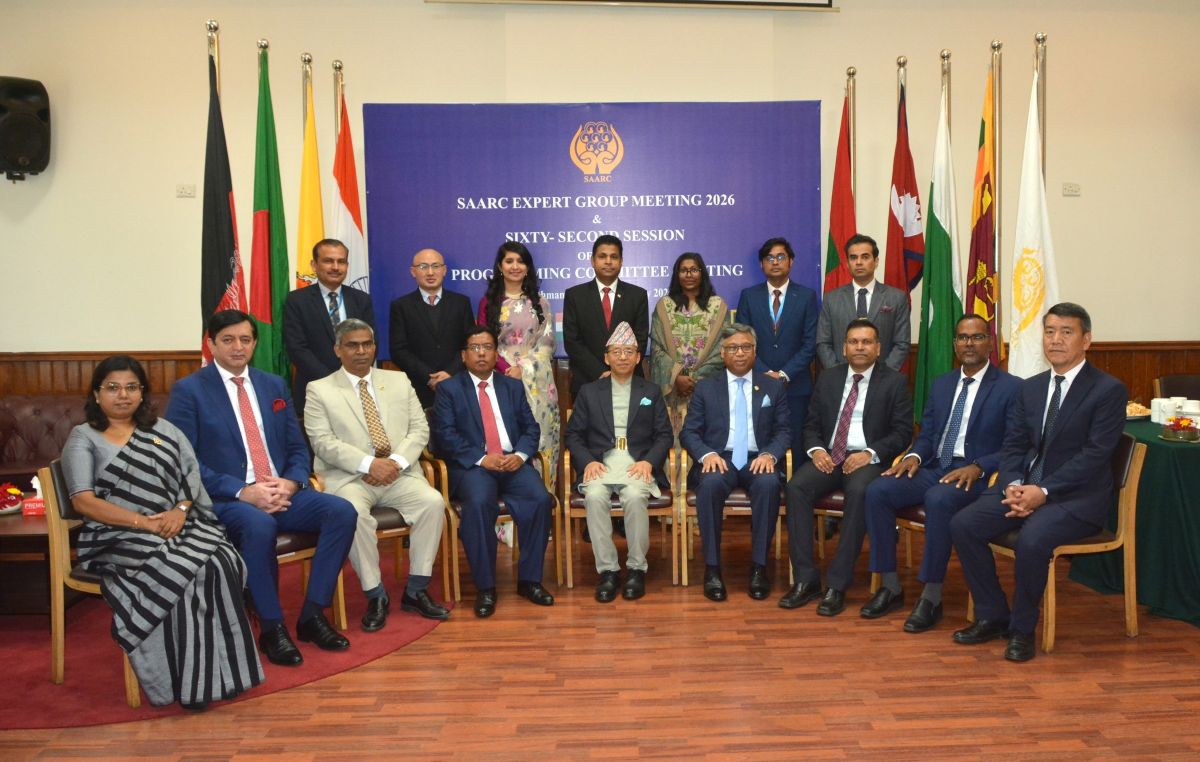
In the context of an increasingly complex and uncertain global environment, Nepal has underscored the necessity of regional cooperation not only as a requirement but as an absolute imperative. This statement was made by the Foreign Secretary and Chairperson of the South Asian Association for Regional Cooperation (SAARC) Standing Committee, Amrit Bahadur Rai, during the 62nd meeting of the SAARC Program Committee.
Regional Cooperation as a Bridge Between National and Global Efforts
Rai highlighted that amid today’s global challenges, regional cooperation is crucial for bridging the gap between national efforts and international processes. As nations face increasingly interconnected issues such as economic instability, climate change, and geopolitical tensions, strengthening regional collaboration within South Asia becomes essential. Rai emphasized that regional cooperation serves as a critical conduit through which countries can navigate and address common challenges effectively.
He stated, "In the face of global uncertainties, regional cooperation has become not just a necessity but an obligation." This reflects Nepal's broader geopolitical strategy of fostering stronger regional ties to ensure mutual benefits and stability within South Asia.
Achievements of SAARC and the Need for Action
In his address, SAARC Secretary-General, Golam Sarwar, reminded the gathering of the significant achievements SAARC has made over the past four decades. He called for a shift from aspirations to actionable outcomes, stressing that the lofty goals of regional cooperation must be transformed into tangible results. Sarwar's comments emphasize the importance of not only celebrating the milestones SAARC has reached but also ensuring that these accomplishments translate into real-world, impactful initiatives.
Approval of SAARC Secretariat’s Budget and Programs
The meeting, which concluded today, was expected to approve the budget and programs of the SAARC Secretariat, a critical step in ensuring the financial sustainability and operational effectiveness of the organization moving forward. These decisions reflect the ongoing commitment of SAARC member states to enhance collaborative efforts in areas such as trade, security, and regional development.
Senior officials from Bangladesh, Bhutan, India, Maldives, Pakistan, and Sri Lanka participated in the meeting, demonstrating the collective interest of these countries in addressing regional concerns through joint efforts. The participation of these senior representatives reflects the strategic importance that regional cooperation holds for all South Asian nations.
Interpreting the Shift Towards Regionalism
This meeting comes at a time when South Asia is grappling with a rapidly changing global environment, including economic fluctuations, rising climate-related risks, and ongoing political instability in parts of the region. In this context, regional cooperation emerges as a vital mechanism for creating a unified response to these challenges. By fostering deeper ties among SAARC nations, Nepal and its neighbors aim to build a more resilient and cooperative region capable of navigating global uncertainties.
The call for regional cooperation is timely, given the growing recognition that no nation in South Asia can effectively address issues such as trade disruptions, security threats, or environmental crises in isolation. In light of these interlinked challenges, enhancing regional cooperation is not just a political ideal but a practical necessity for ensuring sustainable development, peace, and stability in the region.
Looking Ahead: Strengthening SAARC's Role
As Nepal continues to advocate for stronger regional collaboration, the challenge lies in transforming the regional cooperation aspirations into concrete, actionable projects that directly benefit the people of South Asia. The approval of the SAARC Secretariat's budget and programs marks an important step forward in this direction, but much work remains in terms of building greater institutional coherence and aligning member states' policies for more effective regional governance.
In conclusion, Nepal’s assertion at the SAARC meeting highlights a crucial turning point in South Asia's approach to international relations. By focusing on regional cooperation as a bridge between national and global efforts, Nepal is advocating for a more integrated and unified South Asia that can address the region’s challenges collaboratively. The outcomes of the 62nd meeting will undoubtedly shape the future trajectory of the SAARC region, with a renewed emphasis on turning shared aspirations into real-world solutions for the region’s growth and stability.
Advertisement
Written by
Dipesh Ghimire