Nepal Rastra Bank
Nepal Rastra Bank’s Rs. 7 Billion Deposit Move Signals Excess Liquidity and Growing Divide in Banking Sector
The coming months may determine whether excess liquidity eventually translates into productive lending and economic recovery, or whether banks continue struggling with weak demand and deteriorating asset quality despite having ample funds available in the system.
Dipesh Ghimire
3 min read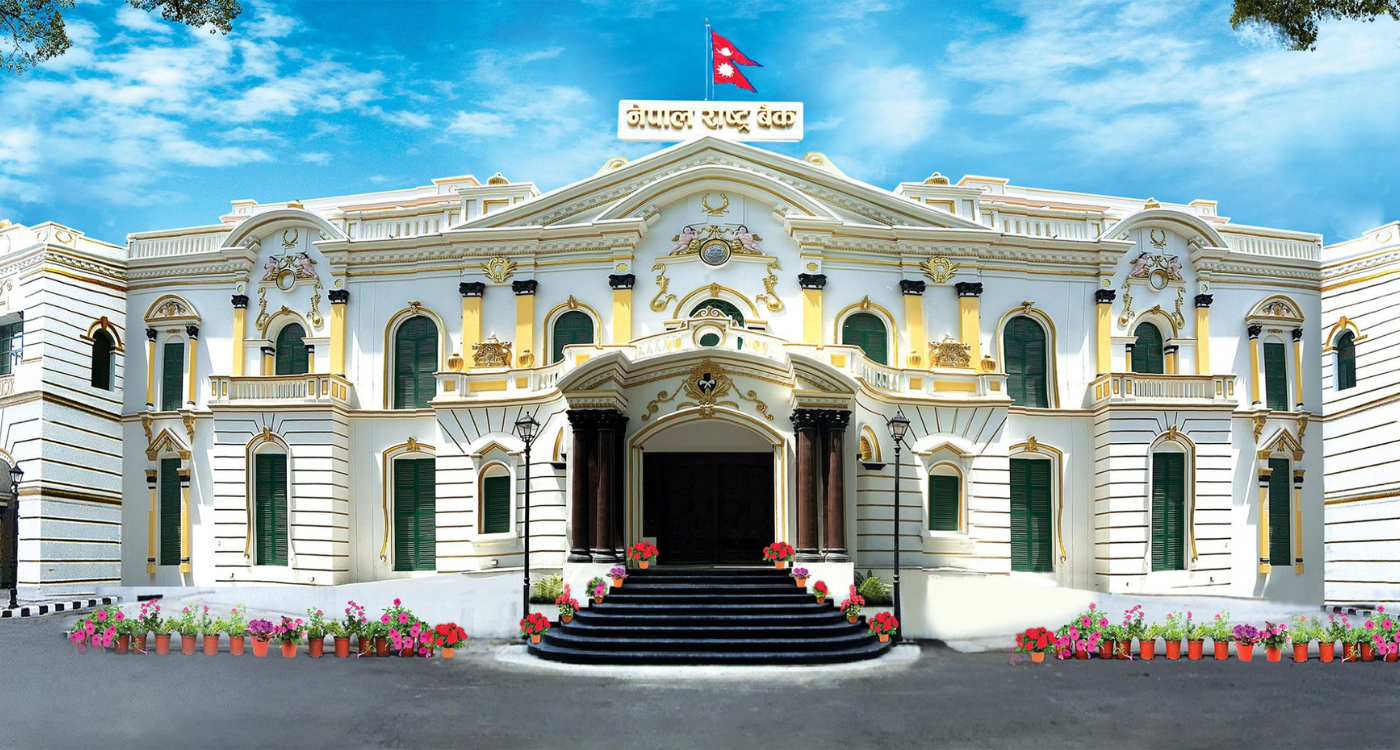
Nepal Rastra Bank has announced plans to place Rs. 7 billion from its gratuity and pension fund into fixed deposits across commercial banks, development banks, and finance companies for one year. At first glance, the move appears to be a routine treasury management exercise. However, analysts say the decision also reflects the deeper liquidity situation inside Nepal’s banking system and highlights the widening gap between stronger and weaker financial institutions.
According to the central bank’s notice, Rs. 5.60 billion has been allocated for Class ‘A’ commercial banks, Rs. 1.05 billion for national-level development banks, and Rs. 350 million for finance companies. The deposits will remain locked for 366 days, with banks required to submit competitive interest rate proposals to secure the funds.
The timing of the announcement is particularly significant. Nepal’s banking sector is currently experiencing excess liquidity due to weak private-sector credit demand, slower business expansion, and limited industrial activity. Deposits in banks have continued to rise, supported largely by strong remittance inflows, while loan demand from businesses and households has remained subdued. As a result, banks are holding large volumes of idle funds and competing aggressively for stable institutional deposits.
Economists say the central bank’s decision to distribute pension and gratuity funds through fixed deposits offers temporary liquidity support, especially for institutions facing funding pressure. But the eligibility criteria set by the regulator also reveal growing concern about financial discipline within the banking sector.
To qualify, banks must maintain gross non-performing loans below 8 percent and net NPL below 3 percent. They must also meet capital adequacy, liquidity, profitability, and credit-to-deposit ratio requirements. Institutions previously subjected to prompt corrective action or declared problematic must remain free from such status for at least six months before becoming eligible.
These conditions come at a time when several banks are already facing pressure from rising bad loans and weakening profitability. Recent loan portfolio reviews conducted under the IMF-supported Extended Credit Facility programme showed that the average non-performing loan ratio among Nepal’s major commercial banks has climbed to around 7.6 percent. Some institutions are also reportedly under capital pressure due to deteriorating loan quality and increased provisioning requirements.
Financial analysts believe the central bank is attempting to balance two objectives simultaneously: protecting public funds while also ensuring liquidity stability in the banking system. By imposing stricter eligibility standards, the regulator appears determined to avoid placing institutional funds in financially vulnerable institutions, especially at a time when confidence in parts of the financial sector remains fragile.
The fixed-deposit bidding process may also intensify competition among banks over interest rates. Banks with stronger liquidity positions may offer relatively lower rates, while institutions under funding stress could be forced to provide more aggressive returns to secure the deposits. This could create a clearer picture of which banks are currently facing liquidity strain beneath publicly reported financial indicators.
Another notable aspect is the central bank’s emphasis that the agreed interest rate will remain fixed throughout the deposit period, regardless of future changes in market rates. Analysts say this provision could benefit banks if interest rates decline further in the coming months, particularly as monetary conditions remain accommodative and credit expansion weak.
Overall, while the Rs. 7 billion placement is small relative to Nepal’s total banking deposits, the move has broader symbolic importance. It reflects how Nepal’s financial system is increasingly navigating a difficult phase marked by slow economic activity, rising loan stress, cautious lending behavior, and uneven confidence across the banking sector.
The coming months may determine whether excess liquidity eventually translates into productive lending and economic recovery, or whether banks continue struggling with weak demand and deteriorating asset quality despite having ample funds available in the system.
Advertisement
Written by
Dipesh Ghimire