Agriculture Economy
Nepal’s Agriculture Economy Under Pressure as Youth Migration and Rising Imports Reshape Rural Life
The rural labor crisis has further intensified these problems. Large numbers of young people continue leaving villages in search of employment opportunities abroad or in urban centers. As migration expands, many farming communities are increasingly populated by elderly residents, while large areas of cultivable land remain abandoned or underutilized.
Dipesh Ghimire
4 min read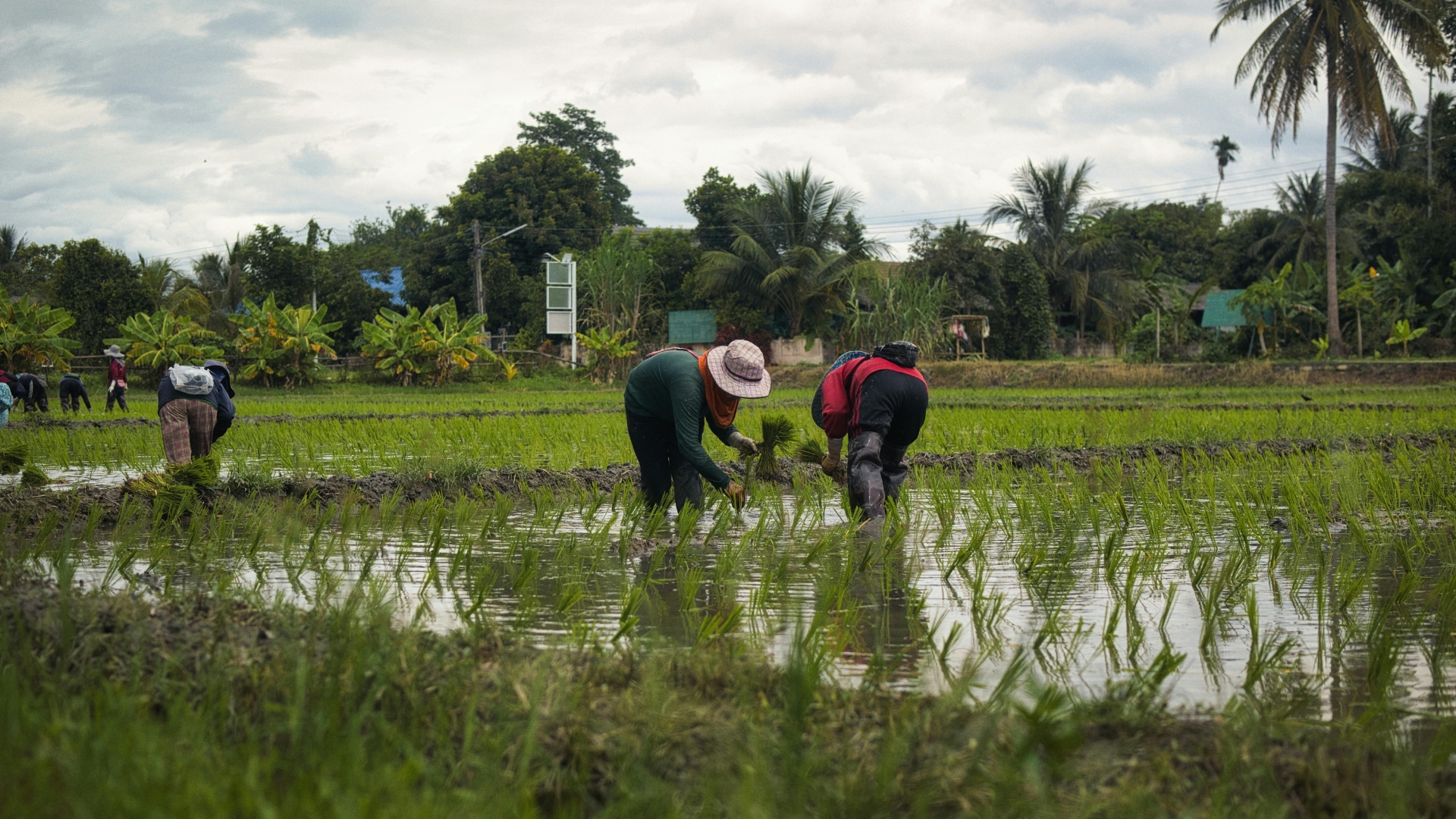
Agriculture still remains the primary source of livelihood for a large share of Nepal’s population, particularly in rural communities where farming continues to define daily economic life. Yet despite this dependence, the sector is gradually losing both manpower and productivity, raising concerns about the country’s long-term food security and economic sustainability.
Recent agricultural data suggest that nearly half of Nepal’s households remain connected to farming either directly or indirectly. Dependency is highest in remote Himalayan districts, where limited industrial development and weak service-sector expansion leave agriculture as the only reliable livelihood option. In contrast, many hill and Tarai districts are witnessing a slow but steady decline in agricultural engagement as migration and foreign employment reshape local economies.
Over the last two decades, foreign employment has become one of Nepal’s strongest economic pillars. Remittance income has supported millions of households and stabilized national foreign exchange reserves. However, economists say much of that income has flowed toward consumption, imported goods, urban housing, and non-productive sectors rather than strengthening domestic agricultural production.
The consequences are becoming increasingly visible. Nepal’s dependence on imported food products continues to rise every year. Government economic data show that agricultural imports have already crossed hundreds of billions of rupees within the current fiscal year alone. Items once commonly produced within the country — including rice, vegetables, edible oil, maize, fruits, and even basic grains — are now increasingly sourced from foreign markets.
Analysts warn that this growing import dependency is not simply an economic issue but also a strategic vulnerability. A country with large agricultural dependence but weak domestic production capacity faces serious long-term risks related to food security, trade imbalance, and rural economic decline.
At the heart of the problem lies the structure of Nepal’s farming system itself. Most agricultural land remains fragmented into small plots, making commercial-scale production difficult. Farmers continue facing rising production costs, irregular fertilizer supply, limited irrigation, weak access to technology, and unstable market systems. In many areas, agricultural work no longer guarantees stable income or economic security.
The rural labor crisis has further intensified these problems. Large numbers of young people continue leaving villages in search of employment opportunities abroad or in urban centers. As migration expands, many farming communities are increasingly populated by elderly residents, while large areas of cultivable land remain abandoned or underutilized.
Agricultural experts say Nepal’s farming sector can no longer survive under a purely traditional subsistence model. They argue that the future of agriculture depends on modernization, mechanization, irrigation expansion, greenhouse farming, commercial vegetable production, agro-processing industries, and technology-driven cultivation systems.
Another major concern involves the weak relationship between farmers and markets. In many cases, farmers produce crops but fail to receive fair prices because of poor transportation, limited storage facilities, and the dominance of middlemen within supply chains. The absence of effective minimum support pricing and organized procurement systems continues leaving small farmers financially vulnerable.
Policy implementation has also faced criticism. Although agricultural support programs are announced every year, experts say many initiatives remain distribution-oriented rather than production-focused. Free seed distribution programs, for example, are often criticized for encouraging dependency without improving long-term productivity or technical capacity.
Agricultural economists argue that future policies should focus more on production-linked incentives, local seed preservation, technical training, irrigation systems, storage facilities, and farmer entrepreneurship. They say agriculture must be treated not merely as a welfare sector, but as a productive economic industry capable of generating employment and supporting national growth.
The role of federalism in agricultural development has also become a growing debate. Nepal’s federal, provincial, and local governments all hold responsibilities related to agriculture, but coordination between the three layers often remains weak. Similar programs are frequently duplicated, resources become fragmented, and long-term planning suffers from institutional overlap.
Experts believe the federal government should concentrate on large irrigation systems, national agricultural policy, fertilizer management, insurance systems, and research infrastructure. Provincial governments, meanwhile, could focus on region-specific production strategies, while local governments work directly with farmers through technical support, cooperatives, and localized market systems.
Younger generations are increasingly seen as the decisive factor in Nepal’s agricultural future. Policymakers have recently begun promoting “agri-tech” systems, startup financing, youth entrepreneurship programs, and commercial farming initiatives aimed at attracting returnee migrant workers and educated youth into the sector.
Whether those programs succeed may depend largely on implementation. Analysts say young people are unlikely to remain in agriculture unless farming becomes technologically modern, financially profitable, and socially respected.
At the same time, Nepal’s geographical diversity continues to offer significant opportunities. Indigenous products such as Marsi rice from Jumla, Kalanamak rice from Kapilvastu, and traditional mustard oil from the Tarai region possess strong branding and export potential if supported with proper certification, processing, and marketing systems.
Organic agriculture is another area receiving growing attention. Because many rural farming systems still rely less heavily on chemical inputs compared to industrialized agriculture elsewhere, Nepal may possess long-term comparative advantages in organic and specialty agricultural products.
Still, experts caution that such opportunities cannot be realized without serious investment in infrastructure. Irrigation networks, rural roads, cold storage systems, collection centers, processing industries, and agricultural transport systems remain underdeveloped across much of the country.
The broader agricultural debate now reflects something larger than farming alone. It touches on migration, economic inequality, food sovereignty, employment generation, and Nepal’s long-term development model. For many economists, the future of agriculture will ultimately determine whether rural Nepal remains economically viable or continues losing population, productivity, and self-sufficiency.
In that sense, agriculture is no longer viewed simply as a traditional occupation. Increasingly, it is being discussed as a strategic national sector whose success or failure could shape Nepal’s broader economic future for decades to come.
Advertisement
Written by
Dipesh Ghimire