Nepal's Capital Market
Nepal's Capital Market at a Crossroads: Three Decades of Growth, Yet Fundamental Weaknesses Persist
The underlying message running through the commission's findings is difficult to ignore. Nepal's capital market has the potential to become a powerful engine for channeling domestic savings into productive investment, reducing the economy's dependence on bank lending, and giving ordinary citizens a meaningful stake in the country's corporate growth. But that potential is being squandered. Until the government treats regulatory independence, market diversification and investor protection as genuine priorities rather than items on a reform checklist, Nepal's stock market will remain what it largely is today — a speculative arena shaped more by rumor and manipulation than by economic fundamentals.
Dipesh Ghimire
3 min read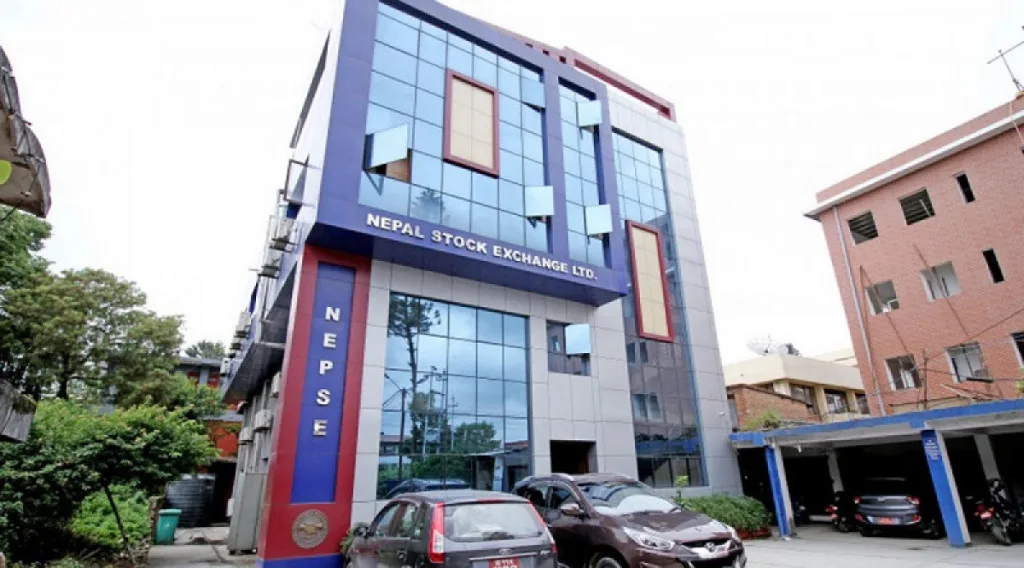
Nepal's capital market has existed for more than three decades, but a brutally honest assessment reveals that its development remains far from complete. The High-Level Economic Reform Recommendation Commission 2081 has laid bare a catalogue of structural weaknesses that continue to hold the market back — and experts warn that without serious intervention, the market risks becoming a playground for the privileged few rather than a genuine engine of national economic growth.
Perhaps the most glaring gap is the near-total absence of a bond market. While equities flood the Nepal Stock Exchange on a regular basis, corporate bonds are almost nowhere to be found outside the banking and financial institution sector. Even government securities — considered the safest and most liquid of all fixed-income instruments worldwide — cannot be freely traded on a secondary market in Nepal. This is not a minor technical oversight. It means that long-term capital at stable interest rates, which is precisely what productive industries need most, simply cannot be raised through capital markets the way it can in more developed economies.
The problem of sector concentration makes things worse. Technology companies, manufacturers, and service-sector businesses are conspicuously absent from the Nepal Stock Exchange. The listed companies move almost entirely in the same direction at the same time, which strips investors of any meaningful ability to diversify their portfolios. When everything rises together and falls together, risk management becomes virtually impossible for ordinary investors.
Foreign investors, meanwhile, are shut out entirely. Only Nepali citizens and a limited category of Non-Resident Nepalis are permitted to participate in the market. This restriction does not merely limit liquidity — it also signals to the global investment community that Nepal's market is not yet ready to compete for international capital, keeping it insulated but also underdeveloped.
The regulatory structure itself is compromised by political interference. Both the Securities Board of Nepal and the Nepal Stock Exchange operate under the heavy hand of the Ministry of Finance, preventing the kind of independent, commercially-driven decision-making that functional capital markets require. When regulators cannot act swiftly and autonomously, the market's ability to modernise and respond to emerging challenges is severely hampered.
Retail investors carry a particularly heavy burden in this environment. Financial literacy among the general investing public remains low, and many people make decisions based on market sentiment rather than fundamental analysis of company performance. This vulnerability is being actively exploited. Stock price manipulation using low paid-up capital shares is a well-documented practice, and insider trading combined with circular transactions has allowed a small circle of well-connected individuals to consistently profit at the expense of ordinary participants.
Brokers, too, are trapped in a narrow role. In mature markets, brokerage firms provide portfolio management, financial advisory services, IPO book-building support, and registrar functions. In Nepal, they are largely confined to executing buy and sell orders. This limits the quality of guidance available to investors and restricts the overall sophistication of market activity.
The reform agenda identified by the commission is both ambitious and long overdue. Establishing a secondary market for government bonds, allowing Non-Resident Nepalis to trade individually without the requirement of setting up investment funds, restructuring the Securities Board to reduce political representation and increase technical expertise, introducing margin lending through brokers, and converting state-owned enterprises into public limited companies open to private investment — these are not radical ideas. They are standard features of functioning capital markets elsewhere in the world.
Beyond institutional reform, the commission also calls for launching commodity exchange markets, introducing derivative instruments and equity crowdfunding, lowering transaction costs for large trades, and making mandatory licensing and qualification standards for securities analysts a legal requirement rather than a voluntary aspiration.
The underlying message running through the commission's findings is difficult to ignore. Nepal's capital market has the potential to become a powerful engine for channeling domestic savings into productive investment, reducing the economy's dependence on bank lending, and giving ordinary citizens a meaningful stake in the country's corporate growth. But that potential is being squandered. Until the government treats regulatory independence, market diversification and investor protection as genuine priorities rather than items on a reform checklist, Nepal's stock market will remain what it largely is today — a speculative arena shaped more by rumor and manipulation than by economic fundamentals.
Advertisement
Written by
Dipesh Ghimire