Nepal's cooperative sector
Nepal's Cooperative Sector Gets a 10-Point Action Plan — But the Real Test Is Enforcement
The savers who have lost money to collapsed or mismanaged cooperatives will not be made whole by an action plan. Their immediate need is for compensation mechanisms and clearer legal pathways to recover their savings — issues that the current plan does not directly address. But the longer-term goal of preventing future losses requires exactly the kind of systematic oversight strengthening that the 10-point plan attempts to put in place. Whether this plan marks a genuine turning point for cooperative sector governance in Nepal or becomes another document filed and forgotten will depend on choices that have not yet been made.
Dipesh Ghimire
5 min read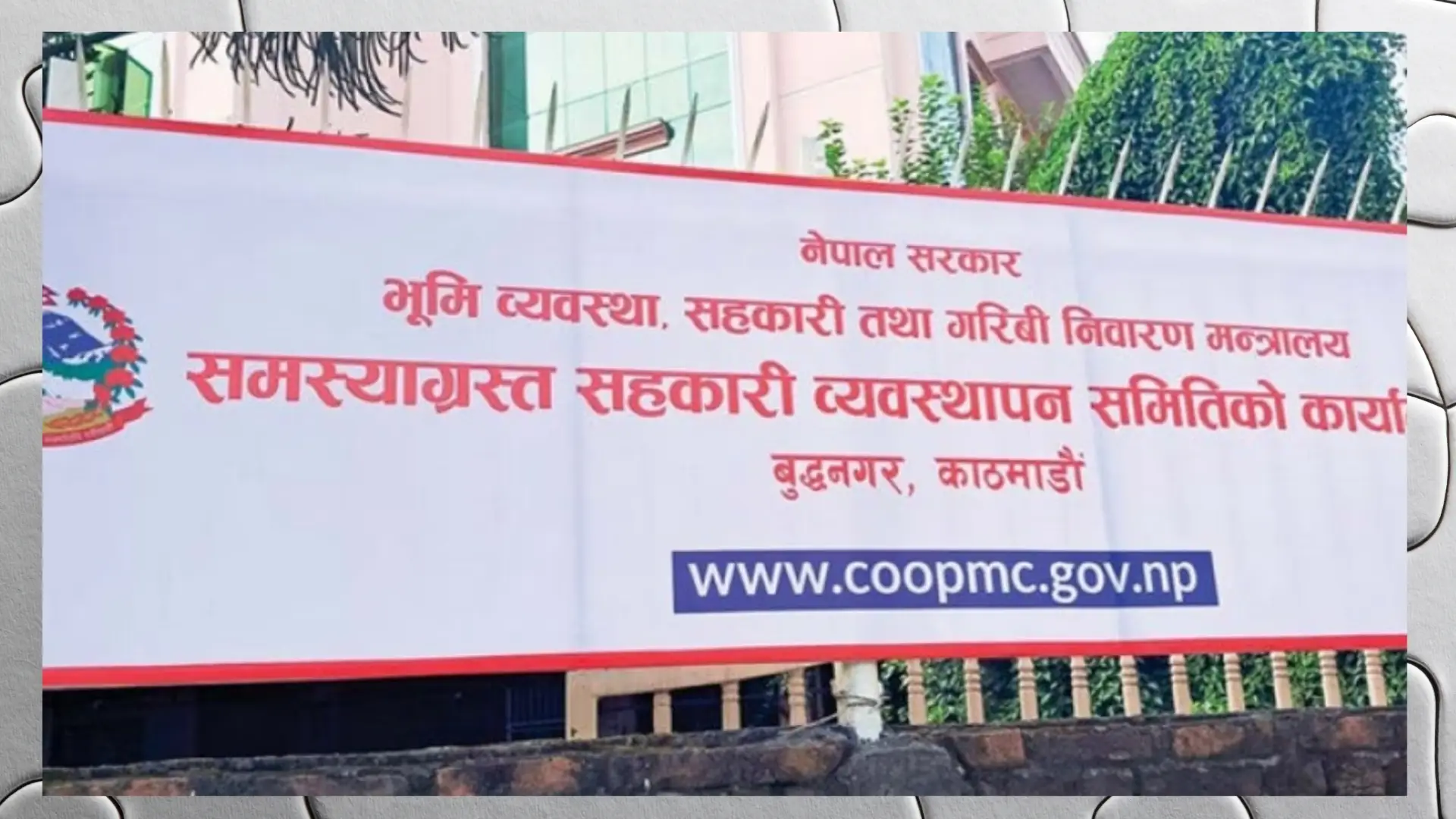
Nepal's cooperative sector has been in crisis for years. Thousands of savers have lost money to cooperatives that collected deposits, made promises they could not keep, and then collapsed or simply stopped functioning. The complaints have been mounting, the irregularities have been documented, and the political pressure to act has been building. Now the Ministry of Land Management, Cooperatives, Federal Affairs and General Administration has responded with a 10-point action plan, directing all seven provinces and local governments to begin implementation immediately.
The plan is a response to a sector that has grown large and largely ungoverned. Nepal has tens of thousands of registered cooperative societies spread across the country, and a significant portion of them operate outside the boundaries of what the Cooperatives Act permits. Some have not held a general assembly in years. Others have not been audited in so long that their financial condition is genuinely unknown. Still others have been collecting savings and disbursing loans without the licenses required to conduct financial transactions. The result has been predictable — when things go wrong, as they inevitably do in institutions operating without accountability or oversight, it is the ordinary savers who suffer the consequences.
The most structurally important element of the action plan is the mandatory integration of all cooperative institutions into the COPOMIS system — the Cooperative Management Information System that serves as the central database for tracking cooperative activity across the country. The significance of this requirement cannot be overstated. A regulator cannot effectively supervise what it cannot see, and a cooperative that does not appear in the central system is essentially invisible to the authorities responsible for oversight. Making COPOMIS enrollment mandatory and enforcing that requirement consistently would for the first time give regulators a complete picture of how many cooperatives actually exist, where they operate, and what their basic characteristics are.
Alongside COPOMIS integration, the ministry has directed that the records and registrations of all cooperative institutions be brought up to date under the Cooperatives Act. This sounds administrative but it matters enormously in practice. Outdated records mean that regulators are working from information that may be years out of date — wrong addresses, wrong leadership, wrong financial figures. Keeping records current is the foundation on which everything else in the oversight system depends.
The identification of dormant and high-risk cooperatives is the most operationally urgent component of the plan. The ministry has directed that a comprehensive list be compiled of all cooperatives that have not held a general assembly for more than two years, have not undergone auditing, or have not enrolled in COPOMIS. These three criteria are well-chosen because they correspond to the most basic obligations of a functioning cooperative institution. A cooperative that has not held a general assembly in two years has effectively stopped being accountable to its members. One that has not been audited has no verified financial record. One that is not in COPOMIS cannot be tracked. An institution that fails all three tests simultaneously is, for all practical purposes, not functioning as a legitimate cooperative — and the savers whose money it holds are exposed to significant risk.
The licensing verification requirement addresses one of the most widespread legal violations in Nepal's cooperative sector. Cooperatives that primarily engage in savings collection and loan disbursement are essentially performing banking functions, and performing those functions requires specific authorization from the National Cooperative Regulation Authority. Many savings and credit cooperatives have been conducting these activities without the required license, either because they never applied or because the regulatory environment was permissive enough that the absence of a license did not attract consequences. The action plan directs provincial and local governments to verify licensing status and coordinate with the authority — a step that should produce a clearer picture of how extensive unlicensed financial activity in the cooperative sector actually is.
The record-keeping requirements for monitoring actions — maintaining updated documentation of orders issued, directives given, fines imposed, and other regulatory actions taken against cooperatives — address a different but related problem. Without comprehensive records of past enforcement actions, regulators cannot identify repeat offenders, cannot track whether sanctions have been complied with, and cannot build the evidentiary record needed to pursue stronger action against persistently non-compliant institutions. The requirement to maintain these records properly is unglamorous but essential infrastructure for any functioning oversight regime.
The ministry has also used the action plan to solicit legal reform suggestions from provincial and local governments, asking them to submit recommendations within 15 days on how cooperative registration, regulation, monitoring, and dissolution processes can be made more effective. This bottom-up consultation approach reflects a recognition that the problems in the cooperative sector are not uniform across the country — the challenges facing urban savings cooperatives in Kathmandu are different from those facing agricultural cooperatives in Karnali — and that the governments closest to the ground may have insights that the federal ministry lacks.
Reading the action plan as a whole, it is possible to identify both its strengths and its inherent limitations. On the strength side, the plan is comprehensive in its coverage of the oversight lifecycle — from registration and record-keeping through monitoring and enforcement to legal reform. It addresses both the information deficit that has allowed problematic cooperatives to operate invisibly and the institutional deficit that has meant even identified problems were not adequately addressed. And by directing implementation to all seven provinces and local governments simultaneously, it attempts to create a nationwide response rather than a patchy, jurisdiction-by-jurisdiction effort.
The limitations are equally visible. Action plans are not the same as action. Nepal has a substantial history of policy documents being issued and then quietly set aside as the political attention that generated them moves on to other priorities. The cooperative sector's problems did not develop because the government lacked awareness of them — they developed because awareness was not translated into sustained, consistent enforcement over time. The 10-point plan will only matter if the provincial and local governments that receive it actually implement it, if the resources needed to conduct meaningful inspections and maintain updated records are allocated, and if the political will to take action against problematic cooperatives — including those with connections to politically powerful individuals — holds firm.
The savers who have lost money to collapsed or mismanaged cooperatives will not be made whole by an action plan. Their immediate need is for compensation mechanisms and clearer legal pathways to recover their savings — issues that the current plan does not directly address. But the longer-term goal of preventing future losses requires exactly the kind of systematic oversight strengthening that the 10-point plan attempts to put in place. Whether this plan marks a genuine turning point for cooperative sector governance in Nepal or becomes another document filed and forgotten will depend on choices that have not yet been made.
Advertisement
Written by
Dipesh Ghimire