Nepal’s Economic Slowdown
Nepal’s Economic Slowdown, Policy Uncertainty Dominate Discussion at CNI Youth Forum
Business leaders and former policymakers warn structural weaknesses continue to hold back industrial growth and private investment
Dipesh Ghimire
3 min read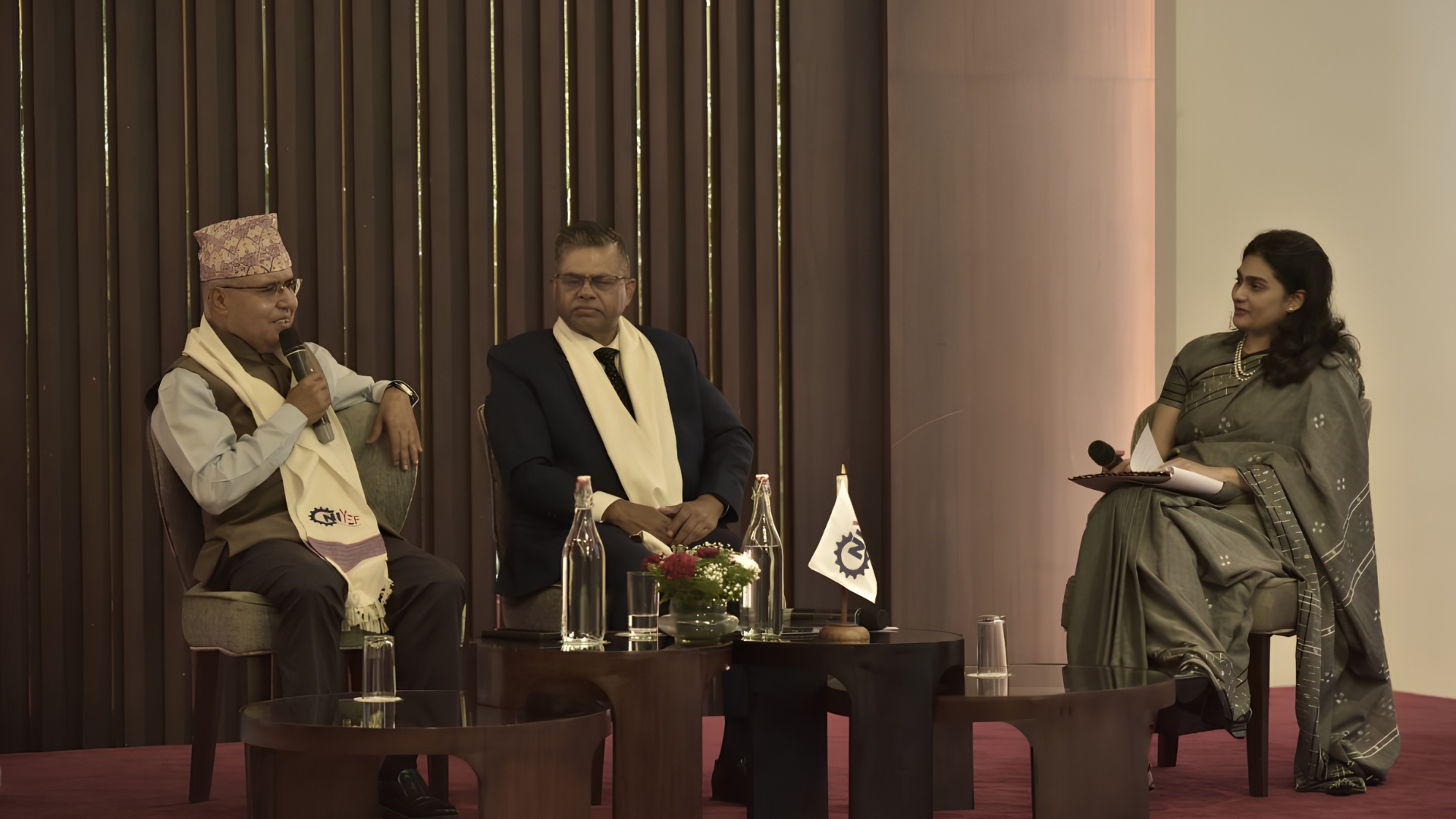
Nepal’s weakening industrial momentum, policy uncertainty, and fragile investment climate emerged as central concerns during a high-level interaction organized in Kathmandu by the youth wing of the Confederation of Nepalese Industries. The program, held under the theme “Analysis of Nepal’s Economic and Industrial Situation,” brought together former policymakers, economists, industrialists, and young entrepreneurs to examine the country’s evolving economic challenges and future development prospects.
The discussion reflected growing concern within Nepal’s private sector over the country’s slowing economic activity despite improving liquidity conditions and relatively stable macroeconomic indicators. Participants argued that while the banking system currently holds excess liquidity and interest rates have eased significantly, industrial expansion and private investment remain weak due to deeper structural and policy-related problems.
Former minister Anil Kumar Sinha and former finance secretary Rameshwar Prasad Khanal participated as key panelists during the discussion. Their presence added a broader policy and institutional perspective to the debate, particularly regarding Nepal’s fiscal administration system, industrial regulations, and long-term economic governance challenges.
The interaction highlighted a growing disconnect between Nepal’s economic potential and its implementation capacity. Speakers repeatedly emphasized that the country continues to struggle not because of a lack of opportunities, but because of weak execution, inconsistent policies, and administrative complexity that discourage productive investment.
During the program, participants discussed the impact of federal financial administration on industrial growth. Several business representatives argued that Nepal’s transition to a federal structure has increased administrative layers and created procedural complications for businesses. According to them, delays in approvals, overlapping regulatory jurisdictions, and inconsistent coordination between federal, provincial, and local governments have made industrial operations more difficult and unpredictable.
The issue of policy stability also dominated the discussion. Entrepreneurs noted that investors remain hesitant to commit large-scale capital because policies often change abruptly without long-term clarity. Business leaders argued that Nepal’s private sector currently operates in an environment where tax rules, import policies, industrial regulations, and administrative procedures can shift frequently, weakening investor confidence.
The discussion comes at a time when Nepal’s economy is showing mixed signals. While remittance inflows remain strong and banks are flooded with liquidity, sectors such as manufacturing, construction, and private investment continue to experience sluggish growth. Many industrialists believe the problem is no longer simply financial but psychological, as businesses increasingly adopt a “wait-and-watch” approach amid uncertainty over policy direction and market demand.
Confederation of Nepalese Industries President Birendra Raj Pandey also participated in the event, which was moderated by CNI Youth Entrepreneurs Forum Vice President Nida Doon Malla. The presence of both senior policymakers and young entrepreneurs reflected an attempt to bridge generational perspectives on Nepal’s economic future.
Speaking during the interaction, CNI Youth Entrepreneurs Forum President Manish Shrestha stressed the importance of accurately understanding Nepal’s present economic reality before discussing future development strategies. He said meaningful policy reform requires stronger collaboration between experienced policymakers and the younger generation of entrepreneurs driving innovation and business expansion.
Questions raised during the interactive session focused heavily on liquidity management, investment security, industrial financing, technological development, and the broader investment climate. Representatives from manufacturing, technology, and service sectors expressed concerns over weak market demand, declining industrial confidence, and difficulties in scaling businesses despite abundant liquidity within the banking system.
Analysts at the event also pointed toward a larger structural issue within Nepal’s economy — the continued imbalance between consumption-driven growth and productive industrial expansion. Although remittance-supported consumption has sustained economic activity for years, industrial productivity, exports, and large-scale domestic production have not grown at the same pace. Experts warned that unless Nepal strengthens industrial competitiveness and policy consistency, long-term economic sustainability could remain fragile.
The discussion further reflected increasing concern among younger entrepreneurs regarding the future direction of Nepal’s economy. Many participants argued that the country risks losing a generation of potential innovators and industrial investors if the business environment continues to remain uncertain and heavily bureaucratic.
The program concluded with remarks from former forum president Ashish Agrawal, who thanked the speakers and emphasized the importance of continued dialogue between policymakers and the private sector.
Beyond the formal interaction itself, the event revealed a deeper sentiment within Nepal’s business community — that economic recovery now depends less on liquidity availability and more on restoring confidence, ensuring policy continuity, and creating a stable environment where industries are willing to invest, expand, and take long-term risks again.
Advertisement
Written by
Dipesh Ghimire