Nepal's Finance Minister
Nepal's Finance Minister at 100 Days: Legal Reforms Underway, But the Economy Isn't Feeling It Yet
Whether that formal will translates into the kind of genuine institutional change that FATF assessors will find convincing — and whether the broader economic reform agenda produces results that Nepali citizens will find convincing — are the twin tests that Finance Minister Wagle now faces as her hundred-day honeymoon period formally ends and the harder work of accountability begins.
Dipesh Ghimire
6 min read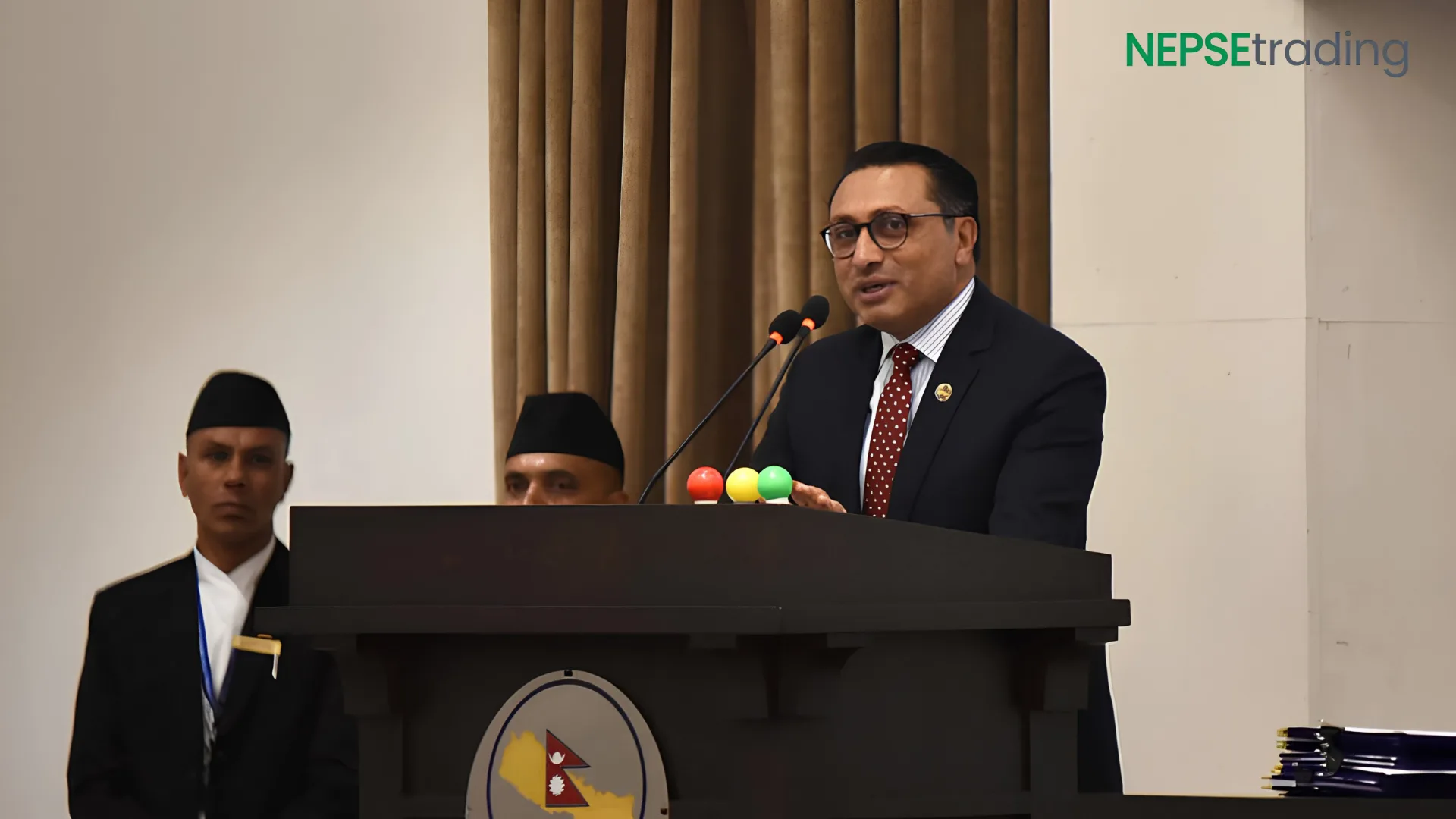
KATHMANDU. When Swarnima Wagle assumed office as Finance Minister on Chaitra 13, 2082, the expectations surrounding her appointment were unusually high — shaped not just by her own promises but by the historic electoral mandate that had brought her government to power. A near two-thirds majority built on the energy of a youth-led civic movement had created a rare political moment: a government with enough parliamentary muscle to actually do the difficult things previous administrations had avoided. One hundred days later, economists and private sector leaders are delivering a sobering verdict: the legal architecture is beginning to change, but the economy itself has not yet felt the difference.
Wagle had arrived at Singha Durbar with a clearly articulated agenda — economic reform, a business-friendly regulatory environment, and systematic legal overhaul. On the third of those commitments, there is genuine progress to acknowledge. Redundant ministries have been dissolved, laws that created unnecessary compliance burdens have been repealed or amended, and the investment framework is being updated to reduce friction for both domestic and foreign capital. These are real achievements, and dismissing them entirely would be unfair to a government still in its earliest phase.
But the harder economic indicators — the ones that businesses, workers, and households actually experience in their daily lives — have not moved in the direction the mandate promised.
The Numbers That Tell a Different Story
The economic data available at the hundred-day mark is difficult to spin positively. Capital expenditure, which serves as the most direct measure of a government's ability to translate budgetary intent into physical investment, has not shown meaningful improvement. Revenue collection has not grown at the pace that fiscal targets require. Banks and financial institutions are sitting on hundreds of billions of rupees in accumulated liquidity, but loan demand from the private sector has not picked up — meaning that cheap money is available but not being borrowed, which points to a confidence problem rather than a cost problem.
The stock market has continued its downward trajectory through this period, eroding household wealth and investor sentiment simultaneously. The real estate sector, which had already been in a prolonged slump before this government took office, has shown no signs of stabilisation. Taken together, these are the conditions of an economy that is waiting — waiting for a signal that the environment has genuinely changed, that investment will be protected, that contracts will be enforced, and that the rules of the game will not shift arbitrarily.
An Economist's Honest Assessment
Economist Dilli Raj Khanal, one of Nepal's most respected voices on macroeconomic policy, did not soften his evaluation when asked about the government's first hundred days. His assessment was pointed: the period has been disappointing in economic terms, despite the genuine enthusiasm that accompanied the government's formation.
"The RSP's election manifesto and the government's hundred-point governance agenda generated a great deal of hope," Khanal said. "But the change has not been felt in any tangible way. Private sector confidence has not recovered. Capital expenditure remains stuck. The money piled up in banks has not moved. The stock market has not improved." He added that the anxiety among industrialists and business operators remains palpable — and that this anxiety is not merely about external investment but about domestic capital as well. Nepali entrepreneurs, he suggested, are not yet convinced that this is a moment to commit resources to new productive activity.
Khanal was careful to distinguish between what has worked and what has not. He credited the government for its efforts on public service delivery, for its anti-corruption initiatives, and for the legal and regulatory housecleaning that has begun. Eliminating unnecessary ministries, repealing obstructive laws, pushing investment-related legal amendments, and maintaining visible pressure on governance standards — these, he said, are positive steps that deserve acknowledgment. But he was equally clear that they are insufficient on their own to shift the economic trajectory. His advice to the finance ministry was direct: conduct an honest self-assessment of the first hundred days, identify what has not worked, and build that learning into the approach going forward.
The FATF Grey List: A Problem That Cannot Wait
Alongside the domestic economic picture, Finance Minister Wagle is managing an internationally imposed deadline that carries consequences the government cannot afford to underestimate. Nepal was placed on the Financial Action Task Force's grey list in Falgun 2081 — a designation that signals deficiencies in the country's anti-money laundering and counter-terrorism financing frameworks. The grey list does not immediately impose sanctions, but it creates friction in international financial transactions, raises the cost of correspondent banking, and sends a signal to foreign investors and lenders that Nepal's financial governance meets international standards only partially.
At today's session of the National Assembly, Wagle personally introduced a proposal to advance the Anti-Money Laundering (Prevention) (Third Amendment) Bill 2083, which had already cleared the House of Representatives. Presenting the bill, the finance minister was unusually direct about the stakes involved, telling legislators that Nepal risks being placed on the FATF's blacklist if the recommendations it has received are not implemented — and that a blacklisting would have consequences far more severe than the grey list designation currently in place.
Wagle's appeal to the National Assembly was for full, unqualified support across party lines. She described the government as having engaged seriously with the FATF's recommendations since taking office, and committed to implementing all required measures on a clearly defined timeline. The assembly responded by unanimously approving the proposal to advance the bill for further consideration.
Legislators Push for Deeper Scrutiny
The unanimous vote to advance the bill did not reflect an absence of questions. Several National Assembly members used the session to press for more thorough examination of the legislation before it is enacted, arguing that some provisions require clearer definition and that the bill as a whole would benefit from committee-level deliberation to build genuine cross-party consensus.
Lawmakers Suresh Alemagar, Ramkumari Jhankri, Vishnukumari Sapkota, Roshani Meche, and Somnath Portel all spoke during the session, collectively making the case that legislation of this significance — with implications for Nepal's international financial standing and its domestic legal framework — should not be rushed through without adequate scrutiny. Their position was not obstructionist; it reflected a legitimate concern that laws enacted under external pressure without sufficient domestic deliberation tend to generate implementation problems and political controversy down the line.
What the First Hundred Days Actually Reveal
Reading the hundred-day economic record of the Wagle finance ministry honestly requires holding two things in mind simultaneously. The first is that some of what this government has attempted is genuinely difficult and genuinely necessary — legal reform, regulatory simplification, and the FATF compliance agenda are not trivial tasks, and making even partial progress on them in a hundred days represents real work. The second is that the economy does not reward intent; it rewards outcomes. And the outcomes that matter most to ordinary Nepalis — employment, investment, credit availability, asset values, and the general sense that economic activity is expanding rather than contracting — have not yet shifted.
The FATF grey list situation adds a dimension of urgency that the government cannot control the timeline on. International bodies do not adjust their review schedules to accommodate domestic political calendars. Nepal must demonstrate compliance progress within the windows that FATF defines, not within the windows that are most politically convenient. The unanimous assembly vote today suggests that there is at least formal legislative will to move forward on this front.
Whether that formal will translates into the kind of genuine institutional change that FATF assessors will find convincing — and whether the broader economic reform agenda produces results that Nepali citizens will find convincing — are the twin tests that Finance Minister Wagle now faces as her hundred-day honeymoon period formally ends and the harder work of accountability begins.
Advertisement
Written by
Dipesh Ghimire