Import
Nepal’s Import Trend Shows Recovery in FY 2024/25
Nepal's import trends have shown notable changes over recent years. Imports peaked at Rs. 1920.4 billion in FY 2021/22 but declined to Rs. 1593.0 billion in FY 2023/24 due to tighter policies. However, data up to mid-May 2025 shows a recovery, with imports rising to Rs. 1474.2 billion, compared to Rs. 1303.4 billion during the same period last year. This growth indicates improved trade activities and relaxed restrictions. The import pattern reflects Nepal’s shifting economic strategy and external trade dynamics. Keep track of Nepal’s latest import data and fiscal trends for 2025 for informed economic insights.
Sandeep Chaudhary
1 min read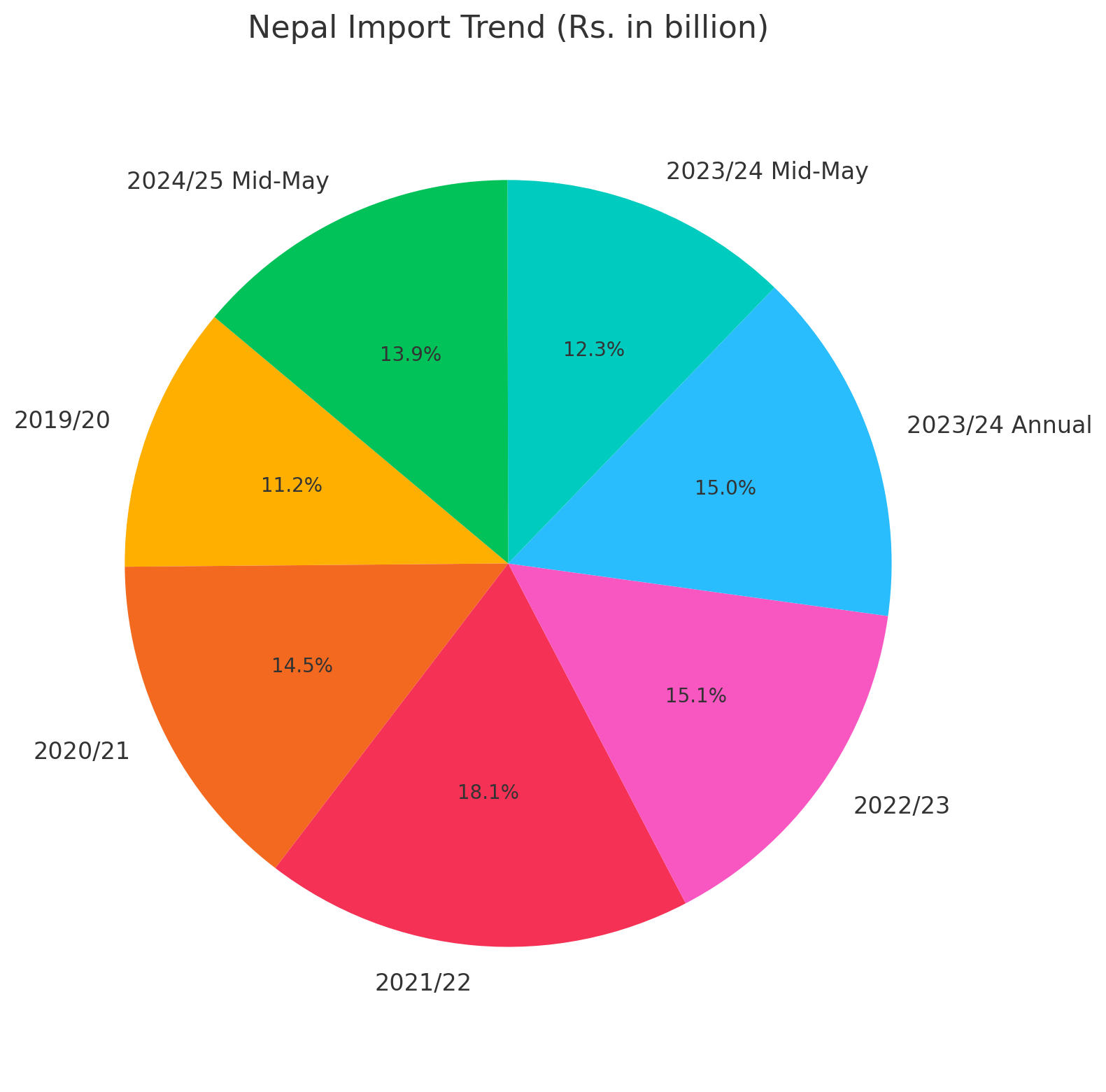
Nepal’s import figures, measured in billions of rupees, have shown significant fluctuations over the past few fiscal years, reflecting both internal economic policies and external global conditions. According to the latest data available up to mid-May 2025, the total import value has reached Rs. 1,474.2 billion, indicating a notable increase compared to the same period in the previous fiscal year, when imports stood at Rs. 1,303.4 billion.
Looking at the broader annual trend, Nepal witnessed a steady rise in imports from FY 2019/20 to FY 2021/22. Imports increased from Rs. 1,196.8 billion in 2019/20 to a peak of Rs. 1,920.4 billion in 2021/22. This surge was largely driven by high domestic demand and increased dependency on foreign goods, especially in the aftermath of COVID-19 supply disruptions.
However, FY 2022/23 marked a significant decline in imports, falling to Rs. 1,611.7 billion. This drop was attributed to tightened import restrictions and a focus on curbing trade deficits. The downward trend continued slightly into FY 2023/24, with total annual imports registering at Rs. 1,593.0 billion. The government’s policy of limiting luxury and non-essential imports played a key role in this reduction.
Despite this, recent mid-May 2025 figures suggest a recovery. The Rs. 1,474.2 billion import mark represents a growth of over 13% compared to the same period last fiscal year. This rebound is likely fueled by eased restrictions, improved foreign exchange reserves, and increasing industrial and consumer demand.
In conclusion, while Nepal’s import patterns have seen notable ups and downs over the last five years, the current fiscal trend points toward a gradual stabilization and growth, hinting at a cautiously optimistic economic outlook for the remainder of FY 2024/25
Advertisement
Written by
Sandeep Chaudhary