Top
Nepal’s Public Debt Rises by Rs 50.6 Billion in First Quarter, External Liabilities Dominate
Nepal’s Public Debt Rises by Rs 50.6 Billion in First Quarter, External Liabilities Dominate Nepal’s public debt has increased by Rs 50.6 billion in just the first three months of the ongoing fiscal year 2082/83. According to the Public Debt Management Office, total outstanding public debt stood at Rs 27.24 trillion by the end of Ashoj, up from Rs 26.74 trillion at the beginning of the fiscal year in Shrawan. The rise in debt indicates the government’s growing dependence on borrowing to meet its fiscal needs amid weak revenue performance. The report shows that Nepal’s total public debt now amounts to 44.61 percent of the country’s Gross Domestic Product (GDP). Out of this, 20.93 percent of GDP is domestic debt, while 23.69 percent represents external borrowing. Economists have warned that while the figure is still below the critical 50 percent debt-to-GDP threshold, the trend points to a gradual build-up of fiscal stress, especially given Nepal’s sluggish growth and limited revenue mobilization capacity.
Dipesh Ghimire
3 min read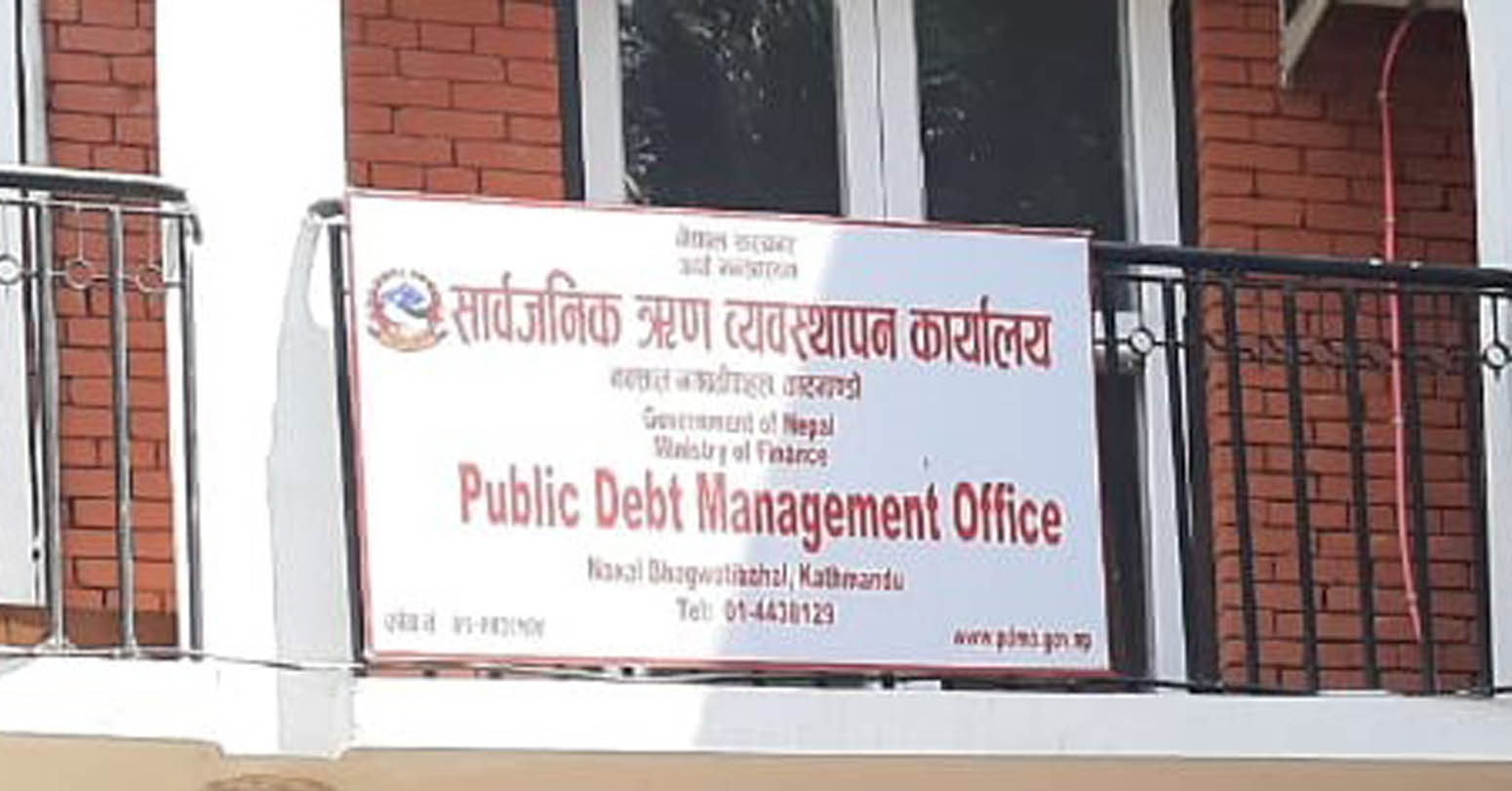
Nepal’s public debt has increased by Rs 50.6 billion in just the first three months of the ongoing fiscal year 2082/83. According to the Public Debt Management Office, total outstanding public debt stood at Rs 27.24 trillion by the end of Ashoj, up from Rs 26.74 trillion at the beginning of the fiscal year in Shrawan. The rise in debt indicates the government’s growing dependence on borrowing to meet its fiscal needs amid weak revenue performance.
The report shows that Nepal’s total public debt now amounts to 44.61 percent of the country’s Gross Domestic Product (GDP). Out of this, 20.93 percent of GDP is domestic debt, while 23.69 percent represents external borrowing. Economists have warned that while the figure is still below the critical 50 percent debt-to-GDP threshold, the trend points to a gradual build-up of fiscal stress, especially given Nepal’s sluggish growth and limited revenue mobilization capacity.
By composition, external loans account for 53.09 percent of the total debt, while domestic loans make up 46.91 percent. As of mid-Ashoj, Nepal’s outstanding external debt stood at Rs 14.46 trillion, compared to Rs 12.78 trillion in domestic borrowings. In the previous quarter, external debt was Rs 14.05 trillion and domestic debt Rs 12.68 trillion. This shows that the government has relied more on foreign loans during the period, increasing its exposure to exchange rate risks and repayment vulnerabilities.
For the current fiscal year, the government has set a target of mobilizing Rs 595 billion in loans. However, only Rs 184 billion, or 16.93 percent of the annual target, had been obtained by the end of the first quarter. Out of the total, domestic borrowing accounted for 24.86 percent of the domestic target, while external borrowing achieved only 4.64 percent. This indicates a sluggish pace in the disbursement of foreign loans, often due to bureaucratic delays and slow project implementation.
The share of domestic borrowing in total debt mobilization during the first quarter reached 89.24 percent, while external borrowing contributed 10.76 percent. Analysts note that this pattern could raise short-term interest costs for the government, as domestic borrowing typically carries higher rates than concessional external loans. Furthermore, rising dependence on internal sources could also crowd out private sector credit in the financial system.
Debt servicing has emerged as another area of concern. The government has allocated Rs 411 billion for debt repayment—both interest and principal—for the fiscal year 2082/83. By the end of Ashoj, Rs 109 billion, or 26.74 percent of the annual allocation, had already been spent. Based on GDP, this represents 1.8 percent of total output, underscoring the growing fiscal burden of debt servicing. Economists say that if the repayment trend continues, it could limit the government’s fiscal space for development expenditure.
While Nepal’s public debt level is not yet at a crisis point, experts stress that the efficiency of loan utilization remains crucial. A significant portion of borrowed funds has been directed toward recurrent expenses rather than capital formation, raising concerns over long-term sustainability. With limited revenue growth and slow economic recovery, maintaining debt sustainability will depend on how effectively future borrowings are channeled into productive sectors.
In summary, Nepal’s rising debt—now close to half of its GDP—reflects a tightening fiscal position. The slow pace of foreign loan disbursement, growing reliance on domestic borrowing, and mounting repayment obligations have collectively heightened fiscal risks. Experts argue that while the debt ratio remains manageable, the country must focus on fiscal discipline, revenue reforms, and productive spending to prevent future vulnerabilities from turning into full-blown debt stress.
Advertisement
Written by
Dipesh Ghimire