ndustry
Nepal's Textile Dream: The Rise and Fall of a Self-Sufficient Industry
How political interference, outdated machinery, and global competition unraveled Nepal's homegrown cloth-to-cotton production cycle — and whether the government's latest revival plan can escape history's shadow
Dipesh Ghimire
8 min read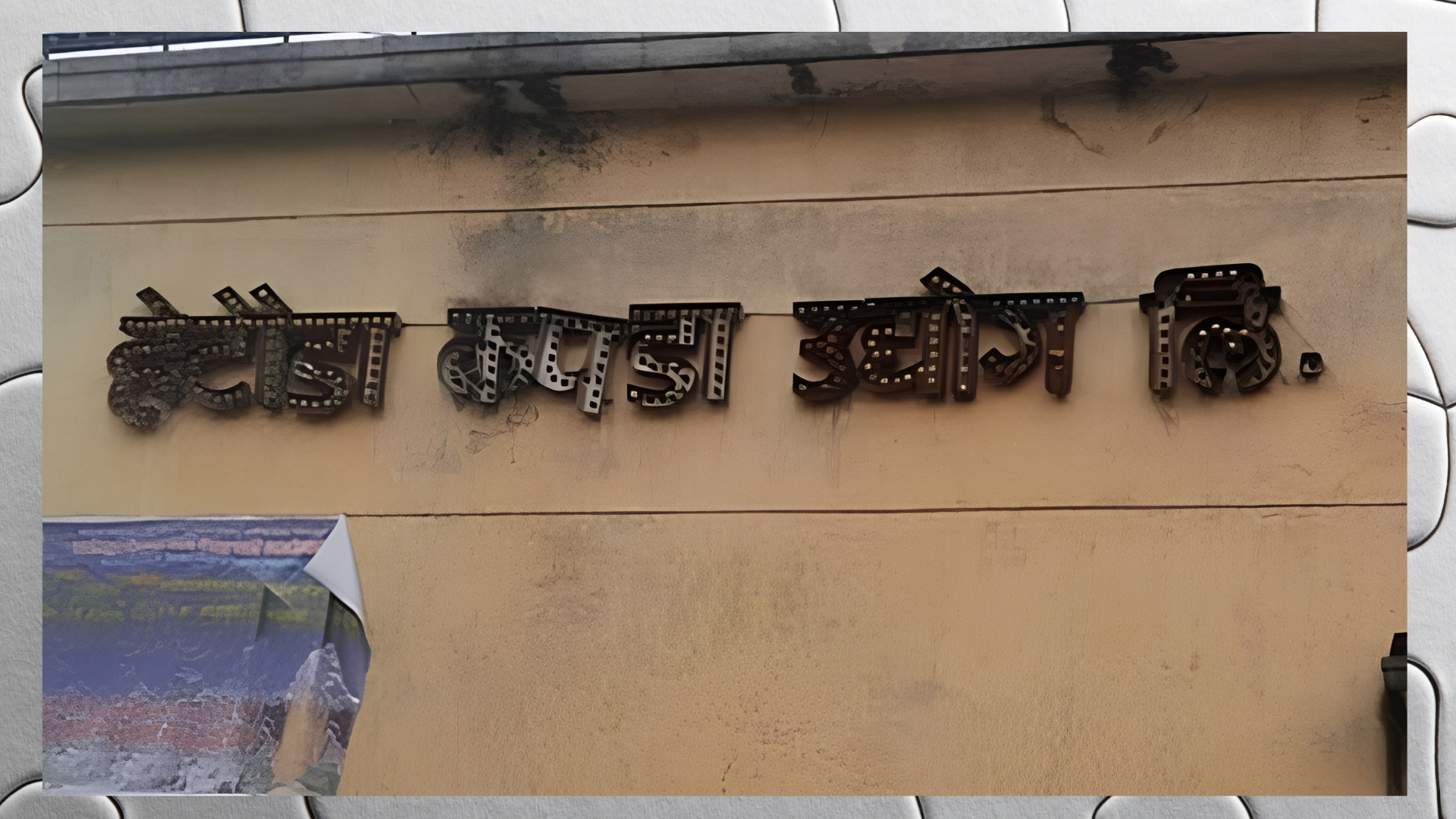
For generations of Nepalis, the idea of wearing clothes stitched from cotton grown in their own soil, spun in their own factories, and woven in their own mills was not a dream — it was reality. Somewhere between ambition and mismanagement, that reality crumbled. Now, as a new government dusts off the same blueprints that previous administrations quietly shelved, the question is no longer whether Nepal once had a self-sufficient textile chain. The question is whether it can ever rebuild one.
A Chain That Once Worked
The story begins not with failure, but with a remarkably coherent industrial vision. In the early 1980s, Nepal constructed what economists might call a vertically integrated domestic supply chain for textiles — arguably one of the most complete attempts at industrial self-sufficiency in the country's modern history.
At the base of the chain were farmers in Nepal's western Tarai districts — Banke, Bardiya, Dang, Kailali, and Kanchanpur — cultivating cotton across more than five thousand hectares of land. They did not do this alone. The Nepal Cotton Development Committee, established in 2037 BS and headquartered in Khajura, Banke, provided them with improved seeds, fertilizers, and technical guidance. Crucially, the government guaranteed purchase of their cotton at a fixed price, removing the market risk that typically discourages smallholder farmers from shifting to cash crops.
That cotton traveled to the Butwal Thread Factory, which began commercial production in 2039 BS. Jointly owned by the Government of Nepal, Janakpur Cigarette Factory, Rastriya Banijya Bank, and Nepal Industrial Development Corporation — with share investments from over 630 private citizens and entrepreneurs — the factory produced nearly twenty tons of thread per day. High-quality polyester, cotton, and blended yarn flowed from Butwal to mills and small industries across the country, providing direct employment to more than seven hundred workers.
The Hetauda Textile Industry, established with Chinese government technical and financial assistance and inaugurated in 2032 BS, sat at the apex of this chain. With 486 modern looms running around the clock, the factory had the capacity to produce nearly 11 million meters of fabric annually. Its output — plain cotton cloth, printed dhoti, cotton sarees, and canvas — carried a government stamp that consumers trusted instinctively. The product was affordable, durable, and domestically made. More than 1,200 Nepalis worked directly inside the factory, and another 600 depended on it indirectly.
For a brief but meaningful period, a cotton farmer in Banke, a thread spinner in Butwal, and a weaver in Hetauda were all part of the same economic story.
Where the Thread Snapped
The political transformation of 2046 BS — the restoration of multiparty democracy — is celebrated as a turning point in Nepal's modern history. For the textile industry, however, it marked the beginning of the end.
Trade union rights, newly guaranteed under democratic governance, quickly became instruments of political competition rather than worker protection. Party-affiliated labor organizations entered government factories. Ministers began treating industrial appointments as political rewards. Capable managers were pushed aside; party loyalists, relatives, and political associates took their place. The factories that had once run on technical expertise began running — or rather, stumbling — on factional arithmetic.
The consequences were predictable. Productivity declined. Accountability evaporated. Financial losses mounted.
Simultaneously, the global textile industry was undergoing a quiet revolution. The 1990s brought automated, energy-efficient machinery that dramatically reduced production costs in countries like China and India. Nepal's factories, starved of investment and trapped in political paralysis, could not modernize. Their decades-old looms continued consuming more electricity, more labor, and more time per meter of cloth than competing factories across the border.
Then came load-shedding. The chronic electricity crisis of that era forced machines that were designed to run twenty-four hours a day to sit idle for ten to twelve hours. Generators filled the gap at enormous cost, making already-uncompetitive cloth even more expensive to produce.
Nepal's 2049 BS shift toward economic liberalization meant cheaper Chinese and Indian textiles could now pour into the market legally, undercutting domestic producers at every price point. The government, now ideologically committed to private sector primacy, had little appetite to invest further in state enterprises. It preferred to privatize what it had rather than rehabilitate what was failing.
The Hetauda Textile Industry halted production in 2056 BS Falgun. It was formally dissolved in 2057 BS — still producing 36,000 meters of cloth daily at the moment of its shutdown.
The Butwal Thread Factory followed in 2064 BS Shrawan. Its closure left 700 workers without jobs and its sprawling machinery to rust undisturbed across sixty ropani of land. Today, the complex resembles an industrial ghost town.
The Cotton Development Committee survived longest in name, but its purpose had already vanished. Without factories to buy its cotton, it stopped purchasing from farmers. Farmers abandoned cotton for familiar staples. Maoist insurgents attacked and burned its collection centers during the conflict years. Its vehicles, warehouses, and depot facilities are now buried under overgrowth. The government has announced its formal dissolution.
Eighteen Years of Announcements
The current government's plan to revive Hetauda Textile Industry — championed publicly by Home Minister Sudhan Gurung and Industry Minister Gaurikumari Yadav, and reportedly backed by the Prime Minister — is not new. It is, in fact, the latest chapter in a remarkably consistent pattern of announcement without execution.
In 2065 BS, Prime Minister Pushpa Kamal Dahal led a government that declared in its budget speech that the Hetauda factory would be revived. Finance Minister Baburam Bhattarai personally oversaw cleanup of the premises and building repairs. The factory did not open. Instead, the Youth Communist League used the compound as shelter, and by 2070 BS, the 14th Battalion of the Armed Police Force had moved in for security duties.
In 2075 BS, a government study concluded that approximately thirty crore rupees would suffice to restart the factory. A proposal to involve the Nepal Army in managing operations was seriously considered — until legal advisors pointed out that army commercial involvement would contradict military law. The idea was shelved.
In 2080 BS, during Dahal's second stint as Prime Minister, a similar army-involvement proposal resurfaced. It was again abandoned under political pressure from those cautioning against military expansion into commerce.
Every budget cycle since the factory's closure has mentioned revival in some form. Ministers have visited. Studies have been commissioned. Proposals have been drafted, discussed, and quietly forgotten. The pattern is so consistent that veteran observers of Nepali industrial policy treat each new announcement less as a policy signal than as a ritual.
The Mountains Ahead
The current government's approach — producing uniforms for security forces as a first phase — does address one historical obstacle with genuine intelligence. Market uncertainty has always haunted Nepal's industrial revival plans. Factories need buyers. Here, the buyers are already identified: the Nepal Army, Nepal Police, Armed Police Force, forest guards, civil servants, and teachers collectively number in the hundreds of thousands, each with a mandated uniform and an annual clothing allowance or budget line. Capturing even a fraction of that captive government market provides a revenue floor that commercial textile ventures rarely enjoy at the start.
But the structural challenges beyond market access are severe.
The machinery in both the Hetauda and Butwal facilities is forty to fifty years old. Much of it has not operated in nearly three decades. Even machines that were well-maintained deteriorate when idle; machines left in monsoon-exposed, poorly secured facilities for twenty-seven years are, in most cases, scrap. Modern textile production uses digital, automated equipment that these factories do not possess. Replacing the old machinery with industry-standard modern equipment would require billions of rupees in capital investment — investment the government has not yet committed to, and whose procurement would, under current rules, require months of tender procedures for even minor purchases.
Nepal's cost structure also works against competitiveness. Labor, transportation, and imported raw materials together push production costs above what neighboring countries — operating at vastly larger scales with decades of accumulated efficiency — can match. Security forces may be compelled by policy to purchase Nepali-made uniforms. But civilian consumers, making free choices in a liberalized market, will not accept domestically produced cloth at a significant price premium indefinitely.
Then there is the most uncomfortable question, the one that all previous revival attempts ultimately failed to answer adequately: who will run these factories, and how will they be hired?
Nepal's Rastriya Swatantra Party government has positioned itself as a champion of private enterprise. Finance Minister Sworneem Wag le has spoken repeatedly of creating an investment-friendly environment. Within that ideological framework, the government returning directly to industrial ownership and management creates an internal tension that has not been publicly resolved. If appointments to the revived factories follow the same logic that destroyed the original ones — rewarding party loyalty over technical competence — the outcome will not differ from the pattern established across eighteen years of failed attempts.
What Success Would Actually Require
Industry Minister Yadav has spoken of reviving all three institutions — the textile factory, the thread factory, and the cotton committee — simultaneously, as a complementary system. If executed with genuine commitment, this would recreate the production cycle that once generated thousands of direct and indirect jobs across western Nepal and the Terai.
The economic case for a functioning domestic textile chain is not fanciful. A revived Hetauda factory alone could employ more than 1,200 workers directly. Add Butwal and the cotton committee, and three to four thousand formal jobs become plausible, with multiples of that in downstream tailoring, packaging, transport, and retail. Cotton farmers in Banke and Bardiya, currently without a reliable buyer for their crop, could return to cultivation if assured of purchase at predictable prices.
But honest assessment requires acknowledging that the same case has been made before, by competent people, with similar arithmetic. What has been missing is not analysis. It is implementation discipline: the willingness to appoint managers on merit rather than political affiliation, to accept that modernizing these factories requires substantial upfront investment rather than cosmetic repair, and to insulate day-to-day operations from the ministerial interference that crippled the original enterprises.
Nepal's government has announced the intention. It has cleaned the premises. It has expressed political will at the highest levels. What it has not yet done is demonstrate that this revival will be structurally different from the ones that preceded it.
The looms in Hetauda have been silent for nearly three decades. The spindles in Butwal have not turned since 2064 BS. The cotton fields of the western Tarai have largely returned to grain. Reviving all three — and keeping them running — will require something none of the previous governments quite managed: treating industrial policy as a technical discipline rather than a political opportunity.
Whether this government can do that remains, as it has for eighteen years, an open question.
Advertisement
Written by
Dipesh Ghimire