Monetary Policy Review
Nepal's Top Business Body Calls for Structural Banking Overhaul, Warns Rate Cuts Alone Cannot Revive Economy
This is a higher and more demanding standard than central banks typically accept for their own performance. But it is the standard that the productive economy requires. The question now is whether Nepal Rastra Bank's upcoming monetary policy will engage with the structural arguments the federation has raised — or whether it will once again reach for the familiar instrument of rate adjustment and hope that this time the result will be different.
Dipesh Ghimire
7 min read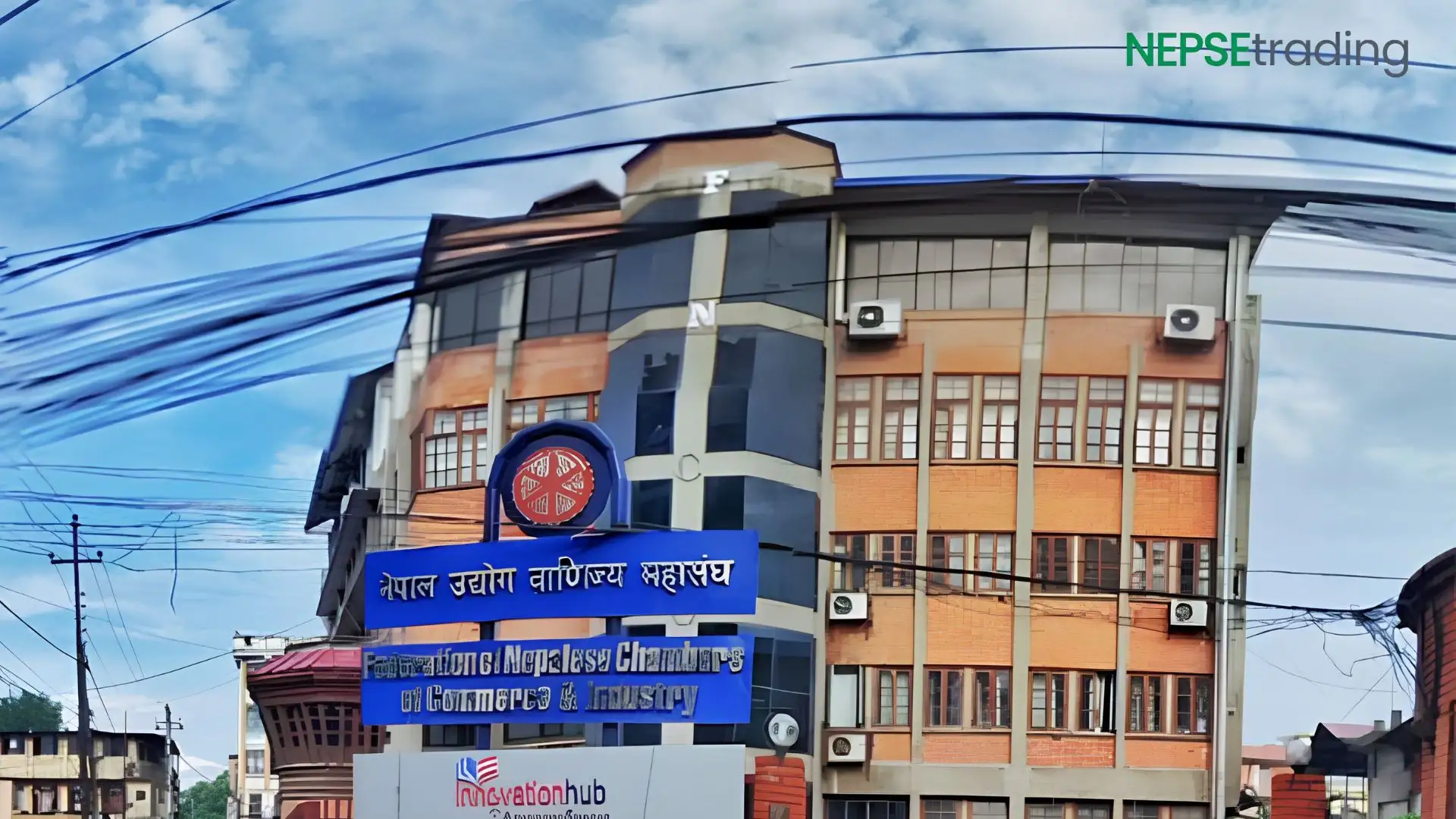
KATHMANDU. Nepal's most powerful private sector umbrella organisation has delivered a blunt message to the central bank ahead of the upcoming monetary policy announcement: stop relying on interest rate adjustments as the primary lever of economic stimulus and instead pursue a fundamental restructuring of the banking system itself. The Federation of Nepalese Chambers of Commerce and Industry submitted its formal recommendations to Nepal Rastra Bank on Friday, laying out a vision for what it calls a second-generation financial reform — a phrase that signals not incremental tweaking but systemic transformation.
The timing of the submission is significant. Nepal's economy has been underperforming for an extended period, and the conventional monetary policy response — cutting rates to encourage borrowing and investment — has demonstrably failed to produce the expected results. The federation's argument is both analytically precise and politically pointed: the problem is not the price of money but the structural capacity of the institutions that are supposed to move it.
The Liquidity Paradox at the Heart of Nepal's Banking Crisis
Perhaps the most striking observation in the federation's submission is what economists might call the liquidity paradox. Nepal's banking system currently holds adequate liquidity — there is no shortage of funds sitting in the system. And yet credit expansion has remained sluggish, investment has not recovered, and productive sectors of the economy continue to operate well below their potential. If cheap and available money is not flowing into the economy, the federation argues, then the obstruction is structural rather than monetary.
This diagnosis matters enormously because it determines the prescription. If the problem were simply that borrowing was too expensive, lower interest rates would logically stimulate demand. But Nepal Rastra Bank has already reduced its policy rate, its Standing Deposit Facility rate, and its Standing Liquidity Facility rate. Deposit interest rates have fallen to historically low levels. And still, credit growth remains anaemic. The federation's conclusion is that banks are constrained not by the cost of lending but by their own capital limitations — and that no amount of rate reduction can overcome a capital adequacy problem.
Capital Constraints: Why Banks Cannot Lend Even When They Want To
The federation's submission identifies capital adequacy as the central bottleneck in Nepal's credit system. Many banks and financial institutions have seen their core capital ratios approach the regulatory minimum, meaning they are operating with almost no buffer above the threshold required by law. In this condition, even if a bank receives a creditworthy loan application from a viable business, it may be legally or prudentially unable to approve it — because doing so would push its capital ratio below the floor.
This is not a hypothetical concern. It is the operational reality facing a significant portion of Nepal's banking sector right now. The federation's prescription is correspondingly direct: before expecting banks to expand lending, give them the capital capacity to do so. This means pursuing recapitalisation of banks and financial institutions, introducing realistic flexibility in capital adequacy requirements and loan loss provisioning rules, and providing targeted capital relief measures that restore lenders' room to operate.
The federation also takes aim at the current practice of requiring personal guarantees from all investors and their family members when a company borrows — a requirement it says should be reviewed. This provision, intended to reduce default risk, effectively transfers an unlimited personal liability to individual shareholders, which the federation argues discourages legitimate investment and entrepreneurship.
Billions in Frozen Assets: The Case for an AMC
One of the most concrete and actionable proposals in the federation's submission concerns the enormous stock of seized and non-performing assets currently sitting on bank balance sheets. These assets — worth billions of rupees — have been acquired through loan defaults and collateral seizures, but they are not being used productively. They are neither generating income nor supporting economic activity. They are, in the federation's characterisation, dead capital trapped inside the banking system.
The federation's proposal is to unlock this capital through a dedicated Asset Management Company, or through mechanisms such as sale, lease, or rental arrangements that return these properties to productive use. The logic is straightforward: if a bank sells or leases a seized property, it converts a non-earning asset into cash, which improves its balance sheet and expands its capacity to issue new loans. At scale, this could meaningfully increase aggregate credit capacity across the sector without requiring new equity capital injections.
The federation does not mince words about the pace of progress on this front. Its submission notes that this idea has been confined to discussion for many years and that the time for implementation has arrived. The implication is that further delay is itself a policy choice — one with measurable economic costs.
Working Capital Rules That Ignore Business Reality
A section of the federation's recommendations addresses the mismatch between uniform regulatory standards and the diverse realities of different business sectors. Nepal Rastra Bank currently applies broadly standardised working capital loan norms across industries, but the federation argues this approach is fundamentally incompatible with how different businesses actually generate and manage cash.
A construction company does not have the same cash flow profile as a tourism operator, a manufacturing firm, or an agricultural business with seasonal revenue cycles. Requiring all of them to conform to a single working capital standard means that some sectors are perpetually underserved while others may be over-extended. The federation proposes that working capital loan structures be determined through commercial assessment between individual banks and businesses, with flexibility built in to reflect sector-specific realities. This is less a call for deregulation than for intelligent regulation — rules calibrated to actual economic behaviour rather than administrative convenience.
LDC Graduation: A Financial System Unprepared for What Comes Next
The federation raises a forward-looking concern that deserves serious attention from policymakers: Nepal's impending graduation from the Least Developed Country category to developing nation status. This transition, which is approaching within a defined timeframe, will trigger the phased withdrawal of international trade preferences that Nepal currently enjoys — preferential tariff access, concessional financing terms, and various forms of technical assistance that developing countries receive under multilateral frameworks.
For Nepal's export-oriented industries, this represents a structural shock that is coming whether the financial system is ready for it or not. The federation's argument is that monetary policy must begin preparing now by creating specific financial instruments for export industries, micro-enterprises, home-based businesses, and women entrepreneurs — including concessional refinancing, targeted credit facilities, and risk-sharing programmes that can cushion the impact of preference erosion.
This recommendation reflects a maturity of analysis that goes beyond immediate crisis management. It asks the central bank to think not just about the economic conditions of today but about the structural challenges of the next five to ten years, and to begin building the financial architecture that will be needed to navigate them.
Differential Treatment for Productive Industries
The federation's submission draws a policy distinction that Nepal's financial regulators have historically been reluctant to formalise: the difference between productive manufacturing industries and general trading businesses. The federation's position is that these two categories of economic activity do not have the same developmental value, do not carry the same risk profiles, and should not receive identical treatment from the banking system.
Specifically, the federation requests that industries using domestic raw materials be given a risk premium concession that allows them to borrow at least one percentage point below the rate charged to general commercial borrowers. It also proposes the introduction of first-loss recovery mechanisms for large industrial borrowers — a credit protection structure in which a designated fund absorbs initial losses before the lending bank is exposed, reducing the effective risk of lending to capital-intensive industries. Agricultural processing industries, the federation argues, should be placed in the priority sector category, with access to concessional interest rates, refinancing facilities, and grace periods during establishment phases.
The Federation's Verdict: Success Cannot Be Measured in Rates Alone
The submission closes with a reframing of how monetary policy success should be evaluated — a reframing that amounts to a direct challenge to how Nepal Rastra Bank has historically communicated its objectives. The federation argues that the success of monetary policy cannot be measured by movements in the interest rate corridor. Rates going up or down are instruments, not outcomes.
Real success, the federation contends, should be measured by three things: whether trust in the banking system has been restored among businesses and depositors; whether credit is actually reaching productive sectors rather than cycling within the financial system itself; and whether private sector investment has genuinely revived — meaning that businesses are committing capital to new productive activity rather than simply rolling over existing debt.
This is a higher and more demanding standard than central banks typically accept for their own performance. But it is the standard that the productive economy requires. The question now is whether Nepal Rastra Bank's upcoming monetary policy will engage with the structural arguments the federation has raised — or whether it will once again reach for the familiar instrument of rate adjustment and hope that this time the result will be different.
Advertisement
Written by
Dipesh Ghimire