Top4 min readNepal’s Securities Intermediaries at the Frontline of AML/CFT: Strengths, Weaknesses, Opportunities, and ChallengesNepal’s capital market is expanding in both size and complexity as globalization and digital finance deepen cross-border linkages. That growth also elevates exposure to money laundering and terrorist-financing risks, making AML/CFT not just a compliance checkbox but a core pillar of market integrity. Securities intermediaries—brokers, merchant bankers, investment bankers, and asset managers—sit at the frontline: their diligence and systems largely determine whether illicit flows can penetrate the market or are stopped at the gate. The legal and institutional scaffolding exists. Nepal’s regime is anchored in the Asset (Money) Laundering Prevention and Terrorist Financing Act, SEBON’s AML/CFT directives, and the Financial Information Unit (FIU) under Nepal Rastra Bank, supported by the Department of Money Laundering Prevention. Together these set obligations for due diligence, risk-based supervision, suspicious transaction reporting, and record retention, while aligning Nepal with international standards such as those of the FATF.Dipesh Ghimire·31 Aug, 2025
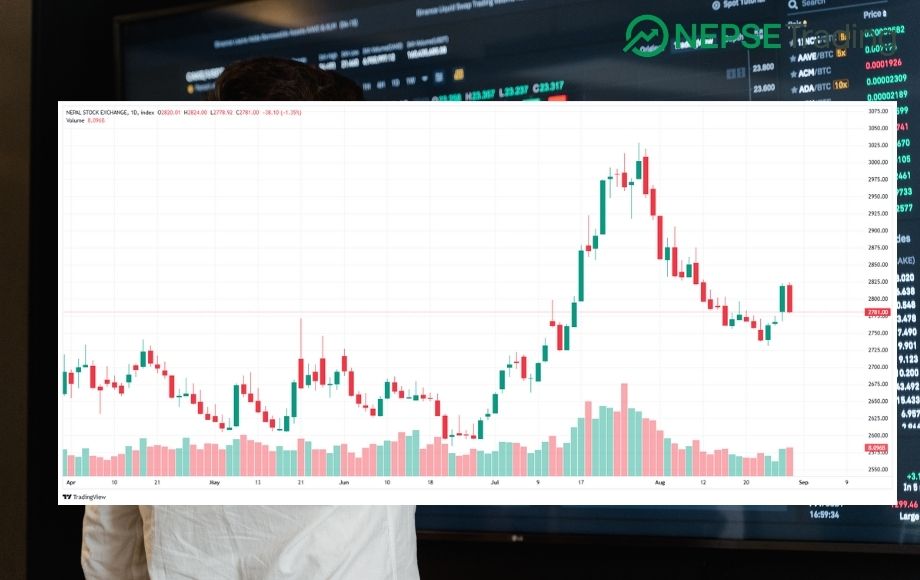
Top3 min readElephant Came… But Empty! NEPSE Index Declines While Turnover SurgesElephant Came… But Empty! NEPSE Index Declines While Turnover Surges Market Index Declines Despite Higher Turnover Kathmandu — On the last trading day of the week, Thursday, Nepal’s stock market witnessed a decline. Analysts pointed out that uncertainty arose in the market after the dividend procedure issued by the central bank a day earlier, though they stressed that the directive itself is a positive development. The NEPSE index, which had climbed above the 2800 mark on Wednesday, fell by 38.10 points to close at 2781 on Thursday. This marks a retreat below the psychological 2800 level after consecutive gains in recent sessions. Despite the fall in the index, market turnover surged significantly. Compared to Wednesday’s NPR 7.68 billion, Thursday’s turnover crossed NPR 8.09 billion. According to NEPSE, a total of 178.91 million shares of 322 listed companies were traded 78,379 times.Dipesh Ghimire·28 Aug, 2025
Top4 min readConcessional Loans in Nepal: Big Relief, Bigger RisksConcessional Loans in Nepal: Big Relief, Bigger Risks Nepal’s concessional loan scheme, designed to provide credit at below-market interest rates, has expanded massively in recent years. According to Nepal Rastra Bank (NRB), banks and financial institutions have approved concessional loans worth NPR 1.40 trillion, of which only NPR 623 billion has been disbursed, leaving NPR 786 billion still pending. While the program has helped nearly 95,000 borrowers, questions over sustainability, defaults, and policy shifts are now pressing.Dipesh Ghimire·28 Aug, 2025
Top2 min readNRB Brings Stricter Rules for Financial Statement Publication and Dividend ApprovalNRB Brings Stricter Rules for Financial Statement Publication and Dividend Approval Kathmandu – Nepal Rastra Bank (NRB) has introduced a new procedure titled the “Procedure for Approval of Financial Statement Publication and Dividend Distribution, 2082”, replacing the earlier framework of 2077. The central bank said the revised rules are aimed at tightening financial discipline, enhancing transparency, and ensuring compliance with international accounting standards.Dipesh Ghimire·28 Aug, 2025
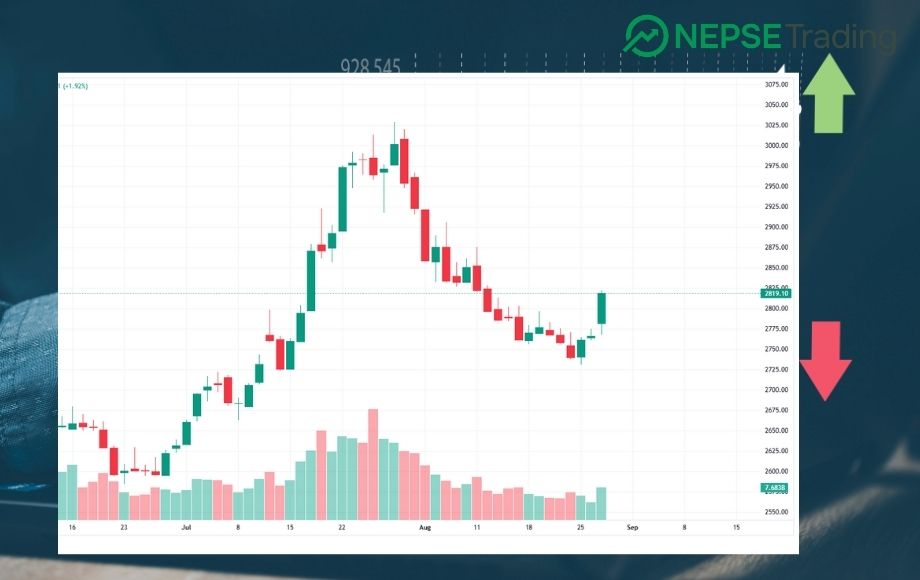
Top2 min readNEPSE Surges Above 2800, Strong Momentum Backed by Fundamentals and TechnicalsNEPSE Surges Above 2800, Strong Momentum Backed by Fundamentals and Technicals The Nepal Stock Exchange (NEPSE) continued its upward rally on Wednesday as listed companies began publishing their annual financial reports. With dividend expectations rising, investors have driven the market up for three straight sessions. On Wednesday alone, the NEPSE index surged by 53.01 points to close at 2819.10, crossing the 2800 level for the first time in 11 trading days.Dipesh Ghimire·27 Aug, 2025
Top2 min readGovernment Borrows at Cheaper Rates Amid Excess Liquidity in Banking SystemGovernment Borrows at Cheaper Rates Amid Excess Liquidity in Banking System The Government of Nepal is currently raising internal debt at one of the cheapest rates in recent years due to the presence of excess liquidity in the banking system. In fiscal year 2079/80 (2022/23), the interest rate on development bonds went as high as 11%. In sharp contrast, bonds issued at the start of the current fiscal year have carried rates as low as 3–4%, according to data from the Public Debt Management Office (PDMO). As of Bhadra 10 (August 26, 2025), the government has already raised NPR 50 billion through development bonds. These include five separate issuances worth NPR 10 billion each, with maturities of three years and eleven years. The average rate for these bonds stands at just 3.74%. Investor demand has been exceptionally strong, with some auctions oversubscribed up to seven times the issued amount.Dipesh Ghimire·27 Aug, 2025
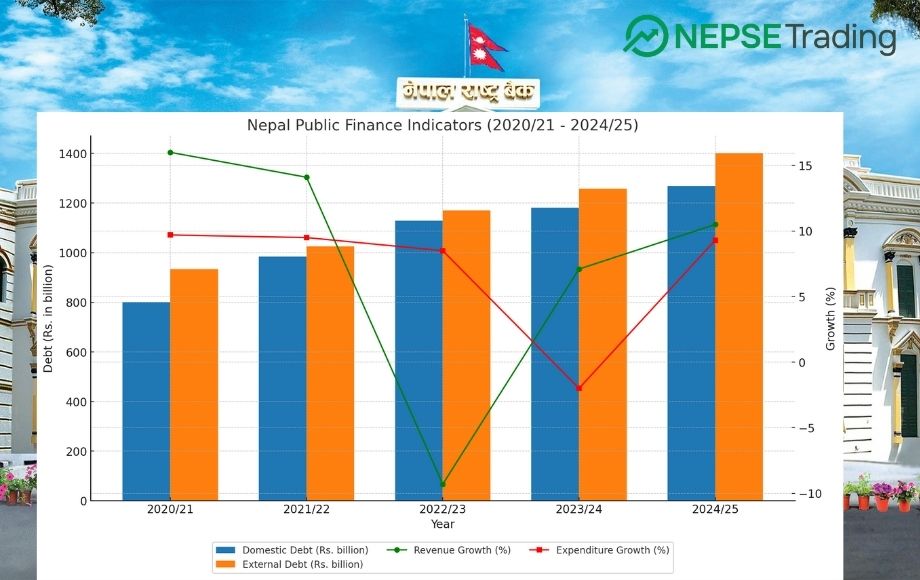
Top2 min readNepal’s Public Finance: Rising Debt, Fluctuating Revenues, and Fiscal PressuresNepal’s Public Finance: Rising Debt, Fluctuating Revenues, and Fiscal Pressures Nepal’s fiscal indicators from 2020/21 to 2024/25 reveal a challenging picture of inconsistent revenue growth, uneven expenditure patterns, and a steady rise in both domestic and external debt. While revenue performance has improved in the latest fiscal year, the growing reliance on borrowing underscores persistent structural weaknesses in public finance.Dipesh Ghimire·24 Aug, 2025
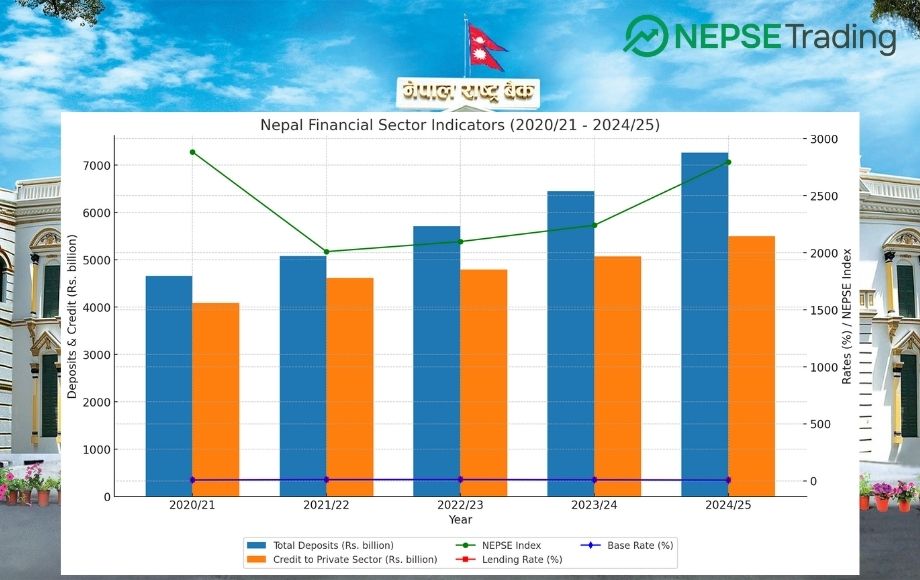
Top3 min readNepal’s Financial Sector Shows Signs of Stability Amid Lower Interest Rates and Stronger DepositsNepal’s Financial Sector Shows Signs of Stability Amid Lower Interest Rates and Stronger Deposits Nepal’s financial sector indicators from 2020/21 to 2024/25 reflect a cycle of volatility followed by relative stabilization. While broad money growth has settled into moderate levels, interest rates have softened significantly, credit expansion has slowed, and stock market indicators suggest renewed investor confidence. The picture is one of easing financial pressures, but also of limited private sector lending growth that could weigh on long-term economic expansion.Dipesh Ghimire·24 Aug, 2025
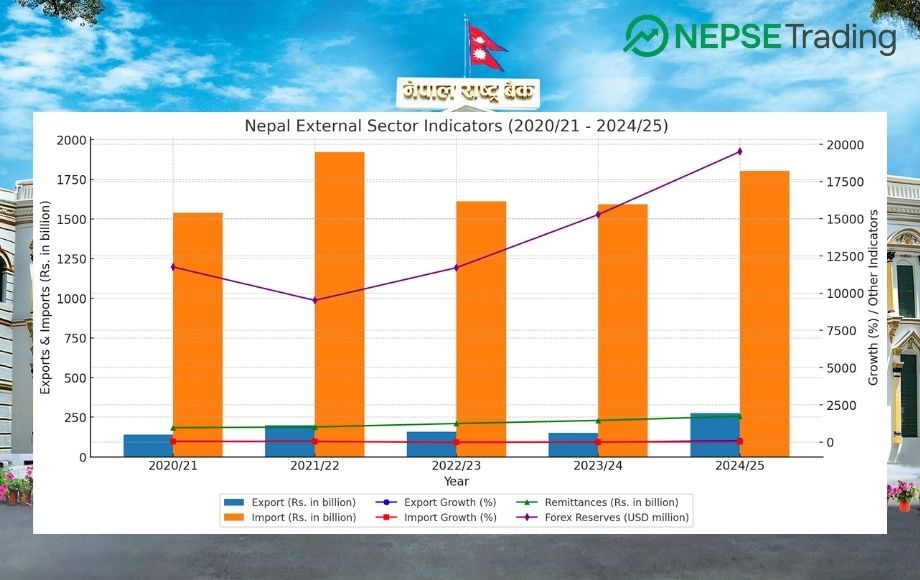
Top3 min readNepal’s External Sector Gains Strength, But Trade Imbalance PersistsNepal’s External Sector Gains Strength, But Trade Imbalance Persists Nepal’s external sector performance over the past five fiscal years reflects both resilience and vulnerability. While remittances and foreign reserves have soared to record highs, and exports have staged a surprising rebound, the structural trade imbalance remains a pressing challenge. The data highlights a positive turnaround from past deficits, but also underlines risks tied to over-dependence on imports and migrant earnings.Dipesh Ghimire·24 Aug, 2025
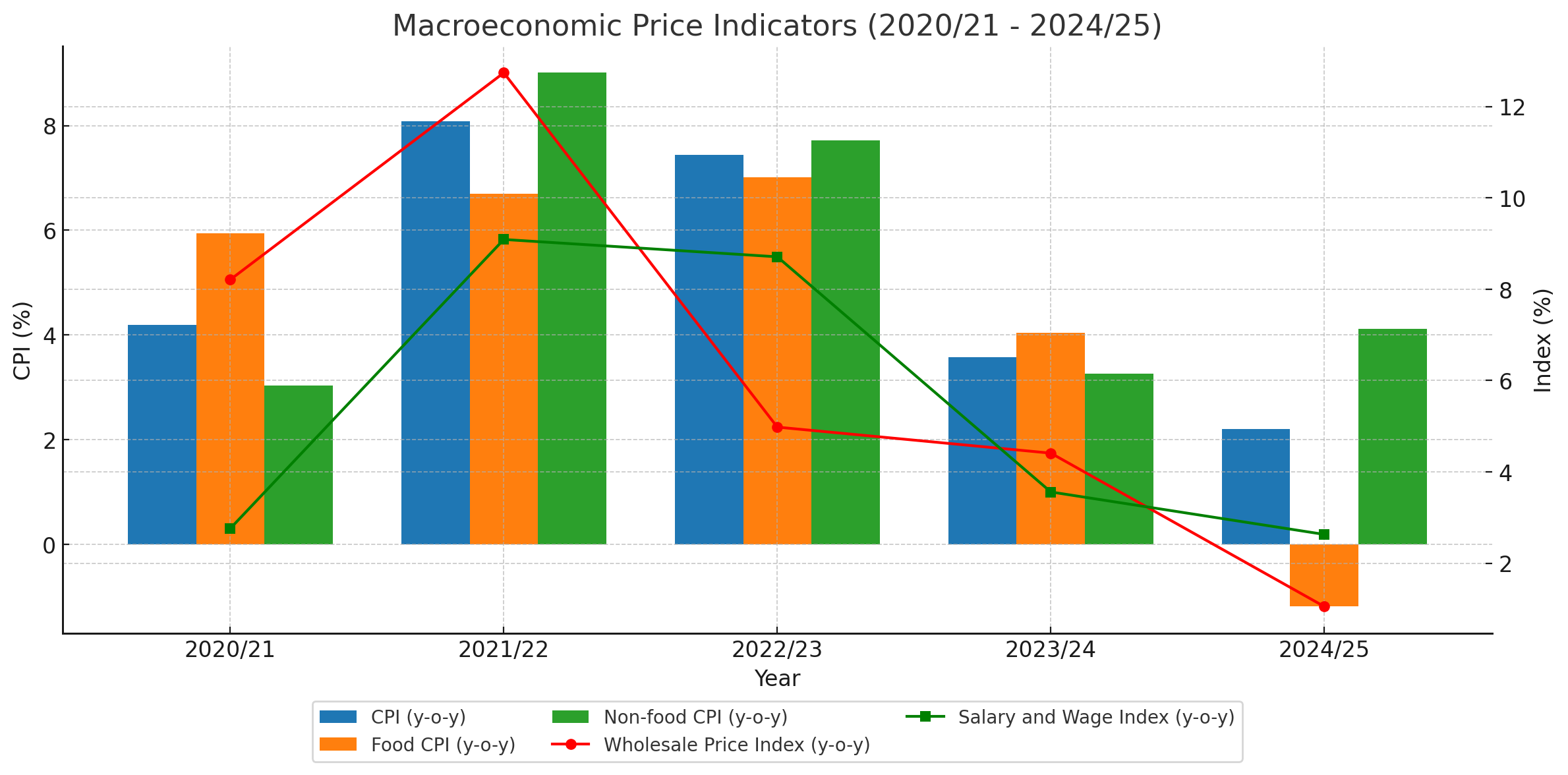
Top2 min readInflation Pressures Ease, But Food Prices Turn NegativeInflation Pressures Ease, But Food Prices Turn Negative Nepal’s latest macroeconomic indicators reveal a mixed inflationary trend over the past five years, with consumer prices showing a significant cooling in recent years, even as non-food prices remain sticky and food prices unexpectedly slip into deflation in the current fiscal year. CPI Trend Shows Cooling Inflation The Consumer Price Index (CPI), which measures overall inflation, spiked to 8.08 percent in 2021/22—its highest in the period under review—amid global supply chain disruptions and rising import costs. It moderated to 7.44 percent in 2022/23, and has since eased substantially, falling to 2.20 percent in 2024/25, signaling improved price stability. The annual average CPI also follows a similar pattern, peaking at 7.74 percent in 2022/23, before settling at 4.06 percent in 2024/25. Economists interpret this decline as evidence of subdued demand, tighter monetary policy, and easing global commodity prices.Dipesh Ghimire·24 Aug, 2025